
Ghost Jobs Are Everywhere Why Companies Post Jobs They Never Intend to Fill (2026 Complete Guide)
The email rejection landed in your inbox moments ago. Another one. You stare at the screen, the generic "thank you for your interest" a familiar sting. You'd spent hours tailoring your resume, crafting a cover letter, and prepping for an interview that now feels like a mirage.
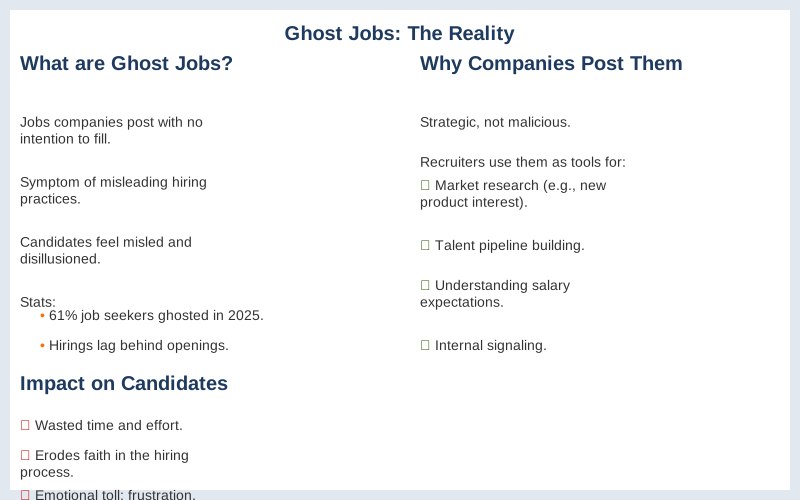
The email rejection landed in your inbox moments ago. Another one. You stare at the screen, the generic "thank you for your interest" a familiar sting. You'd spent hours tailoring your resume, crafting a cover letter, and prepping for an interview that now feels like a mirage. This isn't just bad luck; it's the symptom of an increasingly common and frustrating phenomenon: ghost jobs. These are job postings companies post without any real intention of filling them, a practice that leaves countless candidates like you feeling misled and disillusioned Ghost jobs are everywhere. In 2025, 61% of job seekers reported being ghosted after an interview, a significant increase New Anti-Ghosting Laws. The U.S. labor market, on paper, looks robust with millions of openings, yet job hirings lag significantly, pointing to a substantial number of ghost jobs 'Ghost job' postings add another layer of uncertainty. This isn't just about wasted time; it's about eroding faith in the hiring process.
These phantom listings, often described as "online job postings for positions that do not exist, or that employers are not planning to fill immediately," "Ghost" Job Postings | Congress.gov | Library of Congress contribute to a disquieting disconnect between the advertised opportunities and the actual hiring activity. This trend is so prevalent that it's become a significant point of discussion, with experts highlighting the reasons behind this deceptive practice. Companies might post these jobs to placate existing employees by appearing to hire additional support, or simply to gauge market interest for specific roles without committing to a hire. In some instances, economic volatility can make companies hesitant to commit headcount, leading to roles sitting open longer without resolution 9 Real Reasons Companies Post Ghost Jobs They Never Fill. The sheer volume of these postings can create a false sense of opportunity, and the act of ghosting candidates after they've invested significant effort transforms each fake job into a false promise, hurting individuals and diminishing their faith in the entire system CNBC confirms 2.2 million fake job postings in the US.
The Real Answer
The core reason companies post ghost jobs is strategic, not malicious. Recruiters often use these fake job postings 2026 as a tool for market research, talent pipeline building, or even internal signaling, rather than an immediate hiring need.
From a recruiter's perspective, a job posting is more than just an announcement of an open role. It's a data point. Companies might post a job to gauge market interest in a new product or service, or to understand salary expectations for a role they might need in the future 9 Real Reasons Companies Post Ghost Jobs. This isn't about deceit; it's about gathering intelligence in an uncertain economic climate where committing to headcount is risky 9 Real Reasons Companies Post Ghost Jobs.
Another common driver is building a talent pipeline. Instead of scrambling when a position unexpectedly opens, companies maintain evergreen postings for critical roles. This allows them to quickly access a pool of pre-vetted candidates, significantly speeding up the hiring process when a genuine need arises Ghost Job Postings: Why Companies Advertise Jobs They Won't Fill. This practice, while frustrating for candidates, is a proactive recruitment strategy.
Companies also use these postings to manage internal perceptions. Advertising that the company is "hiring" can reassure current employees during uncertain times, making them less likely to seek opportunities elsewhere. It signals growth and stability, even if no immediate hires are planned PSA: Companies are posting jobs they never intend to fill ... - LinkedIn.
The landscape is shifting, however. Starting January 1, 2026, new anti-ghosting laws will require employers to respond to interviewed candidates within 45 days in jurisdictions like Ontario, Canada, with similar legislation pending in U.S. states New Anti-Ghosting Laws in 2026: What Candidates Need to Know .... These regulations aim to bring much-needed transparency and reduce the prevalence of are ghost jobs real scenarios that waste job seekers' time and erode faith in the hiring process.


What's Actually Going On

How to Handle This
What This Looks Like in Practice
- Senior Software Engineer at a Series B Startup Startups post senior roles to signal growth and attract talent, sometimes without funding for the headcount. CNBC reports openings often outnumber hires. These postings can serve as aspirational signals to investors and potential future hires, creating an illusion of rapid expansion. Some roles are "evergreen" due to high turnover, but the initial posting may have been a "ghost job" intended to attract a wider pool of applicants than genuinely available positions. Candidates invest significant time in roles that were never truly open, causing frustration and a loss of faith in the hiring process from LinkedIn. The sheer volume of these misleading advertisements contributes to the uncertainty in the job market.
- Entry-Level Data Analyst at a Fortune 500 These positions often serve to build a talent pipeline or test market interest for specific skill sets. Companies may keep fake postings active for months, collecting resumes for future needs or to gauge the availability of qualified candidates without immediate hiring intent. Kovasys notes that economic volatility makes companies hesitant to commit headcount, leading them to explore options through these phantom roles. Companies gather resumes for future use, creating a database of potential hires. Candidates face wasted effort and the disheartening feeling of being overlooked for positions that were never genuinely available.
- Career Changer from Teaching to Product Management A career changer might diligently apply for a "Junior Product Manager" role, investing time in tailoring their resume and cover letter. The company may be gauging interest from candidates in adjacent fields or attempting to project an image of a rapidly growing department to stakeholders. NPR highlights that some ghost jobs are legitimate postings for which companies simply do not plan to fill immediately, perhaps due to budget freezes or shifting priorities. In other instances, companies use these postings to gather data on candidates' salary expectations and skill sets, information that can be used for market analysis or future recruitment strategies. Career changers, in particular, invest significant time and hope into a role that likely never truly existed.
- Customer Support Representative at a Retail Giant These roles are frequently advertised to signal ongoing hiring efforts and to provide a perception of support, thereby easing current employees' workloads and morale. A LinkedIn post confirms this common practice. This approach offers temporary morale boosts to existing staff by suggesting that relief is on the way, but it often fails to address underlying staffing issues or lead to actual hires, leaving applicants frustrated.

Mistakes That Kill Your Chances
Applying to roles without verifying authenticity is a common pitfall, especially with ghost jobs. The U.S. labor market can appear deceptively strong, with millions of job openings, but a significant portion are illusions 'Ghost job' postings add another layer of uncertainty to stalled jobs .... In August, openings outnumbered hires by over 2.2 million a month, indicating substantial unfilled or non-existent positions 'Ghost job' postings add another layer of uncertainty to stalled jobs .... This discrepancy inflates hope and wastes job seekers' time.
Candidates often assume postings on reputable platforms are genuine, open positions. This is true for new graduates who may lack experience recognizing red flags. Recruiters use these postings strategically, such as to retain existing employees by showing the company is hiring, or to test market demand PSA: Companies are posting jobs they never intend to fill ... - LinkedIn. Mid-career professionals face greater frustration, with more commitments and less time for speculative applications.
Key Takeaways
- Understand that ghost jobs are a pervasive reality, often serving as a strategic tool for companies to gauge market interest, build talent pipelines, or even placate existing employees with the appearance of expansion 9 Real Reasons Companies Post Ghost Jobs. These postings can also be used to test market demand for certain skills or to satisfy internal metrics regarding recruitment activity without the intention of immediate hiring.
- Be aware that while the U.S. labor market may appear strong with millions of job openings, a significant portion, potentially exceeding 2.2 million per month, may not lead to actual hires, creating a misleading picture of opportunity CNBC confirms 2.2 million fake job postings in the US. This discrepancy can lead to considerable frustration and a sense of disillusionment for job seekers who invest time and effort into applications that go nowhere.
- Recognize that new anti-ghosting laws are emerging in 2026, such as Ontario's requirement for employers to respond to interviewed candidates within 45 days, signaling a move towards greater transparency in the hiring process New Anti-Ghosting Laws in 2026. These legislative efforts aim to curb the practice of leaving candidates in the dark after interviews, thereby fostering a more respectful and efficient recruitment landscape.
- The single most important thing a recruiter would tell you off the record? If it feels too good to be true, or if communication is vague and delayed, it probably is. Trust your gut, and don't waste energy on postings that lack clear intent. Look for clear job descriptions, prompt communication, and a defined interview process to distinguish genuine opportunities from ghost jobs.
Frequently Asked Questions
What are these 'ghost jobs' everyone's talking about?
Why would companies post jobs they never intend to fill?
Are fake job postings a new thing, or are they expected to be around in 2026?
How can I tell if a job posting is a real opportunity or just a ghost job?
What are the other reasons companies might post jobs they don't plan to fill?
Sources
- Ghost Job Postings: Why Companies Advertise Jobs They Won't Fill
- kovasys.com
- 9 Real Reasons Companies Post Ghost Jobs They Never Fill
- PSA: Companies are posting jobs they never intend to fill ... - LinkedIn
- CNBC confirms 2.2 million fake job postings in the US - LinkedIn
- 'Ghost jobs' are everywhere — here's how to avoid falling for them
- New Anti-Ghosting Laws in 2026: What Candidates Need to Know ...
- Nicole Fernandez-Valle's Post - LinkedIn
- 'Ghost job' postings add another layer of uncertainty to stalled jobs ...