
How to Answer 'Tell Me About Yourself' Without Rambling (The 90-Second Formula)
You've just been rejected for a role you were sure was yours. Staring at the "We regret to inform you" email, you replay the interview in your head, specifically that opening question: "Tell me about yourself." Sound familiar? This isn't just a polite icebreaker; it's a critical moment that can shape the entire interview.
You've just been rejected for a role you were sure was yours. Staring at the "We regret to inform you" email, you replay the interview in your head, specifically that opening question: "Tell me about yourself." Sound familiar? This isn't just a polite icebreaker; it's a critical moment that can shape the entire interview. In fact, your response to "tell me about yourself" determines a staggering 44% of your interview success Indeed Career Scout. Recruiters form lasting impressions within 100 milliseconds, and most hiring decisions crystallize in the first minute CareerBuilder research. Forget the rambling autobiography; this is your chance to strategically present your professional narrative. We'll show you the formula recruiters wish every candidate used, what interviewers are actually evaluating, and how to nail this crucial interview opener every time.
This initial exchange is far more than a casual preamble; it's a rapid assessment of your communication skills, self-awareness, and relevance to the position. Interviewers are not looking for a life story, but rather a concise, compelling summary that demonstrates you understand the role and can articulate your value. A strong answer conveys that you are thoughtful, self-aware, and focused on the opportunity at hand Robert Walters. The ideal response follows a strategic formula: your present situation, your relevant past experiences, and your future aspirations as they align with the role. This structure, often referred to as the "present, past, future" model, allows you to highlight key accomplishments and skills that directly address the employer's needs The Muse. It's about presenting a brief highlight, a summary of your experience and education, and emphasizing the unique value you bring to the table Careervillage. This structured approach ensures you're not just talking, but strategically marketing yourself for the specific job.
The Real Answer
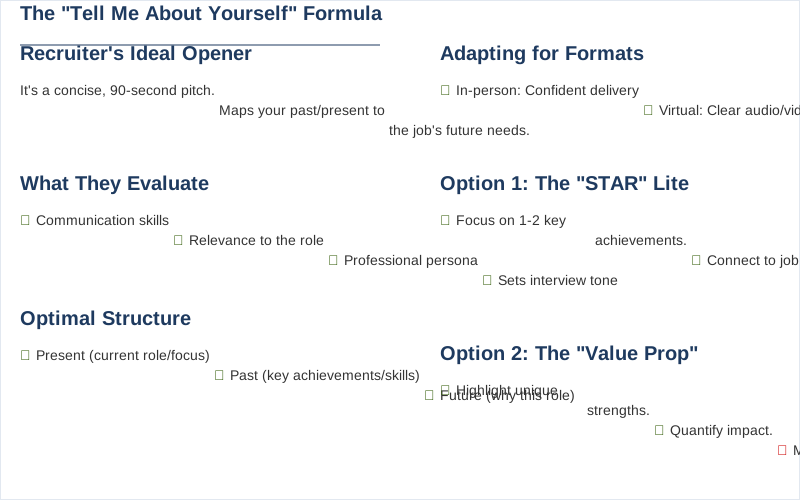
The recruiter's ideal "tell me about yourself" answer isn't a life story; it's a concise, 90-second pitch that maps your relevant past and present to the specific job's future needs.
Forget the autobiography. Interviewers use this opener to gauge your communication skills, assess your relevance to the role, and get a feel for your professional persona before diving deep. They're looking for a narrative that connects your experience directly to their problem, not a chronological dump of your resume. Your response sets the tone for the entire interview; a strong start significantly impacts how they perceive you. Indeed research shows that recruiters form impressions rapidly, within 100 milliseconds Interview Question: "Tell Me About Yourself" (With Answers) - Indeed, and most hiring decisions crystallize in the first minute How to Answer 'Tell Me About Yourself' in an Interview: 30-Second ....
The optimal structure is Present-Past-Future. Start with your current role, highlighting key responsibilities and a recent, relevant accomplishment. Then, briefly touch upon your past experiences that directly led you to this point and built the skills needed for the job. Finally, pivot to the future, explaining why you're excited about *this specific opportunity* and how you envision contributing. This framework, proven to increase advancement rates by 40% How to Answer 'Tell Me About Yourself' in an Interview: 30-Second ..., ensures you're showing them exactly what they need to see.
For experienced professionals, emphasize your most impactful contributions and leadership. For entry-level candidates, focus on transferable skills, internships, and academic projects that demonstrate potential and a strong work ethic. The key is tailoring, even for this initial question. Review the job description and company values beforehand, and weave those keywords and themes into your answer. This demonstrates you've done your homework and are genuinely interested, not just going through the motions. Modern recruiters prioritize skills relevance (73%), followed by cultural fit and soft skills (69%) How to Answer 'Tell Me About Yourself' in an Interview: 30-Second ....
In phone screens, keep it concise and engaging. For video interviews, ensure your background is professional and you maintain eye contact. During in-person interviews, your body language and energy are also being evaluated. Regardless of format, aim for a response between 90 seconds and 2 minutes; anything shorter appears unprepared, and longer risks losing engagement How to Answer 'Tell Me About Yourself' in an Interview: 30-Second .... This is your chance to make a memorable first impression and steer the conversation towards your strengths.

What's Actually Going On
How to Handle This


What This Looks Like in Practice
- Current Role Snapshot For an entry-level data analyst role, you might start by mentioning your current or most recent relevant experience, like an internship or a significant academic project. Briefly describe the scope and a key accomplishment, such as "I'm currently an intern at XYZ Corp, where I've been analyzing customer churn data to identify key drivers and have contributed to a project that improved data accuracy by a significant margin." This sets immediate context and showcases your ability to deliver value The Muse.
- Past Experience Highlight Connect your past experiences to the role you're seeking. For instance, if transitioning from a different field, highlight transferable skills. "Before this, as a high school teacher, I developed strong skills in curriculum design and student assessment, which I now apply to creating clear data visualizations and evaluating project outcomes," says one career changer CareerVillage.org. Emphasize how previous roles have prepared you for the challenges of the new position.
- Future Aspirations Alignment Conclude by linking your career goals to the specific opportunity. For a senior software engineer at a startup, this might sound like: "I'm eager to leverage my experience in building scalable backend systems to contribute to a fast-paced, innovative environment like yours, and I'm particularly drawn to your company's mission to revolutionize AI-driven customer service." This demonstrates you've done your homework and see a genuine fit Robert Walters.
- Quantifiable Achievements (Where Possible) Recruiters value concrete results. While not every role offers easy quantification, if you can mention a specific improvement or contribution, do so. For example, "In my previous role, I implemented a new reporting process that reduced manual data entry time by a notable amount." This provides tangible evidence of your impact tryapt.AI.

Mistakes That Kill Your Chances
Key Takeaways
- The single most important thing a recruiter wishes you'd grasp: Your "tell me about yourself" answer isn't a resume recitation; it's your 30-second elevator pitch for the specific role. Recruiters form lasting impressions within 100 milliseconds How to Answer 'Tell Me About Yourself' in an Interview: 30-Second ..., and this opener dictates nearly half of your interview success How to Answer 'Tell Me About Yourself' in an Interview: 30-Second ....
- Your response is a strategic tool, not small talk. Interviewers use it to gauge your communication style, understand your professional trajectory, and immediately assess your relevance to their problems How to Structure Your Interview Self Introduction - LinkedIn. They're looking for a clear narrative that highlights your most relevant experience, not your life story The Right Way to Answer "Tell Me About Yourself" and Impress Any ....
- Master the Present-Past-Future formula. Start with your current role and a key accomplishment, briefly touch on relevant past experiences that led you here, and pivot to why this specific opportunity aligns with your future goals How to Answer “Tell Me About Yourself” in an Interview (Examples .... Keep it concise, aiming for 90 seconds to 2 minutes; anything longer risks losing engagement How to Answer 'Tell Me About Yourself' in an Interview: 30-Second ....
- Adapt for different formats: For a quick screening call, focus on the "Present" and a brief "Future" connection. In later stages, you can expand on the "Past" with more detailed examples that showcase your skills and quantifiable achievements, which modern recruiters prioritize at 91% How to Answer 'Tell Me About Yourself' in an Interview: 30-Second ....
Frequently Asked Questions
What's the actual structure recruiters want for 'tell me about yourself' answers?
What are interviewers *really* trying to figure out when they ask 'tell me about yourself'?
When should I deliver my 'tell me about yourself' answer, and how long should it be?
How do I change my 'tell me about yourself' answer for a phone screen versus a final round interview?
I'm an experienced professional, how should my 'tell me about yourself' answer differ?
Sources
- Mastering Job Interviews: Self-Introduction and Insightful Questions ...
- So what is the best way to answer "tell me about yourself "? - Reddit
- The Right Way to Answer "Tell Me About Yourself" and Impress Any ...
- How to Answer “Tell Me About Yourself” in an Interview (Examples ...
- Interview Question: "Tell Me About Yourself" (With Answers) - Indeed
- How to Structure Your Interview Self Introduction - LinkedIn
- How to Answer 'Tell Me About Yourself' in an Interview: 30-Second ...
- How to Answer 'Tell Me About Yourself' (Interview Examples)