How to Follow Up After an Interview Without Being Annoying (Recruiter's Guide)
RoleAlign Team
14 min read
Includes Video
You've just wrapped up what felt like a solid interview, but the silence is deafening. Now what? Sending the wrong follow-up, or worse, no follow-up at all, can actively tank your candidacy. The key isn't just sending an email; it's about precise timing, channel selection, and crafting a message that aligns with internal recruiter handoff timelines.
You've just wrapped up what felt like a solid interview, but the silence is deafening. Now what? Sending the wrong follow-up, or worse, no follow-up at all, can actively tank your candidacy. The key isn't just sending an email; it's about precise timing, channel selection, and crafting a message that aligns with internal recruiter handoff timelines. Forget generic advice; this is about what actually moves the needle, based on how hiring teams operate.
Most candidates miss the mark here. Only 24% of job seekers send follow-up emails after interviews, yet a staggering 80% of hiring managers say these communications influence their decisions How to Follow Up After an Interview: Templates That Actually Work. This gap is your opportunity. Recruiters expect a thank-you within 24 hours, ideally the same day or first thing the next morning Interview Follow-Up Email: 5 Templates for 2026. Missing this window means you're already behind the 76% who fail to capitalize on this crucial step. The question isn't if you should follow up, but how to do it strategically. Understanding the internal recruiter handoff timeline is paramount; this is the critical period after your interview where the hiring manager receives feedback and makes initial decisions. Sending a follow-up that acknowledges this process, perhaps by referencing a specific point discussed or reiterating your enthusiasm for the role, demonstrates your awareness and proactive nature. A well-timed message can reinforce your qualifications and keep you top-of-mind as the internal discussion unfolds. Conversely, a generic, poorly timed follow-up, or one that comes across as demanding or impatient, can be detrimental. For instance, sending a follow-up before the recruiter has even had a chance to compile feedback is premature and can signal a lack of understanding of their workflow. The tone should remain calm and respectful, avoiding any demands for immediate information How To Follow Up After a Job Interview in 2026. This strategic approach, aligning with the internal recruiter's operational rhythm, is what truly separates candidates who succeed from those who are overlooked.
The Real Answer
Your post-interview follow-up is a strategic touchpoint, not just a courtesy. The timing, channel, and content dictate whether you reinforce your candidacy or become a nuisance.
Recruiters operate on internal timelines driven by hiring manager feedback and the overall hiring process. The initial thank you is your most critical opportunity. Send it within 24 hours of the interview, ideally the same day or first thing the next morning. This demonstrates promptness and genuine interest, reinforcing why you're a good fit. While 80% of HR managers view follow-ups positively How to Write a Follow Up Email to a Recruiter in 2026 - Juicebox, only 24% of candidates actually send them How to Follow Up After an Interview: Templates That Actually Work, creating a massive gap to exploit.
Personalize this initial email by referencing specific discussion points. This shows you were engaged and can recall details, a key differentiator. Keep it concise, 3-4 paragraphs max, and maintain a professional tone, avoiding demands for information How To Follow Up After a Job Interview in 2026 - LinkedIn. This is your chance to remind them of your value, not rehash your resume.
If you don't hear back within the stated timeline (usually 1-2 weeks, or as specified by the interviewer), a second follow-up is appropriate. This is where many candidates go wrong. Instead of a generic "checking in," add new value. Connect your follow-up to a recent company announcement or industry trend to show proactive engagement How to Write a Follow Up Email to a Recruiter in 2026 - Juicebox. This demonstrates you're still invested and thinking about the role's impact. Spacing these follow-ups 5-7 days apart, with a soft touch on LinkedIn in between, can be effective What's working for cold email and LinkedIn outreach in 2026 ....
Over-following up is a real concern. Beyond two well-timed, value-added follow-ups, you risk appearing desperate or disrespectful of their process. Remember, 86% of hiring managers say thank-you notes influence their decisions Should you send a thank you note after an interview? | Heath Brennan, but they also have internal queues and may have already made a decision. Your goal is to stay top-of-mind positively, not to badger.
Strategic timing is key. Sending your follow-up at the right moment, like within 24 hours, significantly boosts your chances.
| Photo by cottonbro studio
Strategic timing is key. Sending your follow-up at the right moment, like within 24 hours, significantly boosts your chances.
| Photo by cottonbro studio
What's Actually Going On
1
The 24-Hour Window is Paramount - Sending a thank-you email within 24 hours of your interview is non-negotiable. Research shows 80% of hiring managers expect this, and a startling 23% of candidates actually do it, creating a massive opportunity for you to stand out Elite Resumes. The window has narrowed; missing it means you're already behind. This initial outreach signals professionalism and continued interest, crucial for keeping your candidacy alive.
2
Recruiter Handoff Timelines Dictate Urgency - Understand that once an interview concludes, your file moves. For internal recruiters, the clock starts ticking on their next steps. They're often managing multiple requisitions, and a prompt thank-you note can be the nudge that keeps your profile at the top of their inbox, not buried under a week's worth of new applications. This is especially true in fast-paced tech environments or startups where decisions are made rapidly.
3
Personalize Beyond Generic Gratitude - Simply saying "thank you" isn't enough. You need to reference specific points from the conversation that demonstrate you were listening and are a strong fit. This isn't about rehashing your resume; it's about connecting your skills to a specific problem or project discussed. For instance, if you talked about optimizing a particular workflow, briefly mention how your experience directly addresses that challenge. This shows genuine engagement, not just rote follow-up.
4
Company Size and Industry Matter for Tone and Content - A startup might appreciate a more concise, direct follow-up, perhaps even referencing recent company news if relevant. An enterprise, especially in finance or healthcare, may have more structured processes, requiring a slightly more formal tone. Seniority also plays a role; for executive roles, your follow-up should reflect a strategic understanding of the business challenges discussed. The goal is always to reinforce your value proposition, tailored to the specific context.
5
Beyond the First Email: Strategic Sequencing - If you don't hear back after the initial thank-you, don't bombard them. A follow-up after 3-5 business days is reasonable, but it must add value. Instead of "just checking in," connect your follow-up to a recent company announcement or industry trend to show proactive engagement Juicebox. This transforms a passive inquiry into an active demonstration of your continued interest and industry awareness. Research suggests strategic multi-touch sequences can boost engagement significantly tryapt.AI.
6
What to Avoid: The Time Wasters and Deal Breakers - Avoid generic emails, demanding tone, or following up too frequently. Hiring managers are busy; 86% say thank-you notes influence their decisions, but excessive or poorly crafted follow-ups can backfire Heath Brennan. Sending follow-ups 5-7 days apart with a soft touch on LinkedIn in between can be effective, but only if each touchpoint adds genuine value, not just noise Reddit.
Engage thoughtfully. Reading your interview follow-up email promptly shows your continued interest and professionalism to potential employers.
| Photo by RDNE Stock project
Engage thoughtfully. Reading your interview follow-up email promptly shows your continued interest and professionalism to potential employers.
| Photo by RDNE Stock project
How to Handle This
1
Send the thank-you email within 24 hours - This is the most critical timing. It shows you're engaged and professional. Recruiters expect it; 80% of hiring managers appreciate thoughtful follow-ups Elite Resumes. Failing to do this signals a lack of interest or professionalism. For senior roles or high-volume industries, this window is even tighter. This initial communication is crucial because it lands with the interviewer while the interview is still fresh in their mind, and it also serves as the first point of contact for the recruiter after the interview has concluded. Many recruiters begin their internal process of candidate evaluation and feedback immediately, making your promptness vital. A study by Zippia confirms that 80% of HR managers view follow-ups positively Juicebox, highlighting the importance of this first step.
2
Personalize the content - Don't send a generic template. Reference specific points discussed, a shared interest, or a follow-up question. This demonstrates you were listening and genuinely interested, not just checking a box. Recruiters see thousands of applications; personalization makes you memorable. Skipping this makes your email forgettable, indistinguishable from the 76% of candidates who miss this opportunity tryapt.AI. For instance, if you discussed a particular challenge the team is facing, you could briefly reiterate your understanding and suggest a relevant skill or experience you possess that could address it. This shows you're already thinking like a problem-solver for the role. This level of detail is what differentiates a candidate who is truly engaged from one who is simply going through the motions.
3
Use email for the initial follow-up - It's the standard channel. Keep it concise, professional, and under 100 words, with a clear subject line like "Follow-Up: [Your Name] for [Job Title]" Juicebox. If you don't have the interviewer's email, use the recruiter's. Sending via LinkedIn is a secondary option, especially if you've already connected there. Overusing LinkedIn for initial follow-ups can feel intrusive. Email remains the most professional and widely accepted method for initial post-interview communication. It provides a written record and is less likely to be perceived as an interruption compared to a direct message on a social platform, especially if you haven't yet established a rapport on LinkedIn. Ensure your subject line is clear and immediately identifies the purpose of your email.
4
Wait 3-5 business days for a second touchpoint - If you haven't heard back after the initial thank-you, a follow-up is appropriate. Frame it as adding value. Did a relevant industry trend emerge? Did the company announce something new? Connect your interest to that. This shows proactive engagement beyond just asking "what's the status?" Juicebox. A common mistake is following up too quickly or just saying "checking in," which annoys recruiters. For example, if you interviewed for a marketing role and a competitor just launched a new campaign, you could briefly mention your observations and how your strategic thinking might apply. This demonstrates continued interest and industry awareness, going beyond a simple status update. The Coursera article emphasizes that follow-ups should be brief and offer new insights if possible Coursera.
5
Consider a soft touch on LinkedIn for a third touchpoint - Spacing follow-ups 5-7 days apart is a good cadence reddit. If email isn't yielding results, a brief, professional LinkedIn message can work, especially for roles where that platform is heavily used. Avoid bombarding them. Multiple emails or LinkedIn messages without adding value will actively damage your candidacy. Recruiters are busy; persistent, low-value outreach gets you flagged as a nuisance. If you choose LinkedIn, ensure your message is even more concise than an email and directly references your previous interactions. For instance, "Hi [Interviewer Name], following up on our conversation last week regarding the [Job Title] position. I wanted to share a quick thought on [topic discussed] that came to mind." This maintains professionalism and avoids appearing demanding. The LinkedIn article on follow-ups suggests maintaining a calm and respectful tone LinkedIn.
Modern collaboration and communication are vital. Effective messaging in your follow-up can make a significant difference in your candidacy.
| Photo by Mikhail Nilov
Modern collaboration and communication are vital. Effective messaging in your follow-up can make a significant difference in your candidacy.
| Photo by Mikhail Nilov
What This Looks Like in Practice
Senior Software Engineer, Series B Startup. Interviewed Tuesday? Send a thank-you email *that same day*, referencing a specific technical challenge and your experience (e.g., a recent AWS migration). This shows engagement and technical grasp. A Thursday follow-up asking "What's next?" without adding value is weak. Startups move fast; while 80% of hiring managers appreciate follow-ups Zippia study, generic check-ins are noise.
Entry-Level Data Analyst, Fortune 500. Panel interview Friday? A personalized thank-you to *each* interviewer by Monday morning is critical. Mention a specific insight from *their* conversation. Sending one generic email to the recruiter is a missed opportunity; 86% of hiring managers say thank-you notes influence decisions LinkedIn. No reply by Wednesday? A single, concise follow-up to the recruiter on timeline is okay, but don't chase.
Career Changer from Teaching to Product Management. Interviewed Wednesday? Your follow-up must reinforce passion and transferable skills. By Thursday, articulate in your thank-you email how your teaching experience (e.g., curriculum development, stakeholder management) directly applies to product management challenges discussed. A "What's the status?" email adds no value and will likely be ignored. Only 24% of candidates follow up, yet 80% of hiring managers say they influence decisions tryapt.AI. Make yours count.
Mid-Level UX Designer, FinTech Company. Final interview Thursday? Send a thank-you by Friday, including a brief mention of a design solution you proposed that addresses a specific user pain point discussed. This shows proactive thinking. No word by the end of the following week? A single follow-up to the recruiter for an update is acceptable. Don't bombard them; excessive emails are detrimental.
To enhance your follow-up strategy, consider these tips for crafting the perfect thank-you email.
Crafting the perfect follow-up email requires attention to detail. Reference specific points discussed to reinforce your fit for the role.
| Photo by SHVETS production
Crafting the perfect follow-up email requires attention to detail. Reference specific points discussed to reinforce your fit for the role.
| Photo by SHVETS production
Mistakes That Kill Your Chances
Mistake Sending a generic thank-you email.
Why candidates make it They think a quick thank you is enough. Many templates suggest a basic "thanks for your time" approach.
What recruiters actually see A missed opportunity to reinforce your fit. Most hiring managers say thank-you notes influence their decisions Heath Brennan, yet only 24% of candidates send them tryapt.AI. A generic email blends into the noise.
The fixPersonalize your follow-up. Reference specific points discussed, a problem you can solve, or a detail that shows you were listening. This moves beyond mere formality.
Mistake Waiting too long to send your first follow-up.
Why candidates make it Uncertainty about the "right" timing. Some believe a few days is fine.
What recruiters actually see You're not as eager as you seem. The optimal window is within 24 hours of the interview Elite Resumes. Waiting longer means you're less likely to be top-of-mind.
The fix Aim to send your thank you email the same day or first thing the next morning. This shows proactive engagement and strong interest.
Mistake Bombarding recruiters with follow-ups after no response.
Why candidates make it Desperation and a belief that persistence always pays off.
What recruiters actually see Annoyance and a candidate who doesn't respect boundaries. Recruiters are managing hundreds of roles; excessive emails get ignored or marked as spam. This actively damages your candidacy.
The fix Space follow-ups strategically, 3-5 business days apartJuicebox. A second follow-up a week later is usually the limit. Add new value, don't just ask for an update.
Mistake Forgetting to tailor follow-ups for different career stages.
Why candidates make it Applying a one-size-fits-all approach regardless of experience level.
What recruiters actually see
* New Grads: A lack of initiative or understanding of professional communication.
* Mid-Career: A sign of complacency if the follow-up doesn't highlight new skills or achievements relevant to the role.
* Senior Candidates: A red flag if the follow-up doesn't clearly articulate strategic value or a forward-looking perspective.
The fix Adjust your messaging. New grads can emphasize enthusiasm and learning potential. Mid-career folks should connect their experience to specific business needs. Senior candidates must demonstrate strategic impact and leadership.
Mistake Using your follow-up to ask for feedback on the interview itself.
Why candidates make it A desire to understand where they went wrong or improve for future interviews.
What recruiters actually see A candidate who is more focused on their own perceived shortcomings than on the role. Recruiters are often prohibited from giving detailed feedback due to legal or HR policies. Asking for it puts them in an awkward position and can make you seem insecure.
The fix Your follow-up is for reinforcing your interest and fit, not soliciting an interview critique. If feedback is offered, great; if not, focus on moving forward.
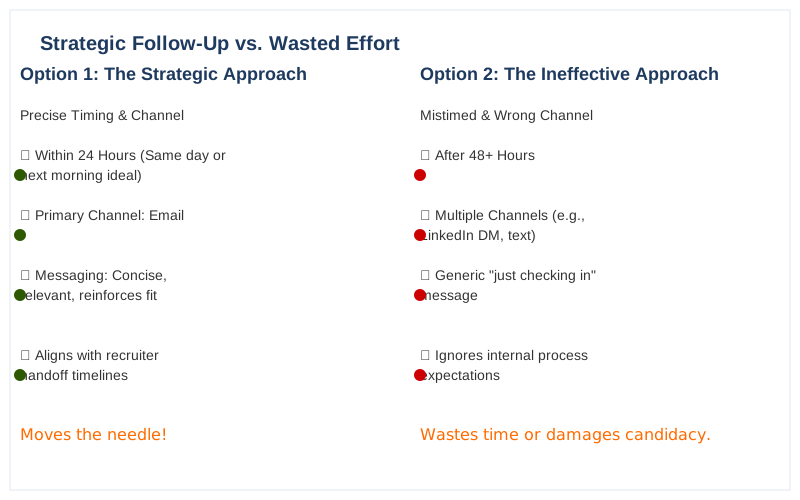
Comparison overview for The precise timing, channel selection, and messaging for post-interview follow-ups that actually move the needle, versus the ones that waste time or actively damage your candidacy, based on internal recruiter handoff timelines.
Key Takeaways
Timing is everything. Send a thank-you email within 24 hours of your interview; ideally, the same day or the next morning Elite Resumes. This is your prime window to reinforce your interest and professionalism. Waiting too long, or sending multiple unsolicited follow-ups too quickly, signals you're not attuned to recruiter timelines and can actively damage your candidacy.
Only 24% of candidates send follow-up emails, yet 80% of hiring managers say they influence decisions tryapt.AI. This is your golden ticket. A well-crafted, concise email that references specific discussion points demonstrates you were listening and are genuinely engaged. Don't just "check in"; add value by connecting your skills to recent company news or industry trends Juicebox.
Know when to stop. If you don't hear back after a polite follow-up, respect the silence. Multiple follow-ups after no response can come across as desperate and unprofessional. A 2024 study confirmed 80% of HR managers view follow-ups positively when done right Juicebox, but this doesn't mean badgering. Focus on quality over quantity.
The single most important thing? Your follow-up is a professional courtesy, not a demand. It's your final chance to make a positive impression by being prompt, professional, and adding value, not just asking for an update.
Mastering follow-ups can enhance your overall communication skills, which is also crucial when learning how to cold email a hiring manager.
Frequently Asked Questions
When's the absolute best time to send a thank you email after an interview, and does it actually matter?
You need to send that thank you email within 24 hours, ideally the same day or first thing the next morning. Recruiters and hiring managers are swamped, and while 86% say thank-you notes influence their decision, only about 23% of candidates actually send one. Missing that window is a missed opportunity; it signals you're not as invested as you could be. Think of it as your last chance to reinforce why you're the right fit before they move to the next stage.
What if I don't hear back after sending my thank you email? How many times should I follow up, and what channel is best?
If you don't hear back after your initial thank you, wait about 5-7 business days before a gentle nudge. A common mistake is just saying 'checking in'; instead, try to add value by referencing a recent company announcement or industry trend that aligns with the role. Keep it concise, professional, and use email unless they explicitly told you to use LinkedIn. Pestering them via multiple channels will likely backfire and damage your candidacy.
How long should I wait before following up if the recruiter gave me a specific timeline, like 'we'll be in touch next week'?
If they gave you a timeline, respect it. Wait until the end of that stated period, or the day after, to send your follow-up. For instance, if they say 'we'll be in touch by Friday,' don't reach out until Monday. Sending a follow-up too early can make you seem impatient, and honestly, internal recruiter handoffs can take longer than expected due to approvals and internal meetings.
What should I actually write in a follow-up email after an interview? Just a quick 'thanks' or something more?
Your follow-up should be more than a generic 'thanks.' Briefly reiterate your enthusiasm for the role and mention one specific point from the conversation that resonated with you or a key skill you highlighted. This shows you were listening and are genuinely engaged. Keep it short - 3-4 concise paragraphs max - and proofread meticulously. Remember, 68% of recruiters say thank-you emails impact their hiring choices, so make yours count.
I already sent a thank you email. Should I also connect with the interviewer on LinkedIn?
Connecting on LinkedIn immediately after the interview can be a bit much for some interviewers, depending on the company culture and your previous interactions. It's generally safer to stick to email for the initial follow-up. If you have a specific, relevant piece of information to share that wasn't covered and you feel it genuinely adds value, a very brief, professional LinkedIn message *after* your initial email follow-up might be considered, but proceed with extreme caution.
What if the recruiter ghosted me after the interview and I haven't heard anything for weeks?
If it's been over a week or two with absolutely no communication and no timeline given, a more direct, but still polite, follow-up is warranted. Frame it around understanding the status of the hiring process rather than demanding an update. You could say something like, 'I wanted to briefly check in on the status of the [Job Title] position and reiterate my strong interest.' If you still get no response after this, it's usually a sign to move on.