
Are Non-compete Agreements Actually Enforceable (2026 Complete Guide)
You just finished a promising interview for your dream job, and the offer letter is in your inbox. But before you celebrate, you notice a non compete agreement attached. It feels like a trap, restricting your ability to work for a competitor for two years within a 50-mile radius.
You just finished a promising interview for your dream job, and the offer letter is in your inbox. But before you celebrate, you notice a non compete agreement attached. It feels like a trap, restricting your ability to work for a competitor for two years within a 50-mile radius. Is this just a scare tactic, or could it actually prevent you from taking this exciting new role?
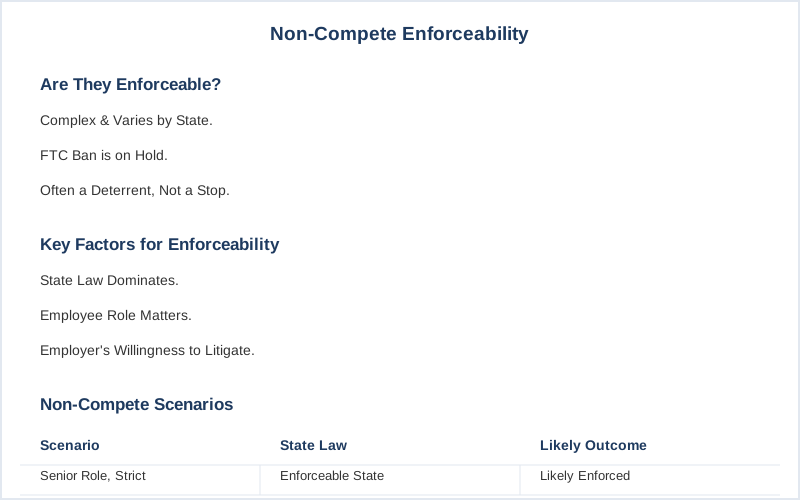
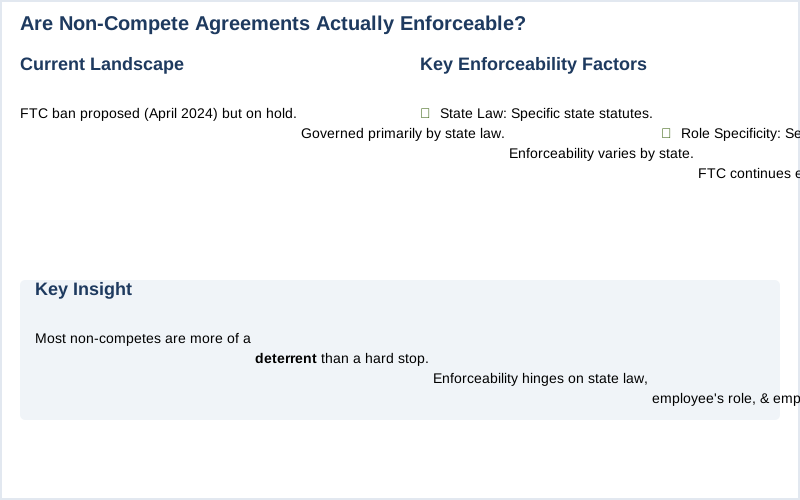
The reality of non-compete enforceability is far from simple. While the FTC announced a rule to ban most non-competes nationwide in April 2024, a district court order has put that ban on hold, leaving the landscape uncertain FTC Announces Rule Banning Noncompetes. Currently, non-competes are primarily governed at the state level State Noncompete Law Tracker. This means what's enforceable in one state might be completely invalid in another. For instance, some states like California have effectively banned them outright, while others, like Massachusetts, have enacted laws that limit their scope based on factors such as employee earnings and the duration of employment. The FTC continues to pursue enforcement actions against agreements deemed particularly harmful FTC Clarifies Stance on Non-Compete Agreements, focusing on those that stifle competition or negatively impact workers. For many workers, especially those in less senior or specialized roles, these clauses are often not enforceable, acting more as a deterrent than a hard legal barrier. Courts typically scrutinize non-competes to ensure they are narrowly tailored to protect legitimate business interests, such as trade secrets or substantial customer relationships, and are not unduly burdensome on the employee's ability to earn a living. The enforceability often hinges on reasonableness in terms of geographic scope, duration, and the specific activities restricted.
The Real Answer
Forget the idea that non-compete agreements are a universally enforced contract. From a recruiter's perspective, most non-competes are more of a deterrent than a hard stop, especially for mid-level to junior roles. The real enforceability hinges on a complex interplay of state law, the employee's specific role, and the employer's willingness and ability to litigate.
While the FTC proposed a nationwide ban, that rule is currently not in effect due to court orders FTC Announces Rule Banning Noncompetes. This means the landscape remains state-driven. Currently, four states outright ban non-competes, and 34 states plus D.C. have significant restrictions State Noncompete Law Tracker. This patchwork of laws means a non-compete enforceable in one state might be completely void in another. For instance, California, Oklahoma, North Dakota, and Minnesota have complete bans, while states like Colorado and Washington impose strict limitations on duration and scope State Noncompete Law Tracker.
The core insight from the trenches is this: unless you're a highly critical, senior executive with access to deeply sensitive trade secrets, your non-compete is likely not worth the paper it's printed on. Recruiters often see these agreements as more of a scare tactic. Most companies simply don't have the appetite or resources for the legal battles required to enforce them broadly Is a non-compete agreement like this actually enforceable? - Reddit. The FTC itself is focusing enforcement on "pernicious" agreements, not every single non-compete clause FTC Clarifies Stance on Non-Compete Agreements. This means the regulatory body is prioritizing egregious cases over routine enforcement actions.
The enforceability of a non-compete agreement is highly case-specific. Factors like the geographic scope and duration of the restriction are paramount. Overly broad terms are almost always unenforceable. For example, a restriction that prevents a software engineer from working in the entire country for five years would likely be struck down. Courts will scrutinize whether the restriction is reasonably tailored to protect the employer's legitimate business interests, such as confidential information or customer relationships, and not simply to prevent competition. The agreement must also be supported by adequate consideration, meaning the employee received something of value in exchange for agreeing to the non-compete. Remember, these agreements are intended to protect legitimate business interests, not to unduly restrict an employee's ability to earn a living.


What's Actually Going On
How to Handle This
Recruiter Reasoning: This mitigates risk and ensures efficient candidate sourcing. Worrying about non-competes for roles that don't warrant them is counterproductive.
What Goes Wrong: Skipping this may disqualify valuable candidates based on unenforceable clauses or hire someone who can immediately join a competitor, exposing your company to risk.
Recruiter Reasoning: Compliance and legal due diligence are paramount. Understanding the legal patchwork prevents costly mistakes and ensures you're not presenting invalid restrictions.
What Goes Wrong: Ignoring state laws or FTC guidance means wasting time on candidates who can freely join competitors or alienating strong candidates with unenforceable demands.
Recruiter Reasoning: Savvy candidates recognize overly restrictive clauses as red flags. Focusing on reasonable, defensible restrictions makes the process smoother and more ethical.
What Goes Wrong: Overly broad or unreasonable non-competes lead to pushback, loss of trust, and candidates opting for less restrictive opportunities. It also signals the company may not understand employment law.
Recruiter Reasoning: These are easier to enforce, less contentious, and still significantly safeguard business interests.
What Goes Wrong: Relying solely on broad, likely unenforceable non-competes means missing opportunities for more robust and legally sound protections like non-solicitation clauses.

What This Looks Like in Practice
- Senior Software Engineer at a Rapidly Growing Tech Firm Instrumental in developing proprietary algorithms, this engineer signed a global non-compete restricting them from joining direct competitors. While the company cited trade secret protection, the broad scope made enforcement difficult. The engineer struggled to find employment in their specialized field, ultimately pivoting to a related but less direct area. Enforceability hinged on state laws and the engineer's critical role. Global Trends in Non-competes - Employment Law Worldview, Non-Compete Agreements in 2026: Enforceable and State-by-State
- Entry-Level Data Analyst at a Large Corporation This analyst signed a standard non-compete. Upon seeking a new role, they found the company rarely enforced such clauses for non-executive, entry-level positions due to significant legal costs versus potential benefit, especially when employees lacked access to highly sensitive information. The analyst transitioned to a new company without issue, as the employer recognized the limited enforceability for their role. Is a non-compete agreement like this actually enforceable? - Reddit, Non-Compete Agreements: The Good, the Bad and the Unknown
- Mid-Level Product Manager in the Healthcare Sector Subject to a non-compete limiting work with direct competitors within the US for a defined period, this manager had access to sensitive strategic roadmaps and client lists. The agreement was more enforceable due to the manager's senior role and access to confidential information. They found it challenging to secure a comparable role within the specified timeframe and geographic area, leading to unemployment and a subsequent career shift into consulting. Enforceability significantly impacted their career trajectory. FTC Announces Rule Banning Noncompetes, FTC Clarifies Stance on Non-Compete Agreements


Mistakes That Kill Your Chances
Key Takeaways
- The enforceability of a non compete agreement is far from absolute and hinges heavily on state law and the specific circumstances of the role. While the FTC's attempt at a nationwide ban faced legal challenges, with a district court issuing an order stopping the FTC's rule from taking effect FTC Announces Rule Banning Noncompetes, the agency has continued enforcement actions against particularly "pernicious" agreements FTC Clarifies Stance on Non-Compete Agreements. This indicates a continued focus on egregious examples even without a blanket ban.
- For most workers, especially those not in highly critical or sensitive roles, these agreements are often not enforceable Non-Compete Agreements in 2026: Enforceable and State-by-State. Many are written broadly to deter rather than litigate, relying on the employee's lack of knowledge regarding their legal rights or the employer's unwillingness to incur the costs of litigation.
- State-level reforms are rapidly restricting non-competes; currently, four states ban them entirely, and 34 states plus D.C. have other restrictions State Noncompete Law Tracker. The trend is towards limiting their use, particularly for lower earners, with some states implementing income thresholds below which non-competes are void. For instance, California, Oklahoma, and North Dakota have outright bans, while many other states require specific justifications and limitations on scope, duration, and geographic reach.
- The single most important thing a recruiter would tell you off the record? Don't let a non-compete agreement scare you into inaction. Most are either unenforceable or employers won't pursue them, especially if you're not a C-suite executive with access to truly proprietary information, trade secrets, or significant client relationships. The legal landscape is increasingly unfavorable to overly broad non-competes.
Frequently Asked Questions
Are non-compete agreements still a thing in 2026?
Will the FTC's ban on non-competes ever go into effect?
How do states handle non-compete agreements?
When are non-compete clauses usually considered enforceable?
What factors make a non-compete agreement unenforceable?
Sources
- Non-Compete Agreements in 2026: Enforceable and State-by-State
- State Noncompete Law Tracker
- FTC Clarifies Stance on Non-Compete Agreements
- Is a non-compete agreement like this actually enforceable? - Reddit
- FTC Announces Rule Banning Noncompetes
- ftc-announces-rule-banning-noncompetes
- Non-Compete Agreements: The Good, the Bad and the Unknown
- Global Trends in Non-competes - Employment Law Worldview