Interview Negotiation

How to Know If a Job Offer is Actually Good (2026 Complete Guide)

RoleAlign Team
16 min read
Prices verified February 2026
Includes Video

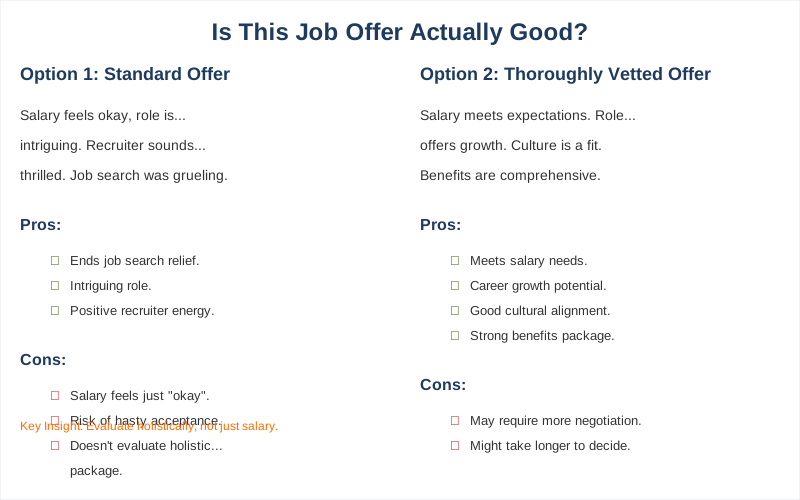
You just got the offer. The recruiter sounds thrilled, the role sounds intriguing, and the number on the page feels... okay? You're not entirely sure. This is the critical juncture where relief from ending a grueling job search can cloud judgment, leading to either hasty acceptance or prolonged, unfocused anxiety.

You just got the offer. The recruiter sounds thrilled, the role sounds intriguing, and the number on the page feels... okay? You're not entirely sure. This is the critical juncture where relief from ending a grueling job search can cloud judgment, leading to either hasty acceptance or prolonged, unfocused anxiety. Neither serves you. You need a systematic way to evaluate the entire offer, not just the salary. The 2026 job market is proving challenging, with 73% saying job searching is harder than ever. A bad offer doesn't just cost you money; it drains your time, energy, and career momentum. As one guide points out, a job offer is a comprehensive package of compensation, expectations, and culture that profoundly impacts your daily life. Failing to properly evaluate it can send you back to the market within a year, often with less confidence and a less appealing resume. Understanding how to evaluate a job offer effectively is paramount.

Beyond the initial salary figure, a truly good job offer encompasses a multitude of factors that contribute to your overall satisfaction and long-term career trajectory. It's crucial to assess not only the immediate financial compensation but also the less tangible aspects that can significantly impact your daily experience. This includes a thorough examination of benefits, such as health insurance, retirement plans, and paid time off, which can represent substantial hidden value. Furthermore, the offer should align with your desired work-life balance, offering reasonable expectations for hours and flexibility. Career growth potential is another vital component; a good offer will present clear pathways for advancement and opportunities to develop new skills. As highlighted by EPM Scientific, assessing salary, benefits, work-life balance, and career growth is key to evaluating offers confidently in their comprehensive guide. Considering how a new role might affect your ability to network is also important for long-term career health as suggested by Indeed. Therefore, approaching the evaluation with a holistic perspective, as recommended by Princeton's Center for Career Development in their coaching process, will help you make a truly informed decision.
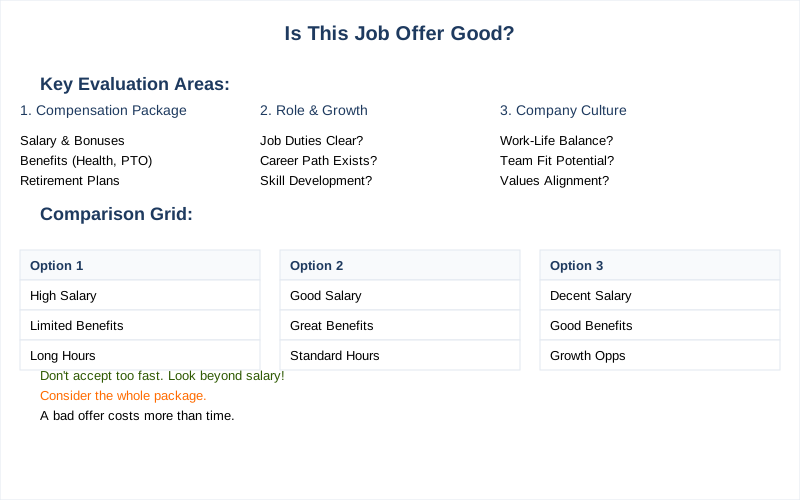
Infographic: Job offer comparison chart.
Key specifications for How to Know If a Job Offer Is Actually Good

The Real Answer

Recruiters evaluate job offers through a lens of fit and long-term value, not just immediate candidate relief. Your assessment must mirror this by looking beyond salary to the holistic package, including career growth, culture, and your ability to network, ensuring the offer aligns with your professional trajectory.

The biggest mistake candidates make is accepting too quickly out of sheer relief after a grueling job search. Remember, 73% say job searching is harder than ever 2026 Job Market Guide: What 48% Applying to 100+ Jobs Must Know, so the emotional pull to say "yes" is immense. However, a bad offer can cost you far more than just time and energy; it impacts career momentum and mental well-being.

When evaluating a job offer, think like a recruiter. They are assessing not just if you can do the job, but if you fit the team and organization long-term. This means scrutinizing the organization's culture, its mission and values, and its financial stability, as outlined by USC's Career Center What to Consider When Evaluating a Job Offer - USC Career Center. A role that underpays or burns you out will send you back to the market quickly, often with less confidence.

Salary is crucial, but it's rarely the sole determinant of a good job offer. Ideally, aim for a salary at least 10% above your current package, using resources like Glassdoor or Payscale to research market rates How to Evaluate a Job Offer Effectively - EPM Scientific. However, don't let a lower base salary blind you if the overall package-including bonuses, subsidized benefits like healthcare and childcare-is strong. Sometimes, a role with a slightly lower initial salary can offer a guaranteed and exciting career track with greater future rewards.

Beyond compensation, consider the work-life balance, commute, and opportunities for professional development. A role that negatively impacts your personal life or stunts your growth is rarely a good long-term bet. Also, assess how the position can affect your ability to network within the industry, a key factor in career progression 18 Important Considerations Before Accepting a Job Offer - Indeed. Focus on resilient roles and build skills that align with current demand Tips for Navigating the Job Market in 2026 - Concero.

Finally, look for red flags. A salary significantly below market value, vague expectations, or a company culture that feels off are major warning signs. You need a clear framework to distinguish between "negotiate harder" and "walk away" scenarios How to Know If a Job Offer Is Good (5 Red Flags to Watch For).

Understanding your rights can help you determine when it's time to leave your job.
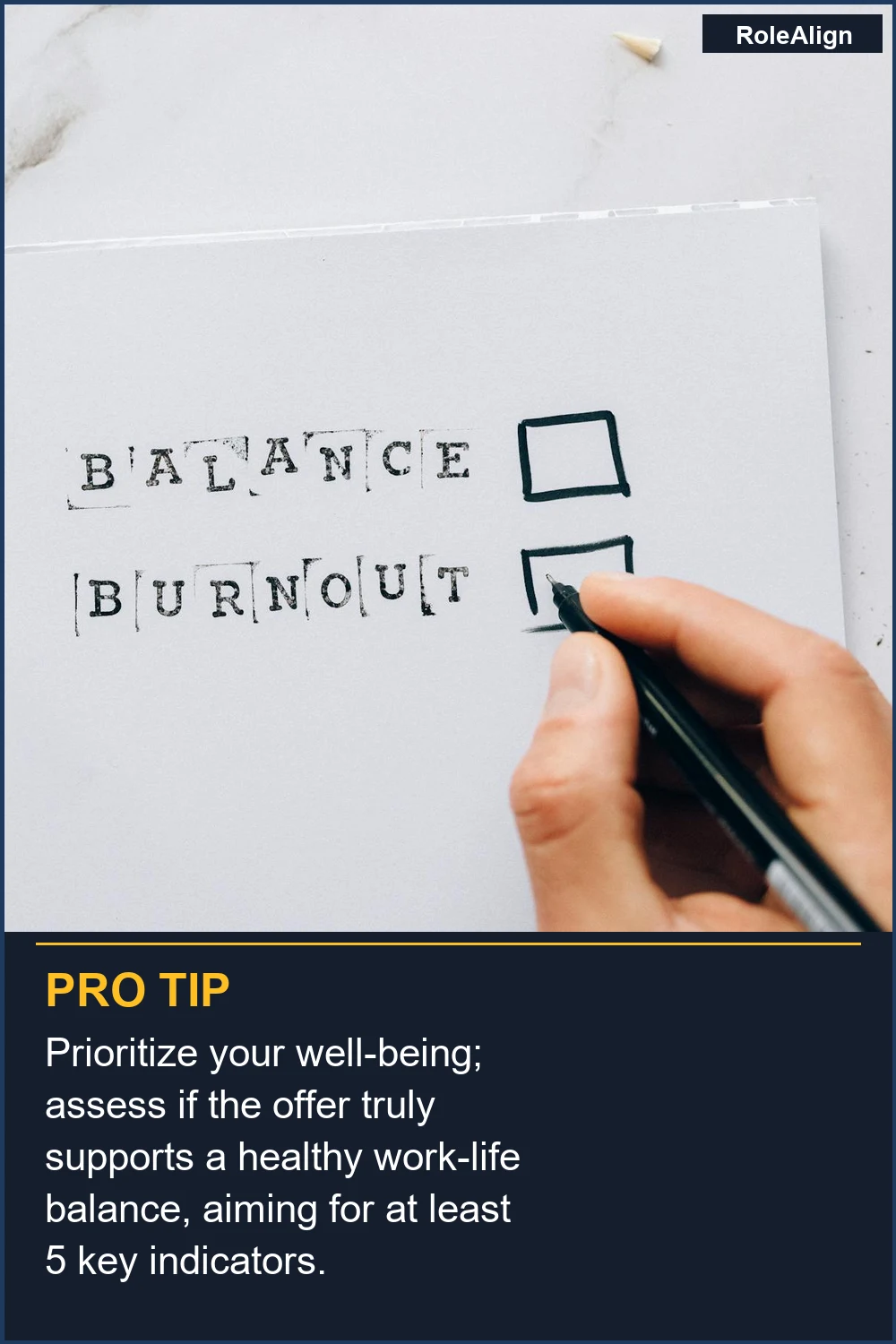
Prioritize your well-being; assess if the offer truly supports a healthy work-life balance, aiming for at least 5 key indicators.
Carefully consider your options before accepting a new role. Evaluating a job offer means looking beyond salary to ensure it aligns with your life priorities and overall well-being. | Photo by Nataliya Vaitkevich

What's Actually Going On

TOPIC: How to Know If a Job Offer Is Actually Good SECTION: details — ## What's Actually Going On

1
ATS parsing and recruiter screening - Job applications begin their journey through Applicant Tracking Systems (ATS), which parse resumes for keywords and qualifications. Recruiters then perform a rapid initial screen, typically spending only seconds on each application, looking for a match to the core requirements. 73% say job searching is harder than ever, making precise keyword alignment crucial. Understanding how these systems work is the first step in tailoring your application to increase your chances of getting noticed. This initial hurdle is often the most challenging, as systems are designed to filter out a large percentage of applicants before a human ever sees the resume. It’s not just about listing your skills; it’s about presenting them in a way that the ATS can easily identify and categorize.
2
Hiring committee decisions and company size - If an application passes the initial screens, it moves to a hiring manager and potentially a committee. For startups, decisions are often faster and more centralized, with founders or early employees heavily involved. Enterprise companies have more formalized processes, involving HR, department heads, and sometimes cross-functional teams. The USC Career Center highlights that evaluating the organization's history, reputation, and financial standing is key, especially in larger, more established companies. This means looking into company news, employee reviews on platforms like Glassdoor, and understanding their market position. A stable financial standing can indicate job security and potential for future growth, while a volatile one might signal risk. In startups, the enthusiasm and vision of the leadership team are often as critical as the product itself, so assessing their commitment and clarity of direction is paramount.
3
Industry and seniority nuances - In tech, the emphasis is often on technical skills and project portfolios. Finance roles prioritize analytical abilities and regulatory knowledge. Healthcare demands certifications and patient care experience. At senior levels, hiring committees look beyond technical skills to leadership potential, strategic thinking, and cultural fit. CareerCheck.io notes that a good job offer should reflect your capabilities and overall worth within the job market, ideally at least 10% above your current package. For instance, a senior engineer might be assessed on their ability to mentor junior staff and contribute to architectural decisions, not just their coding proficiency. Similarly, a sales director’s offer will be heavily influenced by their track record of exceeding targets and their strategic approach to market penetration. Understanding these industry-specific expectations is crucial for both preparing your application and evaluating the offer itself.
4
Evaluating the offer holistically - Beyond salary, consider benefits like health insurance, retirement plans, and paid time off. EPM Scientific emphasizes assessing work-life balance, commute, and potential for career growth. A role that offers less immediate pay but significant future upside or skill development can be more valuable. For example, a slightly lower salary might be offset by excellent professional development opportunities, such as tuition reimbursement for advanced degrees or paid attendance at industry conferences. The Indeed platform advises considering how the offer might affect your ability to network. A job with a strong internal network or one that encourages external professional engagement can be a significant long-term career asset. Think about whether the company culture fosters collaboration and whether your colleagues will be individuals you can learn from and build relationships with.
5
Red flags and negotiation points - Be wary of vague job descriptions, overly aggressive recruiters, or an offer that feels significantly below market rate. CareerCheck.io identifies salary significantly below expectations as a major red flag. Understanding your market value using resources like Glassdoor or Payscale is essential for effective negotiation. For instance, if the offer is 20% below the average for a similar role in your geographic location with your experience level, it warrants further investigation or negotiation. Concero suggests negotiating with flexibility, demonstrating an understanding of both your value and current hiring dynamics. This might involve negotiating for a signing bonus, additional vacation days, or a clear performance review timeline for a salary increase, rather than solely focusing on the base salary. The goal is to evaluate job offer details beyond the surface-level compensation and to approach the negotiation process strategically. Princeton University's Career Development Center also stresses the importance of understanding the nuances of the offer, including the specifics of stock options, bonus structures, and any contractual obligations.
Understanding the nuances of job offers can greatly enhance your ability to successfully approach job offer negotiation.
Prepare for recruiter screening by highlighting 3-5 key achievements on your resume that match the job description.
Professional discussions are key when understanding your potential new role. This interaction helps you evaluate job offer specifics and gauge company culture effectively. | Photo by Los Muertos Crew

How to Handle This

1
Benchmark the Salary - Recruiters present salary figures to align with market rates and the company's compensation bands. They expect you to have done your homework. If the offer is significantly below market, say 10% or more, it signals a potential disconnect or a company looking to cut costs. Skipping this means you might accept an underpaid role, forcing you back into the job market sooner than you'd like, potentially with a career gap. This is critical for all roles, but especially for mid-to-senior positions where your experience commands a higher price point. Research using Glassdoor and Payscale is essential.
2
Analyze the Full Benefits Package - Recruiters use benefits like healthcare, PTO, and retirement contributions as part of the total compensation to attract talent, especially when base salary is constrained. They want to see if you understand the comprehensive value of their offer. Ignoring benefits can lead to unexpected out-of-pocket expenses or a poor work-life balance, undermining the offer's true worth. For instance, a role with a slightly lower salary but excellent healthcare and generous PTO might be a better financial and lifestyle choice than a higher-paying job with minimal benefits, particularly if you have dependents or value your time off. Consider this holistically, as benefits can sometimes outweigh a lower salary offer according to USC Career Center.
3
Scrutinize Career Growth and Role Expectations - Companies extend offers with the expectation that you'll contribute and grow within the organization. They want to see if you're considering the long-term potential, not just the immediate paycheck. Failing to assess growth opportunities means you might accept a stagnant role where your skills become outdated, hindering future career advancement. For entry-level roles, clear paths for promotion and training are vital. For senior roles, look for opportunities to lead, innovate, or expand your influence. Understanding the pace of work and overtime requirements is also key to assessing if this is a good job offer.
4
Evaluate Company Culture and Stability - Recruiters aim to hire individuals who will fit into the company's ethos and contribute long-term. They signal culture through the interview process and the offer itself. Overlooking cultural fit or financial stability can lead to a toxic work environment or an unstable company, resulting in a premature departure and a negative mark on your resume. This is crucial in the 2026 market, where 73% say job searching is harder than ever according to the 2026 Job Market Guide. Research company reviews on platforms like Glassdoor and assess their recent financial performance.
Understanding how to avoid pitfalls can help you recognize what a dead end job truly entails.
Benchmark salary expectations by researching at least 3 comparable roles in your city to ensure a fair offer.
Contemplating your next career step is crucial. When you evaluate a job offer, consider if the salary aligns with market rates and your experience level. | Photo by Maksim Veter

What This Looks Like in Practice

  • Delayed Offer for Senior Data Scientist: A FinTech startup offered a competitive salary for a Senior Data Scientist, but the offer letter lacked stock option details and had a vague start date. This indicated potential internal disarray How to Know If a Job Offer Is Good (5 Red Flags to Watch For). The candidate's persistence in seeking clarification on equity and a firm start date led to a revised offer. Accepting the initial offer without due diligence would have risked an unfavorable equity package or prolonged waiting period.
  • "Too Good to Be True" Offer for Entry-Level Marketing Coordinator: A large CPG company offered an entry-level Marketing Coordinator a surprisingly high base salary and extensive benefits, exceeding industry benchmarks How to Evaluate a Job Offer Effectively - EPM Scientific. Concerns arose about potential downsides like long hours or a high-pressure culture. The candidate's research on company culture via Glassdoor and conversations with current employees verified work-life balance and satisfaction. Solely focusing on compensation without investigating intangible aspects would have been a mistake.
  • Career Pivot Offer for Product Manager: A candidate transitioning into Product Management from a non-technical field received an offer from a Series A SaaS company. While the salary was below their previous earnings, it included significant equity and a clear path for professional development and mentorship, trading immediate compensation for long-term growth concero.com. The candidate's success came from defining financial needs, negotiating equity for long-term goals, and securing training commitments. Accepting without understanding the equity's true value or development commitment would have been detrimental.
  • Under-Market Offer for Mid-Level UI/UX Designer: A UI/UX Designer received an offer significantly below the market rate for their experience and location, despite accounting for benefits uw.edu. The recruiter's emphasis on "great company culture" and "exciting projects" was vague. The designer succeeded by using salary research tools (Payscale, Glassdoor) to build a negotiation case, highlighting skills and portfolio achievements. Accepting the offer at face value would have led to financial strain and resentment.

Understanding the implications of a job offer can also involve knowing what might appear in a background check.
Clarify all offer components, including start dates and benefits, asking for at least 2 specific details if unclear.
During a formal interview, understanding the full scope of the offer is vital. This is your chance to ensure all aspects of the good job offer are transparent. | Photo by Tima Miroshnichenko

Mistakes That Kill Your Chances

Mistake Overemphasizing Salary Alone
Why candidates make it Relief from the job search and immediate financial impact make salary the primary focus.
What recruiters actually see Candidates who only discuss salary appear one-dimensional and may signal they're only motivated by money, not the work itself.
The fix Treat the offer as a holistic package, not just a paycheck. Research benefits like PTO, health insurance, and retirement plans, and factor in career growth opportunities.
Mistake Accepting Too Quickly
Why candidates make it The relief of ending a long job search leads many to accept offers without proper evaluation, especially in a tough market where 73% say job searching is harder than ever.
What recruiters actually see A candidate who jumps too fast can signal desperation or a lack of critical thinking.
The fix Always ask for time to consider the offer. A reasonable request is 24-48 hours. Evaluate the offer against your needs and career goals.
Mistake Ignoring Company Culture and Values
Why candidates make it Candidates often focus on tangible aspects like salary, overlooking company culture.
What recruiters actually see A mismatch in culture is a primary reason for early turnover. Recruiters know a misaligned candidate will likely be unhappy and disengaged.
The fix Dig deep into the organization's mission, values, and overall culture. Look at employee reviews, talk to employees if possible, and pay attention to interview interactions. A good offer aligns with your personal values.
Mistake Failing to Negotiate Beyond Salary
Why candidates make it Many candidates believe negotiation is solely about base salary, unaware other elements can be negotiated.
What recruiters actually see Candidates who don't explore negotiation beyond salary might be seen as lacking confidence. Recruiters often have flexibility in other areas.
The fix Explore non-salary compensation and benefits. Negotiate extra vacation days, professional development stipends, flexible work arrangements, or a signing bonus. Negotiate with flexibility.
Mistake Ignoring Career Growth Potential (Especially for Mid-Career Professionals)
Why candidates make it Mid-career professionals might prioritize immediate compensation, overlooking the long-term impact of a lack of advancement opportunities.
What recruiters actually see Recruiters look for ambitious, growth-oriented candidates. An offer without a clear path for advancement might be seen as a short-term fix.
The fix Scrutinize the promotion path and learning opportunities. Ask about career progression, training programs, and employee development support. A good offer should set you up for future success.
Mistake Underestimating the Importance of Work-Life Balance (Especially for New Grads)
Why candidates make it New graduates, eager to prove themselves, might accept roles with demanding hours, believing it's a necessary sacrifice.
What recruiters actually see Burnout leads to poor performance and high turnover. Recruiters seek sustainable contributors, not those who will flame out quickly.
The fix Clarify expectations around working hours and flexibility. Understand the typical workday, overtime frequency, and the company's stance on work-life integration. A sustainable career requires a role that respects your personal time and well-being, contributing to a good work-life balance.
Navigating job offers can be tricky, especially if you find yourself overqualified for a position.
Infographic: Job offer pros and cons.
Product comparison for How to Know If a Job Offer Is Actually Good

Key Takeaways

  • Don't accept an offer out of relief. After a tough job search, where 73% say searching is harder than ever, it's tempting to say yes immediately. But a bad offer costs time, energy, and career momentum, often sending you back to square one within a year How to Know If a Job Offer Is Good (5 Red Flags to Watch For).
  • Evaluate the full package, not just salary. Consider benefits like healthcare and PTO, as well as growth potential and work-life balance. Sometimes, a strong benefits package can offset a slightly lower base salary What to Consider When Evaluating a Job Offer.
  • Research market rates diligently. Your salary should reflect your worth, ideally at least 10% above your current package. Use resources like Glassdoor and Payscale to ensure the offer aligns with industry standards How to Evaluate a Job Offer Effectively.
  • Focus on impact and resilience. In the current market, employers want proof of outcomes. Emphasize quantifiable results and build skills that align with demand to negotiate with flexibility Tips for Navigating the Job Market in 2026.
  • The single most important thing a recruiter would tell you off the record? Never accept an offer if you have significant doubts; it's always better to keep looking.
Mastering cold emails can also help when you’re ready to negotiate your salary; learn how with our guide on asking for a raise.

Frequently Asked Questions

How do I know if a job offer is actually good?
To determine if a job offer is truly good, go beyond just the salary. Consider the entire package, including benefits, work-life balance, and opportunities for career growth. A strong offer will align with your financial needs and future aspirations, not just provide immediate relief from a job search.
What are the key signs of a good job offer?
Look for a salary that meets or exceeds industry standards, ideally at least 10% above your current package, and a comprehensive benefits plan including healthcare, retirement, and ample paid time off. Also, assess if the role offers opportunities for professional development and aligns with your long-term career goals.
Besides salary, what else should I consider when evaluating a job offer?
Evaluate the company culture, the pace of work, and potential for overtime, as these significantly impact your daily life. Research the organization's stability and reputation, and consider the commute time and cost. A good offer also provides clarity on advancement opportunities and training.
What are some red flags that might indicate a job offer isn't as good as it seems?
Be wary of offers with significantly lower salaries than market rate, vague or minimal benefits, or a lack of clarity on the role's expectations and responsibilities. A rushed offer process or pressure to accept immediately can also be warning signs that something is amiss.
How do I compare a job offer to industry standards?
Use online resources like Glassdoor, Payscale, and Salary.com to research typical salaries and benefits for similar roles in your geographic area and industry. Comparing offers against these benchmarks will help you understand if you're being compensated fairly.

Sources

Related Articles