Internal Referrals: How They Actually Work in Hiring (The Inside Mechanics)

RoleAlign Team
13 min read
Includes Video

You just got another rejection email, the polite kind that says "while your qualifications are impressive, we've decided to move forward with other candidates." Staring at your screen, you wonder if that job board application even made it past the Applicant Tracking System (ATS).

You just got another rejection email, the polite kind that says "while your qualifications are impressive, we've decided to move forward with other candidates." Staring at your screen, you wonder if that job board application even made it past the Applicant Tracking System (ATS). Meanwhile, your former colleague, Sarah, just landed a sweet gig at a startup. How? She told you her friend, Mark, who works there, put in a referral. This isn't magic; it's how employee referrals actually work in hiring. While only 6% of job applications are submitted with referrals, they account for a whopping 45% of all hires The Power of Employee Referrals in Today's Job Market - LinkedIn. Referred candidates have a 30% hire rate compared to just 7% from job boards Recruitment Referral Statistics 2026 | Top Hiring Metrics - SalesSo. This disproportionate impact isn't about skipping the line entirely, but about a trusted signal cutting through the noise. In fact, a referred candidate is 4x more likely to receive a job offer than someone applying directly through a company website Recruitment Referral Statistics 2026 | Top Hiring Metrics - SalesSo. But it's not just about a name in the hat; the quality of that internal relationship is paramount.

The Real Answer

Employee referrals are a recruiter's secret weapon, not just a nice-to-have. They bypass much of the initial ATS noise because the referring employee acts as a pre-filter, vouching for basic qualifications and cultural fit.

Forget the idea that a referral automatically lands you an interview. What it *actually* does is get your resume noticed. Recruiters are drowning in applications; a referral means your resume might get a second look, especially if it comes from a trusted colleague. Referred candidates have a 30% hire rate versus 7% from job boards SalesSo, which is a massive difference. This isn't magic; it's the result of an employee's implicit endorsement.

Referral bonus structures vary wildly, but they're designed to incentivize employees to actively look for and submit *good* candidates, not just anyone. Think of it as a performance bonus for talent scouting. Companies often pay out bonuses only after the referred candidate is hired and has passed their probationary period, ensuring quality.

While many assume referrals bypass the Applicant Tracking System (ATS) entirely, it's more nuanced. A referral often means your resume is flagged or manually reviewed by a recruiter *before* it gets deep into the ATS screening. This is especially true for roles where quality is paramount. However, if the referrer doesn't know you well or the role is highly technical, the referral might not carry as much weight, and you'll still be subject to standard ATS parsing.

Referrals can backfire if the referring employee has poor judgment or a strained relationship with the company. If you're referred by someone who is disengaged or has a negative reputation, that referral can actually hurt your chances. The quality of the referring relationship matters more than the referral itself because it's a proxy for how well you might fit the company culture and role requirements.

Ultimately, a referral is a signal of trust. It tells the recruiter, "I know this person, and I believe they can do the job and fit in." This is why, despite only 6% of applications coming from referrals, they account for 30-50% of hires SalesSo. It's about leveraging internal networks for higher-quality, faster hires, saving companies significant time and money compared to sourcing from job boards SalesSo.
To understand why referrals outperform traditional methods, explore the data in our article on employee referrals vs. applications.
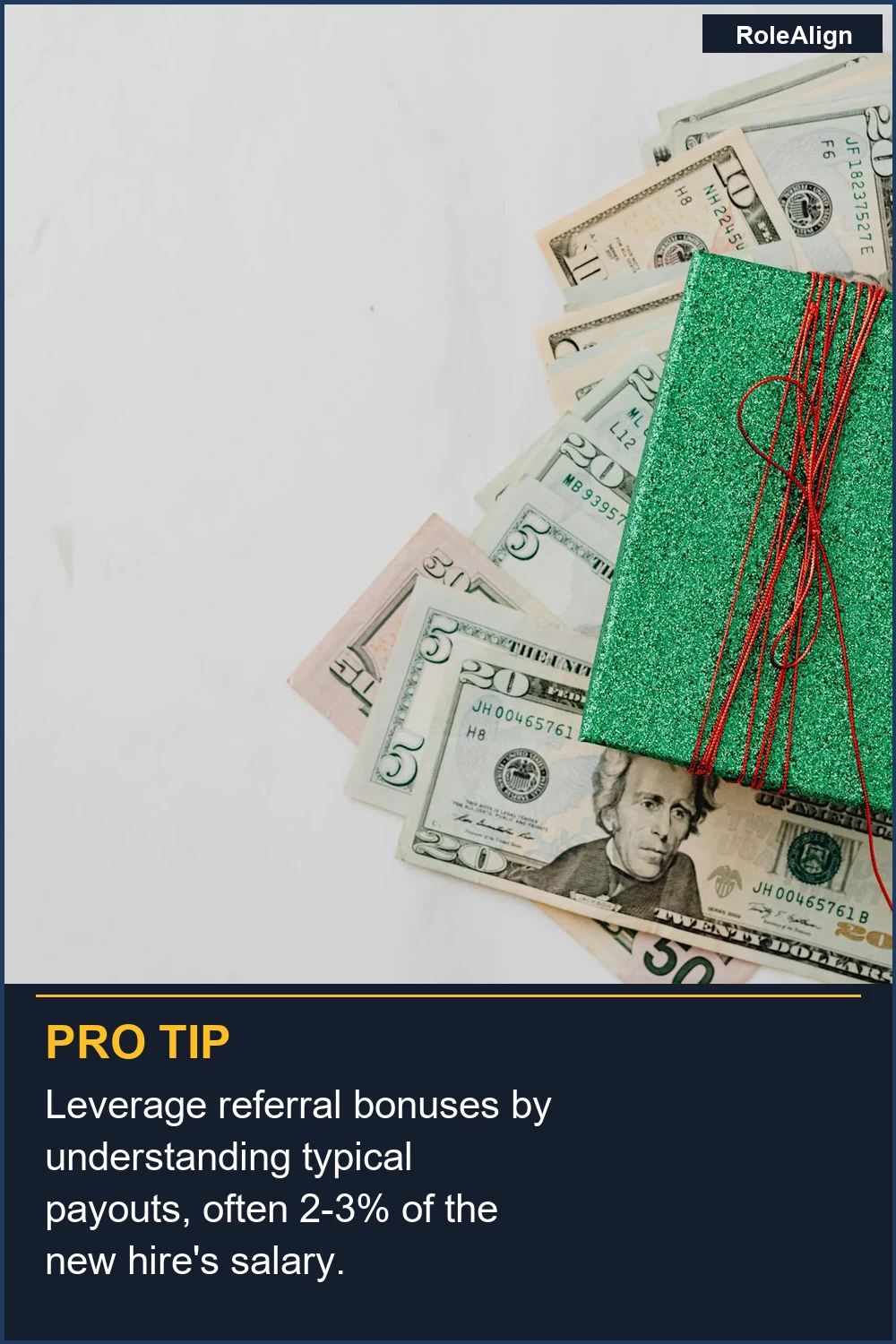
Leverage referral bonuses by understanding typical payouts, often 2-3% of the new hire's salary.
Monetary rewards like gift boxes full of cash highlight the financial incentives behind employee referral bonus programs. | Photo by www.kaboompics.com

What's Actually Going On

1
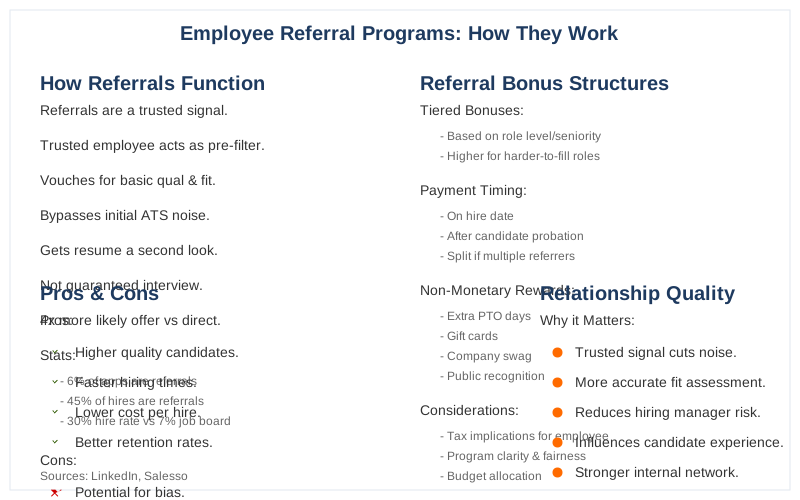
Referral Bonus Structures - Companies offer cash bonuses, gift cards, or extra vacation days for successful hires. Bonuses range from a few hundred to several thousand dollars, often 2-3% of the new hire's salary (vs. agency fees of 20-30% SalesSo). Some programs tier bonuses by role seniority or post-probationary employment. This monetary incentive drives employee participation.
2
ATS Screening and Referrals - While an ATS doesn't automatically bypass its keyword parsing, a referral often flags a resume for human review earlier. Overwhelmed recruiters prioritize referred candidates, who are statistically more likely to be a good fit. Referred candidates account for 45% of hires, despite being only 7% of applicants LinkedIn.
3
When Referrals Backfire - A referral backfires if the referrer hasn't vetted the candidate, leading to a poor cultural or technical fit. This reflects poorly on the referrer and the hiring process. Referred hires who leave quickly or perform poorly waste recruiter and hiring manager resources. Some companies see a 1 in 10 referral-to-hire conversion rate SHRM.
4
The Quality of the Relationship Matters Most - A referral from a trusted colleague or manager carries more weight than a casual acquaintance's recommendation. The referring employee puts their reputation on the line. The quality of the referring relationship is paramount. A strong referral means the referrer genuinely believes the candidate will excel and align with company values, making them a trusted candidate simplicant.com.
5
Industry and Company Size Differences - Tech startups often rely heavily on referrals with less formal processes. Enterprise organizations have more structured programs and stricter vetting. Finance and healthcare, with compliance needs, have nuanced criteria. For senior roles, a referral from a respected industry peer can bypass initial screening stages.
6
Recruiter Screening Dynamics - Recruiters scan resumes for keywords, experience, and education. For referred candidates, they seek quick validation of skills and cultural fit. They ask: "Does this person have the basic qualifications, and does the referrer's reputation suggest they'll fit?" Referred candidates are 15 times more likely to get hired Boterview.
7
Hiring Committee Decisions - Hiring committees weigh referrals heavily, especially from respected team members or leadership. They view referrals as lower-risk hires, speeding up decisions. The trust factor is immense; a strong recommendation can significantly influence a committee's perception before the candidate even speaks.
Understanding referral bonus structures can significantly enhance your strategy, as discussed in our article on employee referrals.
Explore diverse bonus structures beyond cash, such as extra vacation days, to reward valuable referrals.
Financial incentives, from cash to gift cards, are key to understanding how employee referral bonus programs work. | Photo by www.kaboompics.com

How to Handle This

1
Get referred by a trusted insider - This is your primary accelerator. Referrals account for 30% of hires versus 7% from job boards SalesSo, and a single referral can be 4x more likely to get an offer than a direct applicant SalesSo. The key is the *quality* of the referral relationship. A casual acquaintance is less impactful than a colleague who has worked directly with you and can vouch for your skills and cultural fit. Recruiters trust these referrals implicitly because the referrer has skin in the game; their reputation is on the line.

What goes wrong if you skip this: You're relegated to the general applicant pool, where your resume is 15 times less likely to be seen, let alone hired Boterview. Your application gets buried in the ATS, potentially never reaching a human reviewer.

2
Submit your referral through the proper channel, ASAP - Once you have a referrer, ask them to submit your name *immediately* after the job is posted, ideally through a dedicated referral portal or a quick text/email. Many companies send referral notifications via text, driving 42.4% of referral hires Eqorefer. The goal is to get your name flagged *before* you apply directly.

Why it works: Recruiters often have filters set up to flag referred candidates, bypassing the initial ATS screening. This is especially true for niche or senior roles where quality is paramount. For more junior roles, it might just mean your application gets a quick human scan instead of a full ATS parse.

What goes wrong if you skip this: If you apply directly first, your referral might be ignored or seen as less genuine. The system might already have you tagged as a direct applicant, negating the referral's impact.

3
Understand the referral bonus structure and its impact - Companies offer referral bonuses (typically 2-3% of the new hire's salary SalesSo) to incentivize employees. This bonus is a significant driver for referrers. A good referrer will actively advocate for you if they believe you're a strong candidate because they want that bonus.

Why it works: The bonus payment is contingent on the referred candidate being hired and staying for a probationary period (often 90 days). This ensures referrers are motivated to recommend candidates who are genuinely qualified and will be successful long-term, not just warm bodies.

What goes wrong if you skip this: If your referrer doesn't understand the bonus structure or isn't motivated, they might submit your name perfunctorily without any follow-up or genuine advocacy. This turns a potential superpower into a missed opportunity.


If you find yourself without connections, explore strategies in our article on getting a job with no connections.
Build strong professional relationships to increase your chances of receiving a trusted referral, which can bypass ATS screening.
Teamwork and trusted relationships are crucial, as referrals account for 30% of hires, significantly boosting your chances. | Photo by Pavel Danilyuk

What This Looks Like in Practice

  • Senior Software Engineer at a Series B Startup A referral from a trusted engineer at a fast-growing startup is gold. The referring engineer vouches for your technical chops and cultural fit. This often means your resume bypasses the initial ATS screening, landing directly in the hiring manager's inbox. The referring engineer might even coordinate an informal chat before the official interview process, giving you a massive advantage. A referred candidate, despite not having an exact match for a niche skill, was fast-tracked due to the strong referral, landing the role in under three weeks.
  • Entry-Level Data Analyst at a Fortune 500 Here, referrals get your resume a second look. While your resume will still pass through the system, a referral flags it for recruiters. The referring employee might talk to HR to highlight your potential, ensuring your application isn't lost. However, if the referrer doesn't know you well, the referral can fall flat. One candidate was referred for an analyst role but lacked specific SQL experience; despite the referral, they were screened out at the technical assessment stage because the referrer couldn't accurately gauge their skills. Referred candidates have a 30% hire rate versus 7% from job boards .
  • Career Changer from Teaching to Product Management The quality of the relationship is paramount. A referral from someone who knows your transferable skills and drive is crucial. They need to articulate *why* you'd be a great PM, not just that you know someone. Without this, the referral is weak. A strong referral can help you secure an informational interview or a chance to explain your pivot, but it won't magically give you product management experience. One teacher-turned-PM candidate was referred by a former colleague who had seen her lead curriculum development projects, effectively highlighting her product thinking skills. This led to an interview where she could demonstrate her aptitude, resulting in a successful hire.
  • Mid-Level Marketing Manager at a SaaS Company Referrals here often mean a quicker interview loop. The referring colleague can attest to your understanding of marketing principles and your ability to collaborate. This can lead to you being fast-tracked past initial phone screens and straight into interviews with team leads or directors. If the referral is purely transactional, and the referrer doesn't truly believe in your capabilities, interviewers will see through it. A candidate referred for a marketing manager role received an interview within two days of submission. The hiring manager mentioned the referrer had specifically highlighted their campaign strategy skills, which proved accurate in the interview.

Understanding how referrals influence hiring can also shed light on how candidates find jobs in today's market.
Aim for a referral from a senior colleague; their vouching power can significantly accelerate your application.
A strong handshake represents the power of a good referral, often bypassing initial ATS screening for referred candidates. | Photo by Bia Limova

Mistakes That Kill Your Chances

Symptom You assume a referral guarantees an interview bypass.
Signal Your application is marked "received" but never progresses, or you get a generic rejection.
Fix A referral is a strong signal of quality, not an elimination of process. Recruiters still need to assess your fit. Provide your referrer a concise summary of why you're a great match for the specific role.
Symptom You ask for a referral without providing context or making it easy for your contact.
Signal Long silences or a polite brush-off. The referral never materializes.
Fix Do the homework for them. Provide your contact with your updated resume, the job description link, and bullet points of your most relevant skills for *that specific role*. This makes it effortless for them to champion you. Referred candidates have a 30% hire rate vs 7% from job boards Recruitment Referral Statistics 2026 | Top Hiring Metrics - SalesSo, but only if the referral is actionable.
Symptom You lean on a weak or transactional relationship for a referral.
Signal The referral feels perfunctory. The referrer can't speak to your work ethic or cultural fit, leading to skepticism.
Fix Cultivate genuine relationships. The best referrals come from colleagues who have worked with you directly and can vouch for your performance and team dynamics. A casual acquaintance is less impactful than a manager who knows your capabilities intimately. The quality of the referring relationship is paramount; it's about trust, not just a name.
Symptom You assume your referral automatically skips the Applicant Tracking System (ATS).
Signal Your application still goes through the initial ATS screening, and you see no movement.
Fix Referrals often get a priority review, but rarely bypass the ATS entirely. The system flags them, but a recruiter still evaluates your profile. Ensure your resume is ATS-friendly and highlights keywords from the job description. Only 6% of all job applications are submitted with referrals, yet they are incredibly effective 6 Must-Know Employee Referral Statistics (2026) - Boterview.
Symptom As a senior candidate, you expect your referral to carry more weight than it does.
Signal You're told your experience is "great, but not quite what we're looking for," despite a strong referral.
Fix Even at senior levels, a referral is an endorsement, not a guarantee. Recruiters and hiring managers seek a precise match for the role's unique challenges. Your referrer should articulate *how* your specific senior-level experience directly addresses the company's current needs, not just your general background.
Symptom As a new grad, you think any referral is better than none.
Signal You get referrals from people who don't know you well, and the hiring manager notes a lack of concrete examples.
Fix For new grads, a referral from someone who can speak to your potential, work ethic, and eagerness to learn is key. This might be a professor, a former internship supervisor, or a mentor. They need to provide qualitative context beyond just your GPA or coursework. Recruiters often see referred candidates as higher quality, but that quality must be demonstrable The Power of Employee Referrals in Today's Job Market - LinkedIn.
Understanding these mistakes can also shed light on why you might be overlooked for opportunities, as discussed in internal promotions.
Employee referral program pros, cons, bonuses, ATS impact, and relationship value.
Comparison overview for How employee referral programs actually function inside companies, including referral bonus structures, how referrals skip or accelerate ATS screening, when referrals backfire, and why the quality of the referring relationship matters more than the referral itself.

Key Takeaways

Understanding the dynamics of referrals can also shed light on why companies often turn to recruitment agencies for hiring.

Frequently Asked Questions

How do companies actually use employee referrals to find new hires?
Companies typically have a formal process where employees can submit candidates for open roles, often through an internal portal or a dedicated HR system. When you refer someone, your company's recruiting team gets a notification, and the referred candidate's resume is often flagged. This isn't just a casual suggestion; it's a structured way to tap into your network for talent.
Do job referrals really help you get hired, or is it just a myth?
Yes, job referrals significantly boost your chances. Referred candidates are hired 30% of the time compared to just 7% for applicants from job boards, according to SalesSo data Source Name. They're also 15 times more likely to be hired overall Source Name, meaning your chances go from slim to substantially better.
What's the typical payout for referring someone who gets hired?
Referral bonuses vary wildly by company and role, but a common range is 2-3% of the new hire's annual salary, or a flat amount anywhere from $500 to $5,000. Some tech companies might offer higher bonuses for critical or senior roles. It's usually paid out after the referred employee has been with the company for a set period, like 90 days, to ensure they stick around.
Does getting referred mean my resume skips the Applicant Tracking System (ATS) screening?
It's not usually a complete bypass, but referrals often get a significant head start. While the ATS might still ingest the resume, a referral means a recruiter or hiring manager is likely to see it manually before it gets heavily filtered by algorithms. This human touch can overcome minor ATS oversights or keyword misses that might otherwise disqualify you.
When can an employee referral actually backfire on me or the company?
A referral can backfire if the referrer doesn't know you well and recommends you for a role you're not suited for, or if you don't perform well once hired. This reflects poorly on the referrer and can damage their reputation within the company. It also creates extra work for recruiters if the candidate is a poor fit, making them less likely to trust future referrals from that employee.
Why does the quality of the relationship matter more than just sending my resume?
The person referring you is essentially vouching for you. If it's a strong, trusted relationship, the referrer will usually provide context to the hiring team about your skills and cultural fit that isn't on your resume. A weak or transactional referral, where the referrer doesn't truly know you, carries much less weight and is more likely to be treated as just another application.
How should I ask for a job referral without sounding desperate?
Instead of just asking for a referral, try a more strategic approach. Share your resume and a specific job you're interested in, and ask if they think you'd be a good fit and if they'd be comfortable recommending you. Mentioning something specific about the role or company that excites you can also help. This shows you've done your homework and respect their judgment.
Are referred candidates really better employees, or is that just what companies want to believe?
The data suggests referred employees tend to perform better and stay longer. Referred employees are 33% more likely to be top performers than those hired through other channels Source Name, and they have significantly higher retention rates. This is often because the referrer has a good understanding of the company culture and the candidate's fit.

Sources

Related Articles