How Do Candidates Find Jobs: Insights from the Insider's Perspective
RoleAlign Team
11 min read
Includes Video
You just got that polite rejection email, the one that feels like a digital slap in the face. Or maybe you're staring at your LinkedIn profile, wondering how recruiters even find you when you're not actively looking. The truth is, how candidates find jobs is a much more nuanced game than most people realize, and the "apply button" is often the least effective move.
You just got that polite rejection email, the one that feels like a digital slap in the face. Or maybe you're staring at your LinkedIn profile, wondering how recruiters even find you when you're not actively looking. The truth is, how candidates find jobs is a much more nuanced game than most people realize, and the "apply button" is often the least effective move.
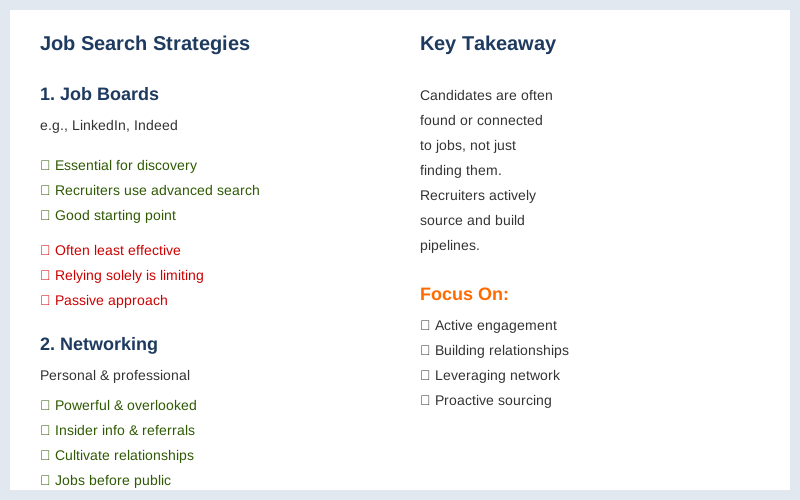
Forget the idea that simply scrolling job boards is enough. While platforms like LinkedIn and Indeed are essential for initial discovery, relying solely on them is like fishing in a puddle. Recruiters, for instance, actively use LinkedIn's advanced search to identify candidates, often looking for recent activity Strategies For Job Seekers: Best Practices For A Strategic Job Hunt. The real magic happens when you tap into your existing network. Personal and professional connections remain a powerful, often overlooked, avenue for discovering opportunities, even in today's digital-first world The Ultimate Job Search Guide. This isn't about generic networking; it's about cultivating relationships that can lead to insider information and referrals before a job is even posted publicly.
The Real Answer
Candidates don't "find" jobs as much as they are "found" or "connected" to them, and the most effective methods are often the least obvious. Recruiters are not just passively waiting for applications to flood in; they are actively sourcing and building pipelines.
Forget the passive scrolling and endless "apply now" clicks. The real job search engine isn't always a job board. While platforms like LinkedIn, Indeed, and Monster are essential, they are often just the starting point for both candidates and recruiters. Recruiters are leveraging advanced search filters on LinkedIn, and you should too, to mimic their approach and find roles before they're widely advertised Harvard Business Review. This means understanding how hiring managers use LinkedIn to search for candidates, often by copying job descriptions to identify relevant keywords and skills Harvard Business Review.
The most successful candidates understand that networking remains king. Tapping into your personal and professional networks, attending industry meet-ups, and seeking informational interviews are critical Challenger, Gray & Christmas, Inc.. Recruiters rely heavily on referrals because they often yield higher-quality candidates who are already vetted to some extent. Don't underestimate the power of a warm introduction; it bypasses the ATS black hole.
Beyond active searching, cultivate your online visibility. Recruiters are constantly scanning professional platforms like LinkedIn for potential candidates, especially those with recently updated profiles or activity Challenger, Gray & Christmas, Inc.. Ensure your profile accurately reflects your skills and experience, and consider engaging with content relevant to your target industry or roles. This makes you discoverable when recruiters conduct targeted searches.
Finally, remember that a strategic mindset is crucial. Understand your own strengths and career goals before diving in Tufts Alumni & Friends. Review job postings not just to apply, but to learn about employer expectations and required qualifications University Career Center. This proactive approach, combining digital tools with genuine human connection, is how candidates truly find jobs.
To enhance your chances of being discovered, consider exploring insights for the employment agency job seeker in navigating the recruitment landscape through effective strategies.
Discover how candidates find jobs by understanding that recruiter pipelines and connections are key, not just passive applications. Over 70% of opportunities arise from networking.
| Photo by Lukas Blazek
Discover how candidates find jobs by understanding that recruiter pipelines and connections are key, not just passive applications. Over 70% of opportunities arise from networking.
| Photo by Lukas Blazek
What's Actually Going On
1
ATS parsing is the first hurdle - Most candidates assume their resume lands on a recruiter's desk. Wrong. It hits an Applicant Tracking System (ATS) first. Systems like Greenhouse, Workday, or Taleo scan for keywords matching the job description. If your resume lacks specific terms or is formatted poorly (think tables, graphics, or unusual fonts), it might get rejected before a human ever sees it. Recruiters often configure these systems, setting minimum keyword thresholds. This is why tailoring your resume with precise language from the job posting is non-negotiable. Jobvite highlights the importance of this initial screening.
2
Recruiters screen for fit, fast - Once an application passes the ATS, a recruiter spends mere seconds on your resume. They're not looking for your life story; they're hunting for proof you can do the job and fit the team. This means quickly identifying relevant experience, quantifiable achievements, and cultural alignment. For startups, this might mean looking for a "jack of all trades" who can wear multiple hats. Enterprise companies often seek specialized skills and a proven track record within their specific industry. Forbes emphasizes strategic job hunting, and that starts with making a recruiter's job easy.
3
Hiring committees review for potential - If you make it past the recruiter, you'll likely face a hiring committee or the hiring manager. This is where deeper evaluation happens. They're assessing not just your technical skills but your problem-solving abilities, communication style, and how you'll integrate with the team. For senior roles, expect scrutiny on leadership potential and strategic thinking. In tech, this often involves coding challenges and in-depth technical interviews. In finance, it's about analytical rigor and market understanding. In healthcare, it's clinical competency and patient care philosophy. Tufts Alumni notes that strong interviewing skills are crucial for articulating your value.
4
Networking is still king, but digital - While job boards and company career pages are common starting points, personal and professional networks remain incredibly powerful. Recruiters actively search platforms like LinkedIn, using advanced search filters to find passive candidates. Challenger, Gray & Christmas stresses that while digital tools are essential, interpersonal aspects are key. Referrals often get prioritized because they come with a pre-vetted endorsement. Building a strong online presence on platforms like LinkedIn makes you discoverable, especially for specialized roles.
Understanding ATS parsing can be crucial for success in tech roles, as detailed in our article on IT professional recruitment.
Navigating the job market means understanding the ATS. Candidates must optimize their resumes to pass this initial digital screening process effectively.
| Photo by MART PRODUCTION
Navigating the job market means understanding the ATS. Candidates must optimize their resumes to pass this initial digital screening process effectively.
| Photo by MART PRODUCTION
How to Handle This
1
Research the job description thoroughly - Dissect the posting. Identify keywords for skills, technologies, and responsibilities. Recruiters use Applicant Tracking Systems (ATS) like Workday or Greenhouse to scan for these terms. If your resume doesn't match, it's filtered out.
What goes wrong if you skip it: Your application is a needle in a haystack, discarded by ATS filters or a quick recruiter scan. Recruiters prioritize resumes mirroring job requirements for a strong fit.
2
Leverage LinkedIn strategically - Recruiters search talent on LinkedIn using advanced filters, often looking for recent activity [How Do Candidates Search for Jobs? Here Are Ways to Find Top Talent]. Ensure your profile is complete, professional, and mirrors your resume. For senior or specialized tech roles, recruiters bypass job boards and search LinkedIn directly.
What goes wrong if you skip it: You're invisible to recruiters actively sourcing candidates. A passive profile means missing opportunities that never get posted publicly, especially for niche or high-demand roles.
3
Tap into your network and referrals - Referrals increase your interview chances significantly. A recommendation from a current employee is a pre-vetted endorsement. This is critical for startups or companies valuing cultural fit. [The Ultimate Job Search Guide] notes interpersonal aspects remain critical.
What goes wrong if you skip it: You compete against candidates with an internal advocate. Recruiters often prioritize referrals, meaning your application might languish without that initial introduction.
4
Apply early and follow up intelligently - Apply as soon as a job is posted; the initial applications are often reviewed first. If you don't hear back within a week or two, a polite, specific follow-up email to the recruiter or hiring manager can be effective. Avoid generic messages.
What goes wrong if you skip it: Your application gets buried, and you miss the window when recruiters actively review new candidates. Lack of follow-up can signal disinterest.
When learning how candidates find jobs, remember the importance of detailed research. Thoroughly dissecting job descriptions helps identify crucial keywords for ATS.
| Photo by cottonbro studio
When learning how candidates find jobs, remember the importance of detailed research. Thoroughly dissecting job descriptions helps identify crucial keywords for ATS.
| Photo by cottonbro studio
What This Looks Like in Practice
Senior Software Engineer at a Series B Startup: This candidate leveraged LinkedIn for direct outreach to engineering managers and recruiters, bypassing the ATS entirely. They also actively participated in relevant open-source projects, which led to inbound interest from a technical lead. What worked was the proactive networking and showcasing of technical contributions, demonstrating immediate value beyond a resume. Applying through standard job boards yielded minimal results, reinforcing the idea that direct engagement is key for senior tech roles. The Ultimate Job Search Guide highlights the importance of personal networks.
Entry-Level Data Analyst at a Fortune 500: This individual focused on optimizing their resume for ATS keywords, meticulously matching their skills to job descriptions. They also utilized university career services and attended virtual career fairs, which provided structured opportunities to connect with recruiters. While many applications went unanswered, the strategic keyword alignment resulted in a few interviews. The lack of direct industry experience was a hurdle, making generic applications less effective than those targeting specific company needs. How Do Candidates Search for Jobs? notes how candidates find top talent.
Career Changer from Teaching to Product Management: This candidate invested heavily in building a portfolio of product management projects and completed relevant online certifications. They then targeted companies known for hiring individuals with transferable skills, actively seeking out hiring managers on LinkedIn for informational interviews. This approach provided valuable insights and direct feedback, leading to a successful transition. Purely submitting resumes to generic PM roles was ineffective because it failed to showcase their newfound capabilities and understanding of the product lifecycle. Strategies For Job Seekers emphasizes strategic hunting.
To better understand how these AI tools enhance the hiring process, explore the article on modern talent sourcing.
See how candidates find jobs by bypassing traditional methods. This image represents candidates actively preparing for interviews after successful direct outreach on platforms like LinkedIn.
| Photo by RDNE Stock project
See how candidates find jobs by bypassing traditional methods. This image represents candidates actively preparing for interviews after successful direct outreach on platforms like LinkedIn.
| Photo by RDNE Stock project
Mistakes That Kill Your Chances
Mistake Treating every job application as a lottery ticket.
Why candidates make it Mass-applying feels easier when faced with numerous online openings. Job search engines make this feel efficient.
What recruiters actually see Generic, untailored applications that signal a lack of genuine interest. This wastes our time and tells us you're applying to dozens of roles simultaneously, not seriously considering this one. For new grads, this generic approach is particularly damaging as you lack the established track record to overcome it.
The fixTarget your applications. Research each company and role thoroughly, as suggested by University Career Center. Customize your resume and cover letter for each posting, highlighting how your skills directly match the job description. Think quality over quantity.
Mistake Relying solely on job boards and ignoring your network.
Why candidates make it Job boards are the most visible and accessible way to find openings.
What recruiters actually see Passively searching candidates. Many roles, especially senior ones, are filled through internal referrals and direct outreach before they hit a public job board. If you're only looking on LinkedIn or Indeed, you're missing a huge chunk of the market.
The fixActivate your network. Reach out to former colleagues, mentors, and acquaintances in your target companies. Use LinkedIn for informational interviews and to ask for introductions. Networking is consistently one of the most effective ways to find jobs.
Mistake Over-optimizing your resume for AI without human readability.
Why candidates make it The prevalence of Applicant Tracking Systems (ATS) leads many to believe that stuffing resumes with keywords is the ultimate strategy. They focus on keywords for systems like Taleo or Greenhouse.
What recruiters actually see A resume that reads like keyword soup, lacking narrative flow and clear articulation of achievements. While ATS scans are a first pass, a human recruiter will quickly discard a document that is difficult to read or doesn't tell a compelling story. This is especially true for mid-career professionals who need to demonstrate impact, not just keyword alignment.
The fixBalance ATS compatibility with human appeal. Ensure your resume is ATS-friendly by using standard section headings and relevant keywords, but also focus on clear, concise language that tells a story about your accomplishments. Use action verbs and quantify your results. Resume tips should always consider the human reader.
Mistake Presenting an unprofessional or inactive online presence.
Why candidates make it Many candidates don't realize how thoroughly recruiters vet online profiles beyond LinkedIn. They assume a dormant social media account is harmless.
What recruiters actually see A candidate with a questionable personal brand or someone who isn't engaged professionally. We check LinkedIn, but also other platforms like Twitter or personal blogs. An inconsistent or unprofessional online persona can be a red flag, indicating a lack of attention to detail or poor judgment. This is critical for senior candidates whose public persona reflects on the company.
The fixCurate your digital footprint. Ensure your LinkedIn profile is up-to-date, professional, and actively showcases your expertise. Clean up or privatize any social media accounts with questionable content. Think of your online presence as an extension of your resume; visibility on professional platforms is key.
Understanding how to avoid common mistakes can also help you navigate the complexities of ATS systems effectively.
Comparison overview for how do candidates find jobs
Key Takeaways
Your network is still king, even with all the AI and digital tools. Don't just scroll LinkedIn; actively build and tap into your personal and professional connections, attend meet-ups, and seek mentorship. The way to land a position has always been through face-to-face interactions and working your networks.
Online visibility is non-negotiable. Recruiters and hiring managers use LinkedIn and industry platforms to find candidates. Make sure your profile is up-to-date, professional, and showcases your accomplishments. Hiring managers use LinkedIn to search for candidates.
Understand employer expectations by dissecting job descriptions. Look beyond the title to grasp typical duties and required qualifications. This research informs your resume and cover letter, making your application more targeted. Review specific job postings to learn about employer expectations.
AI is a tool, not a crutch. Use AI for resume optimization, interview prep, and research, but don't let it replace genuine self-reflection and human connection. AI tools can assist with resume optimization.
The single most important thing a recruiter would tell you off the record? Stop treating job searching like a passive application process. It's an active campaign requiring strategy, hustle, and genuine human connection.
What are the most effective job search strategies for tech candidates?
For tech roles, beyond the standard job boards, you need to be visible. Think LinkedIn, GitHub, and industry-specific communities. Recruiters actively search these platforms, often before a role is even posted publicly. Also, don't underestimate targeted outreach to hiring managers or engineers at companies you admire; a direct message can sometimes bypass the ATS entirely.
How do candidates find jobs in AI versus traditional industries?
In AI, the landscape is more dynamic; look at research papers, conferences (like NeurIPS or ICML), and specialized Slack channels or forums for bleeding-edge opportunities. For traditional industries, while job boards and company career pages are still primary, networking within industry associations and attending local meetups can be surprisingly effective for uncovering roles that aren't heavily advertised.
What role does networking play in the job search process?
Networking isn't just about collecting connections; it's about building genuine relationships. A referral from a trusted employee can get your resume to the top of the pile, often bypassing the initial ATS screening. According to Challenger, Gray & Christmas, Inc., leveraging personal and professional networks is still a cornerstone of successful job hunting.
How can entry-level candidates effectively find job opportunities?
Entry-level candidates should focus on building a strong online presence and highlighting transferable skills from internships or academic projects. Attend university career fairs and leverage alumni networks; many companies use these channels specifically for early-career talent. Don't shy away from roles that offer training or rotational programs, as these are designed to onboard new professionals.
What should candidates know about ATS systems when applying for jobs?
Applicant Tracking Systems (ATS) like Workday or Greenhouse are designed to filter resumes based on keywords and formatting. If your resume looks like a graphic design project with tables and fancy fonts, the ATS might not be able to read it properly. Stick to standard fonts, clear section headings (like 'Experience' and 'Skills'), and ensure keywords from the job description are present, but don't just stuff them in - use them naturally.