IT Professional Recruitment: Navigating the Tech Hiring Maze

RoleAlign Team
11 min read
Includes Video

You just got another rejection email. Same boilerplate text, same vague reasons. You're staring at your LinkedIn profile, wondering if your resume even made it past the Applicant Tracking System (ATS) filter. The tech job market is a maze, and frankly, it feels rigged.

You just got another rejection email. Same boilerplate text, same vague reasons. You're staring at your LinkedIn profile, wondering if your resume even made it past the Applicant Tracking System (ATS) filter. The tech job market is a maze, and frankly, it feels rigged. Demand for IT professionals is booming - the U.S. Bureau of Labor Statistics projects over 350,000 job openings annually for computer and IT occupations through 2033 Dice.com. Yet, getting your foot in the door feels impossible. Companies are desperate for talent; McKinsey found 60% of executives see shortages as a major roadblock to digital transformation Alpha Apex Group, and nearly 46% report missing tech skills are blocking AI deployment. This isn't about sending out a thousand applications hoping one sticks. It's about understanding the specific pressures and strategies that define IT professional recruitment today. You need to know what recruiters are actually looking for, why certain applications get flagged, and how to present yourself so you're not just another data point in a crowded ATS.
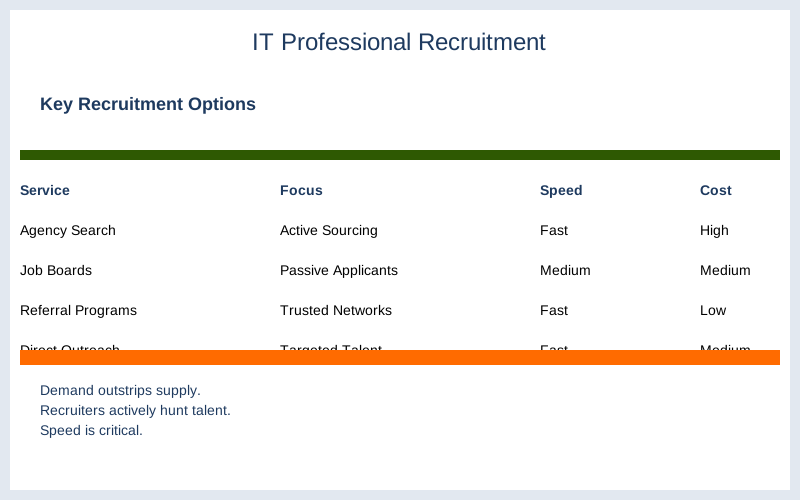
IT recruitment specs comparison infographic
Key specifications for it professional recruitment

The Real Answer

IT professional recruitment is a high-stakes, speed-driven game where the best candidates vanish within days. Recruiters aren't just passively waiting for applications; they're actively hunting, assessing, and selling to a finite pool of top talent.

Forget the notion that recruiters are just resume screeners. The reality is, they're employing sophisticated sourcing tactics and often leveraging AI tools to identify individuals who aren't actively looking. This is crucial because demand for tech talent consistently outstrips supply, with McKinsey reporting that only 16% of executives feel comfortable with their current tech talent pool, and 60% cite shortages as a major roadblock to digital transformation.

The biggest mistake candidates make is assuming a generic application is enough. Top recruiters are bombarded with generic InMails and job postings. To succeed in tech talent acquisition, you need to understand that recruiters are looking for specific skills and cultural fits, often using tools like applicant tracking systems (ATS) such as Greenhouse or Workday to manage the pipeline. They're not just matching keywords; they're evaluating potential, speed, and cultural alignment.

This hyper-competitive environment means recruiters must be exceptionally fast. The U.S. Bureau of Labor Statistics projects 356,700 job openings annually for computer and IT occupations from 2023-2033, indicating sustained demand. The Ultimate Guide to Hiring IT Professionals highlights that even in challenging times, the sector shows growth, and nearly 79% of laid-off tech workers find new roles within three months. This rapid turnover means recruiters are constantly engaged in a race to secure the best.

A proactive, personalized approach is non-negotiable. Recruiters spend significant time building relationships and understanding candidate motivations. They're not just filling a role; they're selling an opportunity and a company culture. This is why strong employer branding and authentic engagement are critical to standing out. AI and automation tools are increasingly used to identify, engage, and hire top technical talent faster, allowing recruiters to focus on the human element and strategic outreach. An insider's guide to tech talent recruitment emphasizes that modern recruiters combine technical fluency with marketing skills and data-driven tools.


Understanding how candidates navigate the job market can provide valuable insights, as explored in our article on how candidates find jobs.
Engage candidates within 24 hours to secure top IT talent before competitors do.
A dynamic team brainstorms in a bright, modern office, embodying the collaborative spirit essential for successful IT professional recruitment. | Photo by Rebrand Cities

What's Actually Going On

1
ATS parsing - Companies like Greenhouse, Lever, and Workday use Applicant Tracking Systems (ATS) to filter candidates based on keywords and phrases from the job description. Recruiters configure these systems. If your resume lacks the specific technologies, languages, and methodologies listed in the posting, it won't reach a human. An insider's guide to tech talent recruitment: Find & hire the best, faster
2
Recruiter screening - Recruiters scan resumes in seconds for relevant experience, skills (e.g., Python, AWS, Kubernetes), and clear career progression. They seek quick matches to core requirements, often looking for specific project experience or quantifiable achievements. A generic resume gets bypassed. Tech Recruitment: the ultimate guide
3
Hiring committee decisions - Beyond the initial screen, hiring committees (including managers, teammates, and HR) assess technical aptitude, problem-solving skills, and cultural fit. They evaluate your collaboration ability, understanding of complex systems, and team contribution. Behavioral questions and technical deep-dives are common. The Complete Guide to IT & Tech Recruitment in 2025

The demand for tech professionals outstrips supply, with McKinsey reporting only 16% of executives comfortable with their tech talent pool and 60% citing shortages as a roadblock to digital transformation. The Complete Guide to IT & Tech Recruitment in 2025. Speed and precision are paramount. An insider's guide to tech talent recruitment: Find & hire the best, faster

Company size and industry dictate hiring nuances. Startups seek adaptability and broad skills for rapid growth, often with faster but less structured processes. Enterprises have more formalized stages, emphasizing process adherence and specialized expertise. Industry specifics matter: tech focuses on cutting-edge skills, finance on security/compliance, and healthcare on regulatory knowledge and patient data privacy. The Ultimate Guide to Hiring IT Professionals

Seniority level shapes hiring committee focus. Junior roles assess foundational knowledge and learning potential. Senior and lead positions require proven leadership, strategic thinking, and successful project delivery. The U.S. Bureau of Labor Statistics projects faster-than-average growth for computer and IT occupations (2023-2033), with an estimated 356,700 job openings annually. The Ultimate Guide to Hiring IT Professionals. Expect high competition.


To truly grasp the recruitment process, it's helpful to explore insights from employment agency job seekers.
Leverage ATS data to identify and engage over 50% more qualified IT candidates.
A multicultural team huddles around a whiteboard, illustrating how clear strategy and communication drive effective IT recruitment. | Photo by Tima Miroshnichenko

How to Handle This

1
Research the Company and Role Deeply - Recruiters scan for immediate alignment. If you haven't spent time understanding the company's mission, recent news, and the specific tech stack mentioned in the job description, your application signals you're not serious. This isn't just about keywords; it's about demonstrating you've done your homework beyond a superficial glance at the career page. Many leaders feel shortages are a major roadblock to digital transformation, so they need candidates who clearly understand their challenges The Complete Guide to IT & Tech Recruitment in 2025.
2
Apply Through the Right Channel, Early - If you have a referral, use it. It bypasses initial screening and lands your resume on a recruiter's desk with a warm intro. If not, apply directly via the company's career portal. Avoid generic InMails on LinkedIn unless you have a highly personalized message and profile; many recruiters find these tedious. The tech talent market is extremely competitive, and the best candidates are snapped up quickly The Complete Guide to IT & Tech Recruitment in 2025. Recruiters need to move fast because top talent doesn't stay available long An insider's guide to tech talent recruitment: Find & hire the best, faster.
3
Craft a Targeted Resume and Cover Letter - This is where many fail. Your resume needs to mirror the language and requirements of the job description, especially for senior IT professional recruitment. ATS systems are configured to look for specific keywords and phrases. A generic resume will get filtered out. Your cover letter, if submitted, should be concise, highlighting 2-3 key achievements that directly address the role's core needs. Recruiters are looking for clear evidence of skills and impact, not a laundry list of everything you've ever done.
4
Follow Up Strategically - Don't pester. A single, concise follow-up email several days after applying is sufficient if you haven't heard back. Reference your application and reiterate your strong interest. If you were referred, your referrer might follow up on your behalf. Recruiters are often juggling many roles, and a polite nudge can keep you top-of-mind. However, bombarding them with messages will backfire. Remember, nearly 79% of laid-off tech workers found new jobs within three months, indicating a strong need for qualified individuals The Ultimate Guide to Hiring IT Professionals.
To enhance your preparation, understanding the Recruit CRM hiring process can provide valuable insights.
Analyze company mission and recent news to tailor your IT recruitment pitch for immediate candidate alignment.
Professionals focus intently in a bright office, demonstrating the deep research required for successful IT professional recruitment. | Photo by Thirdman

What This Looks Like in Practice

  • Senior Software Engineer, FinTech Startup: This startup struggled to attract seasoned backend engineers, despite high application volume. Many lacked experience with distributed systems and high-frequency trading. Success came from targeted outreach highlighting innovation and the chance to build from scratch. They also sped up interviews. Relying on job boards alone failed; passive candidates were crucial. An insider's guide to tech talent recruitment confirms building relationships and employer branding are critical.
  • Entry-Level Data Analyst, E-commerce Giant: An e-commerce company struggled to identify SQL and data visualization skills among numerous entry-level Data Analyst applicants. A skills-based assessment early on narrowed the pool to capable candidates. Clearly defining technical proficiencies in the job description helped; relying solely on resume keywords was ineffective. The Ultimate Guide to Hiring IT Professionals projects substantial annual IT job openings.
  • Cloud Security Specialist, Healthcare Provider: A healthcare organization faced a small candidate pool for a Cloud Security Specialist role due to its specialized nature. Partnering with a niche IT recruitment agency with existing security professional relationships proved effective. Competitive compensation and articulating the mission-driven aspect of protecting patient data were also key. A lengthy interview process deterred candidates. Tech Recruitment: the ultimate guide notes tech candidates are discerning due to numerous opportunities.
  • Product Manager, SaaS Company: A SaaS company sought a Product Manager skilled in agile and UX. Many applicants lacked strategic product vision. A structured approach, including a take-home product challenge and panel interviews with cross-functional leads, assessed strategic thinking and collaboration. Generic outreach failed; personalized engagement was essential. The Complete Guide to IT & Tech Recruitment in 2025 emphasizes 2025 tech hiring is highly competitive.

To improve their chances of attracting top talent, companies should consider implementing the best resume tips from recruiters.
Expand your IT recruitment search globally, tapping into international talent pools for specialized roles.
Remote work in Milan, with hands typing on a laptop, signifies the global reach of modern IT professional recruitment. | Photo by Luca Sammarco

Mistakes That Kill Your Chances

Mistake Over-reliance on generic buzzwords.
Why candidates make it New grads especially think popular industry terms signal knowledge.
What recruiters actually see Clichés with no concrete evidence. We scan fast; these phrases don't differentiate. We need specific technologies and quantifiable achievements, not just buzzwords.
The fix Replace generic terms with specific technologies, tools, and quantifiable results. Instead of "proficient in cloud technologies," state "Managed AWS infrastructure, reducing costs by X%." For senior roles, focus on strategic impact.
Mistake Neglecting to tailor your resume and cover letter for each role.
Why candidates make it It's time-consuming; many assume a one-size-fits-all approach works.
What recruiters actually see A generic application signals a lack of interest or understanding. We spot mass-applied resumes instantly. It tells us you're not serious about *this* opportunity. Recruiters spend seconds on initial reviews, so your application needs to grab attention immediately. This means your application needs to grab attention immediately.
The fix For each application, review the job description. Highlight keywords and required skills, then ensure your resume and cover letter directly address them with specific examples and achievements. Even small tweaks make a difference.
Mistake Presenting a resume that's a laundry list of every technology ever encountered, without context.
Why candidates make it Candidates, especially those with broad experience, often believe more is better.
What recruiters actually see Overwhelm and a lack of focus. It's impossible to quickly discern your core strengths for a specific role. We need to see what's relevant. For senior candidates, this suggests a lack of strategic focus. Tech recruiting is competitive; clarity is key. Tech recruiting is competitive; clarity is key.
The fix Curate your skills section to prominently feature technologies directly relevant to the job description. For less relevant but valuable skills, consider a secondary "Additional Skills" section. Emphasize your most impactful contributions.
Mistake Assuming your online presence is irrelevant.
Why candidates make it Many focus only on their resume, unaware recruiters vet online.
What recruiters actually see Inconsistent or unprofessional online profiles. A lack of a strong, relevant online portfolio is a red flag, especially for technical roles. Conversely, a well-maintained GitHub profile showcasing projects is a significant differentiator. Your digital footprint matters in IT professional recruitment. Your digital footprint matters in IT professional recruitment.
The fix Ensure your LinkedIn profile is complete, professional, and mirrors your resume. For developers and engineers, a well-organized GitHub profile with active contributions is crucial. Remove unprofessional or outdated content.
Understanding how hiring professionals view referrals can help you avoid mistakes that kill your chances; explore insights in this recruiter perspective.

Key Takeaways

  • Tech recruiting is a sprint, not a marathon. The best candidates are off the market in days, not weeks. You need to move with precision and speed, leveraging AI-driven tools to identify and engage top talent before your competition An insider's guide to tech talent recruitment: Find & hire the best, faster.
  • Forget generic outreach. In a market where demand for tech professionals is 2 to 4 times greater than supply The Complete Guide to IT & Tech Recruitment in 2025, sending mass InMails on LinkedIn is a losing strategy. Focus on personalized, data-driven engagement that speaks directly to a candidate's skills and career aspirations Tech Recruitment: the ultimate guide - HeroHunt.AI.
  • Employer branding is your secret weapon. Top IT talent is in high demand, and they have options. Highlight what makes your company unique - the challenging projects, the innovative culture, the learning opportunities - to attract and retain the best.
  • Understand the tech stack, not just the buzzwords. Recruiters need a genuine understanding of the technologies and methodologies involved to accurately assess candidates and build credibility. This technical fluency is crucial for effective IT professional recruitment.
  • The single most important thing a recruiter would tell you off the record? "Stop treating every application like a generic lottery ticket. We're drowning in them. Show us you've actually read the job description and understand what we need, not just what you want."
To enhance your understanding of rapid tech recruitment, exploring the Google recruiter hiring process can be enlightening.

Frequently Asked Questions

What specific tech skills should I put front and center on my resume?
Focus on the technologies directly mentioned in the job description, especially those that are high-demand. Think cloud platforms (AWS, Azure, GCP), specific programming languages (Python, Java, JavaScript), and frameworks (React, Angular, Spring). Quantify your achievements with these skills whenever possible; instead of saying 'managed databases,' say 'optimized SQL queries, reducing load times by 15%.' Recruiters and Applicant Tracking Systems (ATS) scan for these keywords, and concrete examples show you've actually used them effectively.
How much do those resume-scanning systems (ATS) actually matter for tech jobs?
They matter a lot, especially for larger companies. Systems like Taleo, Workday, and Greenhouse are configured to parse resumes for specific keywords and phrases related to the job requirements. If your resume doesn't contain the right terminology or isn't formatted cleanly (avoiding tables, headers/footers), it might get filtered out before a human even sees it. I've configured these systems myself; they're blunt instruments designed to weed out what doesn't match, so keyword optimization is non-negotiable.
What are the biggest mistakes people make in IT job interviews?
One common pitfall is not adequately preparing for behavioral questions using the STAR method (Situation, Task, Action, Result) - recruiters expect structured answers that demonstrate problem-solving. Another is failing to ask insightful questions about the tech stack, team dynamics, or company challenges; it signals a lack of genuine interest. Also, don't underestimate the technical deep-dive: be ready to discuss your code, architectural decisions, and how you approach debugging, not just what you've done.
I'm just starting out in IT. How can I make my potential shine through when I don't have much experience?
Showcase personal projects, contributions to open-source software, and relevant certifications (like CompTIA A+, Network+, or cloud-specific ones). If you've completed bootcamps or online courses, highlight the practical skills you gained and any capstone projects. Frame your limited professional experience by emphasizing transferable skills like problem-solving, eagerness to learn, and strong communication, and be prepared to articulate *why* you're passionate about this specific area of IT.
Is finding a tech job at a startup really different from looking at a big company?
Absolutely. Startups often have leaner hiring teams and a more informal interview process, focusing on cultural fit and your ability to wear multiple hats. They might prioritize adaptability and a 'roll-up-your-sleeves' attitude over deep, specialized experience. Large corporations, on the other hand, typically have more structured interview loops, multiple rounds with different stakeholders, and a greater emphasis on specific technical proficiencies and adherence to established processes, often using more robust ATS systems.

Sources

Related Articles