Recruiter Insights

What's the difference between recruiting and hiring? Understanding the nuances of talent acquisition

RoleAlign Team
13 min read
Includes Video

You just got the rejection email. Again. You've polished your resume, meticulously crafted cover letters, and spent hours scrolling through job boards. You thought you were actively "recruiting" for yourself, but the outcome feels like you're just... applying. The reality is, what you're doing often blurs the lines between two distinct, yet interconnected, processes: recruiting and hiring.

You just got the rejection email. Again. You've polished your resume, meticulously crafted cover letters, and spent hours scrolling through job boards. You thought you were actively "recruiting" for yourself, but the outcome feels like you're just... applying. The reality is, what you're doing often blurs the lines between two distinct, yet interconnected, processes: recruiting and hiring. Recruiting is the strategic, proactive work of building a talent pipeline, identifying potential candidates, and making them aware of opportunities - often before a specific role even exists Indeed. It's about casting a wide net, showcasing your employer brand, and nurturing relationships with people who might be a fit down the line U.S. Chamber of Commerce.

Hiring, on the other hand, is the more tactical, immediate phase. It kicks in when there's a defined need - a resignation, a new project, a headcount approval. This is where the evaluation, interviewing, and decision-making happen to fill a specific open position Somewhere. Companies that excel at talent acquisition understand this difference; they invest in ongoing recruiting efforts so that when a hiring need arises, they aren't starting from scratch, scrambling to find anyone available. They have a bench of qualified candidates ready to go.

The Real Answer

The core difference between recruiting and hiring boils down to strategy versus execution. Recruiting is the proactive, long-term effort to build a pipeline of talent and attract potential candidates, while hiring is the reactive, transactional process of filling an immediate, defined role.

Think of recruiting as planting seeds and nurturing them. It's about continuously identifying, attracting, and engaging potential candidates, often before a specific job is even open. This involves building relationships, maintaining your employer brand, and ensuring you have a pool of qualified individuals ready when needs arise. Recruiters might advertise job openings, attend job fairs, or leverage their networks to identify future talent What's the Difference Between Recruitment and Hiring? - Indeed. This strategic approach to talent acquisition involves developing a comprehensive plan for sourcing candidates, engaging them with compelling content about the company culture and opportunities, and nurturing these relationships over time. It's about creating a robust talent pipeline that can be tapped into whenever a new position opens up or an existing one needs to be backfilled. This proactive stance ensures that organizations aren't caught off guard when a critical role becomes vacant, allowing for a more thoughtful and effective selection process.

Hiring, on the other hand, is like harvesting a specific crop. It kicks off when there's a defined need - a resignation, a new headcount, or a critical gap on a team. The hiring process is focused, and its outcome is transactional: define the role, source candidates (often from the recruiting pipeline), evaluate them, and make an offer A Complete Guide to Hiring and Recruiting for Your Small Business. Hiring managers take over once a pool of potential hires is presented, narrowing their focus to specific candidate details. This immediate need drives the hiring process, which typically involves activities like screening resumes, conducting interviews, administering assessments, and negotiating compensation. The goal is to fill a specific vacancy with the best possible candidate from the available pool, often under a tighter deadline than the recruiting phase allows.

When you're scrambling to fill a position with no prior sourcing or an engaged candidate pool, that's hiring, not recruiting. It's a last-minute push to fill a vacancy, often leading to reactive cycles, rushed interviews, and potentially poor-fit hires because the groundwork wasn't laid Recruit vs Hiring: Building a Pipeline vs Filling a Position | Somewhere. This reactive approach can strain resources and compromise the quality of hires. The organizations that consistently outperform in talent acquisition understand and invest in both, recognizing that recruiting fuels hiring. A strong recruiting function provides a consistent stream of qualified candidates, making the subsequent hiring process more efficient and successful. Talent acquisition, a broader concept encompassing both, is about building a strategic hiring process and its execution, moving beyond simply filling positions to fill positions What is the difference between recruiting & talent acquisition? - Reddit. Essentially, recruiting builds the bench, while hiring selects the players for the current game.


To further explore efficient hiring techniques, consider the insights shared in Recruit CRM's hiring process.
Engage with at least 5 potential candidates daily to build your talent pipeline effectively.
Understanding the difference between recruiting and hiring starts with recognizing that recruiting is the strategic foundation. Focus on building a diverse pool of talent, like this team, to ensure a strong future workforce. | Photo by SHVETS production

What's Actually Going On

Recruiting and hiring are two distinct but intertwined phases of talent acquisition. Think of recruiting as building the runway and filling the hangar with potential aircraft, while hiring is selecting and boarding the specific plane you need for a particular flight. Recruiting is the strategic, proactive effort to identify, attract, and engage a pool of qualified candidates, often before a specific role even opens up. It's about creating a pipeline and making your company an attractive destination for talent. Hiring, conversely, is the tactical, reactive process of evaluating candidates from that pipeline, making a decision, extending an offer, and bringing someone on board for a defined, immediate need.

1
Recruiter screens - Recruiters are scanning for keyword matches that align with the job description. They are using Applicant Tracking Systems (ATS) like Workday, Greenhouse, or Taleo, which parse resumes for specific skills, years of experience, and educational qualifications. A recruiter's goal is to efficiently filter out the majority of applicants to present a manageable shortlist to the hiring manager. They are looking for the "good enough" to move forward, not necessarily the perfect candidate.
2
Hiring manager evaluates - This is where the deep dive begins. Hiring managers, often supported by a hiring committee, assess candidates not just on skills, but on cultural fit, problem-solving ability, and potential impact on the team. They might use behavioral interview questions to gauge how a candidate has handled past situations, looking for evidence of critical thinking and collaboration. Decision-making here is less about keywords and more about qualitative assessment, though some companies still rely on scorecards and structured interviews.
3
Company size and industry impact - In startups, the lines blur; founders often handle both recruiting and hiring, prioritizing speed and adaptability. Enterprise companies have specialized roles, with dedicated recruiters and hiring managers, and often more formalized hiring committees. Tech industries might lean heavily on technical assessments and coding challenges, while finance emphasizes regulatory knowledge and risk assessment. Healthcare adds layers of credentialing and compliance. Seniority also shifts the focus; entry-level roles are more about potential and basic qualifications, while senior positions demand proven leadership and strategic thinking. Recruiting is about building a pipeline, while hiring is about filling an immediate vacancy.
4
Hiring committees decide - These groups, often comprising peers, managers, and sometimes cross-functional stakeholders, weigh in on the final decision. They are looking for the candidate who best aligns with team needs and company objectives. The process can involve consensus-building, debate, and ultimately, a collective agreement on who will receive the offer. This stage is critical for ensuring a well-rounded hire who will integrate smoothly and contribute effectively. Hiring is the final step in bringing someone on board.

Recruiting is a long-term investment in your talent brand and future workforce needs. Hiring is the transactional execution to fill an immediate gap. Overlooking recruiting means you'll constantly be in reactive mode, scrambling to find candidates when positions become vacant, often leading to rushed decisions and less-than-ideal hires.
Understanding these phases can illuminate why many organizations opt for external support, as discussed in hiring recruitment agencies.
Map out your recruitment strategy for the next 12 months to proactively identify talent needs.
Recruiting builds the necessary infrastructure, much like this industrial site, to support future hiring needs. A well-planned recruitment strategy is key to attracting the right people. | Photo by DTS VIDEOS

How to Handle This

1
Build the talent pipeline - Recruiting is the strategic, long-term play to identify and attract potential candidates, often before a specific role even exists. This means consistently engaging with individuals who have the skills you'll need down the line, especially in high-demand fields like AI or specialized engineering roles. You're not just looking for someone to fill a seat today; you're cultivating relationships and building a pool of passive candidates who might be a perfect fit for future opportunities. This proactive approach is crucial because it ensures you're not scrambling when a critical position opens up. What goes wrong if you skip this? You end up in a reactive hiring mode, posting jobs and hoping the right person applies, which often leads to rushed decisions and mismatched hires. This is where companies like Workday Blog emphasize building employer brand and anticipating future needs.
2
Execute the hire - Hiring is the reactive, transactional phase focused on filling an immediate vacancy. Once recruiting has presented a qualified pool, the hiring manager steps in to evaluate candidates, conduct interviews, and make a definitive offer. This stage is about assessing specific skills, cultural fit, and overall suitability for a defined role. For instance, if a senior software engineer leaves, hiring is the process of finding and bringing on their replacement quickly. If you skip this, the candidates recruited might never get to the offer stage because the evaluation process is unclear or inefficient. The Indeed definition highlights that hiring narrows the scope to individual candidate details once the recruiting pool is established.
3
Leverage channels strategically - During recruiting, you'll use broader channels like LinkedIn or industry-specific job boards to cast a wide net and build your pipeline. You might attend virtual career fairs or leverage employee referrals to attract a diverse range of talent. For highly specialized roles, direct outreach on platforms like GitHub or niche Slack communities is essential. When it's time to hire, the focus shifts to more targeted communication, often through direct email or scheduled interviews with the candidates identified during the recruiting phase. Ignoring this distinction means you might blast generic job ads for a critical role, missing out on passive candidates who would have been receptive to a personalized recruiting message. The U.S. Chamber of Commerce notes that recruiting is most useful for expanding talent pipelines and attracting candidates for specialized roles.
Understanding your hybrid work policy can also enhance your effectiveness in roles that utilize AI-based matching in recruiting.
Implement a candidate relationship management system to nurture leads for up to 6 months.
The ongoing efforts in recruiting, like the continuous operations at this industrial site, are crucial for filling future hiring needs. Building a pipeline is a marathon, not a sprint. | Photo by Sinitta Leunen

What This Looks Like in Practice

  • Senior Software Engineer at a Series B Startup. They needed someone to hit the ground running to build a critical new feature. We actively sourced passive candidates on LinkedIn, leveraged our network, and attended tech meetups to build a pipeline of highly skilled engineers. Focused outreach emphasizing the startup's growth trajectory and the technical challenge worked. Relying solely on job board postings yielded a flood of unqualified applicants and significantly slowed the hiring process, confirming the distinction between building talent pools and filling immediate needs U.S. Chamber of Commerce.
  • Entry-Level Data Analyst at a Fortune 500. This role had high volume but needed specific foundational skills. We used broad advertising across university career portals and major job boards. The hiring phase standardized screening via an ATS like Workday to filter for keywords and basic qualifications before live interviews. Volume and standardization worked for this entry-level role. We missed proactively engaging promising, passively looking candidates, a common pitfall when recruiting solely for immediate vacancies Indeed.
  • Career Changer from Teaching to Product Management. This highlights identifying potential versus direct experience. We identified individuals with transferable skills (communication, project management) and sold them on the vision and training opportunities for product management. The hiring process had to be flexible, focusing on behavioral interviews and case studies to assess aptitude, not just past PM experience. Narrative building and highlighting growth paths worked. A rigid hiring manager expecting a traditional PM background didn't, underscoring that recruiting attracts talent, while hiring makes the final decision Betts Recruiting.
To gain further insights into effective talent acquisition, explore the Google recruiter hiring process.
Automate 3 repetitive recruiting tasks to save your team up to 10 hours per week.
Successful hiring relies on efficient logistics, similar to this fuel truck ensuring operations. The difference between recruiting and hiring involves executing these critical supply chain elements for talent. | Photo by David McElwee

Mistakes That Kill Your Chances

Mistake Treating recruiting and hiring as the same thing.
Why candidates make it It's easy to conflate them; job boards and application systems blur the lines. Posting your resume isn't "recruiting," it's just the start of hiring.
What recruiters actually see Recruiters see "recruiting" as a long-term strategy to build a talent pipeline for current and future needs, not just filling an immediate vacancy What's the Difference Between Recruitment and Hiring? - Indeed. Hiring is the transactional phase of selecting someone for a specific role.
The fix Understand that recruiting is proactive outreach and relationship-building, while hiring is reactive decision-making. Focus on building connections and showcasing your value beyond just applying to posted jobs.
Mistake Believing a generic application is enough for "recruiting."
Why candidates make it Many assume submitting an application through an ATS like Workday or Greenhouse is the primary way to engage recruiters, thinking the system will flag them if they're a good fit.
What recruiters actually see Recruiters use ATS to manage *applications*, not necessarily to *find* candidates proactively. They rely on their network, LinkedIn Recruiter, and direct outreach for active recruiting A Complete Guide to Hiring and Recruiting for Your Small Business. A passive application often gets lost in the volume.
The fix For critical roles or companies you're passionate about, go beyond the "apply now" button. Find a recruiter or hiring manager on LinkedIn and send a personalized message, or seek informational interviews to build a relationship before a role is posted. This separates true recruiting engagement from passive hiring.
Mistake Over-emphasizing immediate availability and "can-do" attitude over long-term potential.
Why candidates make it Especially for new graduates or those in mid-career transitions, the pressure to get *any* job quickly can lead to highlighting immediate readiness rather than strategic fit. You might think starting tomorrow is the most important thing.
What recruiters actually see Recruiters, particularly in specialized fields like AI and tech, look for candidates who demonstrate potential for growth and alignment with the company's future trajectory. They're investing in talent acquisition that anticipates future needs Talent Acquisition vs. Recruiting: The Complete Guide - Workday Blog. A short-term fix isn't always a long-term win.
The fix Frame your experience and skills in terms of future impact and learning agility. For senior roles, emphasize strategic vision and mentorship ability. For new grads, highlight eagerness to learn and adapt. Show you're looking for a career path, not just a job.
To enhance your appeal to recruiters, consider exploring insights for job seekers in the recruitment landscape.
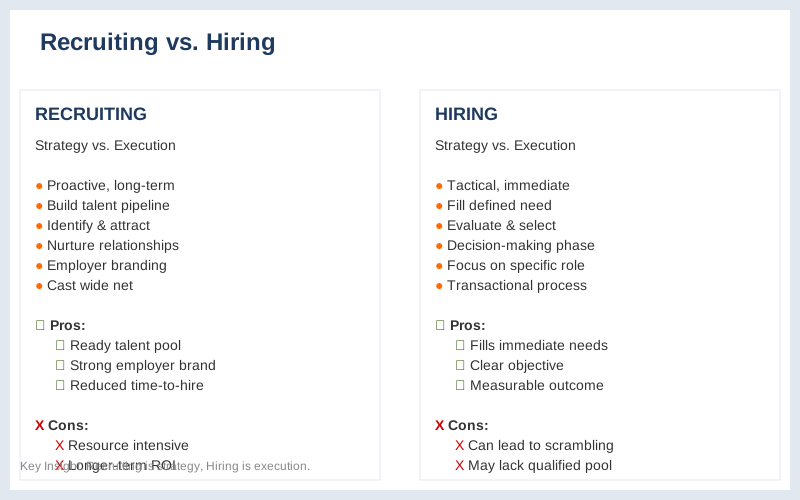
Recruiting vs. Hiring: Pros/Cons infographic.
Comparison overview for What's the difference between recruiting and hiring?

Key Takeaways

  • Recruiting is the long game; it's about building a continuous pipeline of talent and nurturing relationships, not just filling immediate openings LinkMatch. Think of it as planting seeds for future harvests. This proactive approach involves understanding future business needs and identifying potential candidates who align with the company culture and long-term vision, even if there isn't an immediate opening. It's about cultivating a community of engaged professionals who are aware of and interested in the organization.
  • Hiring is the sprint; it's the transactional process of evaluating specific candidates for a defined role and making a final decision Indeed. This is where you choose the right player for the current game. Hiring focuses on the immediate need, involving the review of applications, interviews, and selection of the most qualified individual to fill a specific vacancy.
  • Recruiting attracts, creating awareness and a pool of potential fits, while hiring selects the best candidate from that pool to fill a specific vacancy Somewhere. One builds the audience, the other picks the star performer. Recruiting is essentially talent acquisition's initial outreach, aiming to cast a wide net, whereas hiring is the narrowed-down, decisive action taken to fill a precise requirement.
  • The most crucial thing a recruiter will tell you off the record? Don't just apply when you need a job. Build relationships and stay visible *before* you need one. A recruiter can't sell you if they don't know you or haven't seen your consistent quality work. This means engaging with industry professionals, attending events, and showcasing your expertise proactively. Building this rapport ensures you are top-of-mind when opportunities arise, making the hiring process smoother for both the candidate and the employer.
Understanding the compensation for those in recruitment roles can further enhance your job search strategy; learn more about recruiter jobs salary.

Frequently Asked Questions

What's the difference between what a recruiter does and what a hiring manager focuses on?
Think of it this way: recruiters are your talent scouts, building the pipeline and bringing promising candidates to the table. They're focused on sourcing, initial screening, and presenting a pool of qualified individuals. Hiring managers, on the other hand, are the decision-makers. They dive deep into the specifics of the role, conduct the in-depth interviews, and ultimately decide who gets the offer. Recruiters cast a wide net and identify potential, while hiring managers narrow it down and select the best fit for the immediate need.
Does the way companies find tech talent differ from how they find people for non-tech jobs?
Absolutely. For tech roles, especially specialized ones in AI or cybersecurity, companies often lean heavily on proactive recruiting. They'll build talent pipelines for skills that are in constant demand, even if there isn't an immediate opening. This often involves sourcing passive candidates, attending niche tech conferences, and leveraging platforms like GitHub. For non-tech roles, while proactive recruiting still happens, there's often a stronger reliance on job boards and direct applications when a specific position needs filling quickly.
How does the size of a company change how they handle bringing in new people?
For startups and smaller companies, the lines between recruiting and hiring are often blurred. You might have the CEO doing both. As companies grow, they typically build dedicated recruiting teams whose primary job is to source and screen candidates, creating a talent pool. Larger organizations also have more structured hiring processes, often involving multiple interview rounds with various stakeholders and dedicated HR teams for onboarding. This specialization allows for a more efficient, albeit sometimes slower, process.
What key numbers do recruiters obsess over that hiring teams might miss?
Recruiters live and die by metrics like time-to-fill and source-of-hire. They want to know how quickly they can get a role filled and which channels are bringing in the best candidates, often tracked in ATS systems like Greenhouse or Lever. Hiring managers, however, are more focused on candidate quality and interview-to-offer ratios. They're looking at how many candidates from that pool actually pass their interviews and ultimately accept an offer, which is crucial for team performance but less about the speed of the initial search.
How can knowing the difference between recruiting and hiring help me apply for jobs?
Understanding this distinction helps you tailor your approach. If a company is actively 'recruiting,' they're likely looking to build a pipeline for future needs, so emphasizing your long-term potential and cultural fit is key. If they're 'hiring,' the focus shifts to demonstrating you're the immediate solution to a defined problem, so highlight how your skills directly match the job description. For instance, if you see a role that's been open for 60+ days (a common red flag for slow hiring or difficult searches), you know your application needs to scream 'I can solve this NOW.'

Sources

Related Articles