Hiring Discrimination

What Happens When You Report Hiring Discrimination (2026 Complete Guide)

RoleAlign Team
13 min read
Prices verified February 2026
Includes Video

You've meticulously prepared for the interview, researched the company, and practiced your answers. Then, the rejection email arrives, and something feels fundamentally unfair. It wasn't about your qualifications; it was about your age, your race, your religion, or another protected characteristic.

You've meticulously prepared for the interview, researched the company, and practiced your answers. Then, the rejection email arrives, and something feels fundamentally unfair. It wasn't about your qualifications; it was about your age, your race, your religion, or another protected characteristic. This gut feeling that you've been overlooked due to unlawful discrimination is a serious matter, and understanding what happens when you report hiring discrimination is crucial. The Equal Employment Opportunity Commission (EEOC) is the primary federal agency tasked with enforcing anti-discrimination laws in the workplace Filing A Charge of Discrimination - EEOC. In fiscal year 2024, 40% of discrimination charges filed with the EEOC included a harassment allegation, highlighting the prevalence of these issues Workplace Harassment Remains Prevalent As EEOC Rescinds .... Filing an EEOC complaint is the first formal step in the discrimination complaint process, initiating a review of your employer's practices. This process can feel daunting, but knowing the steps involved empowers you to seek redress.

When you file a charge of discrimination, you are submitting a signed statement asserting that an employer, union, or labor organization has engaged in employment discrimination Filing A Charge of Discrimination - EEOC. This formal complaint triggers an EEOC investigation, which is a comprehensive review designed to assess whether anti-discrimination laws have been violated How to Handle an EEOC Investigation in 2026 | HR Acuity. The EEOC may also investigate broader patterns of discrimination, especially given requirements like the EEO-1 report, which allows the government to review a company's employment practices and identify potential issues EEO-1 Reporting Requirements & Deadlines for 2026 - Paycor. Beyond the federal level, states and local governments also offer avenues for reporting discrimination Discrimination, harassment, and retaliation | USAGov. It's important to remember that employees who report unlawful employer conduct are often protected from retaliation, meaning an employer cannot punish you for raising concerns about discrimination North Carolina Employment Law 2026: Complete Guide for .... Documenting what is happening is a critical part of this process How to Safely Document Workplace Discrimination - Weiler Law PLLC. Employers may soon be required to certify that their employment actions are free from discrimination and comply with all federal civil rights laws, underscoring the increasing scrutiny on these practices The 2026 Regulatory Landscape: What to Expect & How to Prepare.

The Real Answer

Reporting hiring discrimination triggers a formal process where the Equal Employment Opportunity Commission (EEOC) or state agencies investigate your claim. While candidates often assume immediate action, the reality involves a structured review of evidence and employer responses. This process is designed to ensure compliance with anti-discrimination laws, but its effectiveness hinges on thorough documentation and understanding the legal framework.

When you report hiring discrimination, you initiate a formal discrimination complaint process. This typically begins with filing a charge with the EEOC or a state agency, like the California Rights Department Filing a Discrimination Complaint in California (2026). A charge is a signed statement asserting that an employer engaged in discrimination Filing A Charge of Discrimination - EEOC. The agency then typically notifies the employer and may attempt mediation. If mediation fails, the EEOC or state agency will conduct an investigation, which is a comprehensive review to assess if anti-discrimination laws were violated How to Handle an EEOC Investigation in 2026 | HR Acuity.

From the recruiter's perspective, a discrimination complaint is a serious compliance issue that triggers internal review and potential legal scrutiny. Companies are increasingly aware of their obligations; some may soon be required to certify that their employment actions are free from discrimination The 2026 Regulatory Landscape: What to Expect & How to Prepare. The EEO-1 report, for instance, is a government tool to review company employment practices for potential discrimination EEO-1 Reporting Requirements & Deadlines for 2026 - Paycor. Employers are expected to respond promptly and cooperatively to EEOC information requests during an investigation.

The investigation involves gathering evidence from both the complainant and the employer. This can include reviewing hiring policies, candidate communications, and interview notes. Employers are advised to assemble a knowledgeable team, including HR and legal counsel, to navigate the process effectively How to Handle an EEOC Investigation in 2026 | HR Acuity. It's crucial to understand that while employers cannot punish you for reporting discrimination in good faith, career progression might be impacted if your direct supervisor was involved in the alleged discriminatory decision Will reporting discrimination ruin my career growth? : r/WorkAdvice.
Understanding how algorithms can amplify biases is crucial, especially when considering how age discrimination plays a role in hiring practices.
Gather at least 3 pieces of evidence before filing your EEOC complaint to strengthen your case.
Understanding the discrimination complaint process begins with data analysis. If you suspect bias, remember the EEOC investigates claims thoroughly. | Photo by Kampus Production

What's Actually Going On

1
Applicant Tracking Systems (ATS) parse resumes, typically looking for keywords and structured data. Recruiters then screen for qualifications, experience, and cultural fit, often relying on initial impressions and adherence to job descriptions. Hiring committees, comprised of managers and team members, make final decisions based on a combination of these factors, aiming to fill specific skill gaps and team dynamics.
2
Company size significantly impacts this process. Startups might have informal hiring, with founders making most decisions and a heavy emphasis on adaptability and "likability." Enterprises, however, have more structured processes, often with dedicated HR teams, multiple interview rounds, and reliance on ATS data. This can lead to a more standardized, though potentially less personal, experience. The regulatory landscape, including potential requirements for companies to certify their employment actions are free from discrimination, adds another layer of complexity, especially for larger organizations The 2026 Regulatory Landscape: What to Expect & How to Prepare. This certification process is becoming increasingly important as governmental bodies seek to ensure compliance with federal civil rights laws.
3
Industry nuances also play a role. Tech hiring often prioritizes technical skills and problem-solving abilities, with coding challenges and portfolio reviews being common. Finance may focus on analytical skills, attention to detail, and regulatory knowledge. Healthcare roles demand specific certifications, a high degree of empathy, and strict adherence to protocols. Seniority level dictates the depth of evaluation; executive hires involve extensive background checks and strategic alignment discussions, while entry-level roles might focus more on potential and basic competencies. These industry-specific considerations, while not inherently discriminatory, can sometimes be applied in ways that inadvertently disadvantage certain groups if not carefully managed.
4
Reporting hiring discrimination triggers a formal investigation. If you file a discrimination complaint, the Equal Employment Opportunity Commission (EEOC) will conduct a comprehensive review to assess potential violations of anti-discrimination laws How to Handle an EEOC Investigation in 2026 | HR Acuity. A charge of discrimination is a signed statement asserting that an employer has engaged in unlawful employment practices Filing A Charge of Discrimination - EEOC. This process involves gathering documentation, interviewing relevant parties, and analyzing employment practices. The EEO-1 report serves as one governmental tool to review employment practices and identify potential discrimination by collecting data on employee demographics. States and local governments also offer avenues for reporting discrimination Discrimination, harassment, and retaliation | USAGov.
5
The investigation aims to determine if unlawful discrimination occurred. This can involve reviewing application materials, interview notes, and hiring decisions. In fiscal year 2024, 40% of discrimination charges filed with the EEOC included a harassment allegation Workplace Harassment Remains Prevalent As EEOC Rescinds .... Since the start of 2023, nearly 1 in 3 employees (28%) reported experiencing discrimination, and microaggressions are also prevalent (27%), highlighting the ongoing nature of these issues. The investigation will meticulously examine whether protected characteristics, such as race, gender, age, religion, disability, or national origin, played a role in the hiring decision. Employees who report unlawful employer conduct may also be protected from retaliation North Carolina Employment Law 2026: Complete Guide for .... Thorough documentation of the alleged discriminatory events is crucial for a successful investigation How to Safely Document Workplace Discrimination - Weiler Law PLLC.
Understanding how ATS impacts hiring can shed light on broader issues like pay discrimination in the workplace.
Document every interaction, including dates and names, for at least 5 key discriminatory incidents.
This applicant tracking system view highlights how initial screening can be influenced. Learn how to report hiring discrimination effectively. | Photo by ThisIsEngineering

How to Handle This

1
Document Everything in Writing - If you suspect hiring discrimination, start by meticulously documenting every interaction. This includes dates, times, names of individuals involved, specific statements made, and any relevant emails or messages. Recruiter reasoning: This builds a clear, objective record that is crucial for any formal complaint or investigation. Skipping this step means relying on memory, which is unreliable and easily challenged. For senior roles, detailed documentation is even more critical as hiring decisions involve more stakeholders and complex justifications. How to Safely Document Workplace Discrimination - Weiler Law PLLC.
2
Initiate Internal Reporting Channels - Your first formal step is often to report the discrimination internally, typically to HR or a designated compliance officer. Recruiter reasoning: Companies are legally obligated to investigate such claims and prefer to resolve issues internally to avoid external scrutiny and potential legal penalties. This also allows them to assess the situation with their own internal processes and legal counsel. Failure to report internally can be seen as a missed opportunity for the employer to rectify the situation, potentially impacting your case later. For roles in highly regulated industries like finance or healthcare, internal reporting is a mandatory prerequisite before external action. How is Human Resources Supposed to Handle Discrimination?.
3
File a Formal Charge with the EEOC - If internal efforts fail or are insufficient, the next step is to file a charge of discrimination with the Equal Employment Opportunity Commission (EEOC) or a similar state agency. Recruiter reasoning: The EEOC acts as a neutral investigator, reviewing evidence to determine if unlawful employment discrimination occurred. Filing a charge is a prerequisite for federal lawsuits. This is where the formal discrimination complaint process begins. For candidates in any industry, understanding that nearly 1 in 3 employees have reported experiencing discrimination How to Handle an EEOC Investigation in 2026 | HR Acuity, highlights the necessity of this formal step when internal resolution is not achieved.
4
Cooperate Fully with the Investigation - Once a charge is filed, the EEOC will likely initiate an investigation. This may involve requesting documents, interviewing witnesses, and potentially conducting on-site reviews. Recruiter reasoning: Full and prompt cooperation signals good faith and can streamline the investigation process, potentially leading to a quicker resolution. Evasive or uncooperative behavior can be interpreted negatively and prolong the process. Companies are often required to certify that their employment actions are free from discrimination and comply with federal civil rights laws The 2026 Regulatory Landscape: What to Expect & How to Prepare, making transparency during an investigation paramount.
To further explore the nuances of AI in hiring, consider how algorithms can unintentionally discriminate.
Keep digital and physical copies of all communications related to your job application.
Securing your digital footprint is crucial when you report hiring discrimination. Keep meticulous written records of all communications. | Photo by cottonbro studio

What This Looks Like in Practice

  • Senior Software Engineer at a Series B Startup: Faced with repeated rejections after being told the company was "looking for someone more senior" despite years of experience, the engineer filed an EEOC complaint. They had documented the interview feedback, which seemed to shift depending on their perceived age. The complaint prompted an EEOC investigation. What worked: meticulous documentation of interview notes and email exchanges. What didn't work: relying solely on verbal feedback without written confirmation.
  • Entry-Level Data Analyst at a Fortune 500: After being passed over for a promotion despite consistently exceeding performance metrics, the analyst suspected age discrimination. They reported discrimination internally to HR and then filed a discrimination complaint with the EEOC. What worked: having performance reviews that clearly demonstrated their qualifications and contributions. What didn't work: the initial HR response was dismissive, delaying their confidence in the internal process.
  • Career Changer from Teaching to Product Management: This individual noticed a pattern of comments about their "lack of corporate polish" during interviews for product management roles, despite a strong portfolio of transferable skills. They decided to report hiring discrimination. What worked: gathering testimonials from former colleagues about their leadership and communication skills. What didn't work: initial attempts to get feedback on specific interview performance were met with vague responses, making it harder to pinpoint exact discriminatory statements.
  • Mid-Level Marketing Manager at a Tech Firm: After being denied a role where they were clearly qualified, the candidate learned the position was filled by someone with less experience but from a specific demographic. They filed a charge of discrimination. What worked: demonstrating a clear pattern of qualifications and the statistical likelihood of a discriminatory hiring practice, supported by EEO-1 report data showing underrepresentation. What didn't work: the company's initial defense was that the selected candidate had "better cultural fit," a subjective and often problematic justification.
Understanding how to meet employee expectations can also help address issues related to discrimination in the workplace.
Filing an EEOC complaint can lead to a formal investigation; be prepared to provide detailed timelines.
A cybersecurity expert's focus mirrors the need for detail when facing potential hiring discrimination. An EEOC complaint initiates a structured review. | Photo by Tima Miroshnichenko

Mistakes That Kill Your Chances

Symptom Filing a vague or emotional complaint.
Signal A complaint lacking specific dates, names, or actions.
Fix Document everything meticulously before filing. Include exact dates, times, individuals involved, specific discriminatory statements or actions, and any witnesses. This clarity is crucial for a successful report hiring discrimination, as HR and the EEOC need concrete evidence. For new grads, this might mean detailing every interaction during the interview process. Mid-career professionals should focus on patterns of exclusion. Senior leaders need to highlight systemic issues affecting multiple candidates.
Symptom Believing HR is your advocate, not the company's.
Signal Relying solely on internal HR without independent legal advice.
Fix Understand that HR's primary role is to protect the company. While they investigate, they are not your personal legal counsel. Seek independent legal advice early, especially if you are unsure about the strength of your case or the potential repercussions. This is vital for understanding your rights and options when considering an EEOC complaint. For senior candidates, a misstep here can have significant professional consequences.
Symptom Withholding evidence for fear of retaliation.
Signal Incomplete documentation provided to investigators.
Fix While fear of retaliation is valid, withholding crucial evidence cripples your discrimination complaint process. The law generally protects employees who report discrimination in good faith even if the conduct isn't ultimately found illegal. Ensure you have secure copies of all communications, policies, and relevant documents. If you're concerned about retaliation, discuss this with your legal counsel; they can advise on protective measures. For all career stages, thorough documentation is your strongest shield.
Symptom Expecting immediate resolution after filing.
Signal Impatience leading to pressure for quick, unsubstantiated outcomes.
Fix The EEOC complaint process can be lengthy and complex, involving investigations and potential mediation before any formal action is taken. Understand that a comprehensive review is necessary to ensure fairness. Manage your expectations and focus on providing clear, consistent information. Mid-career professionals, accustomed to faster decision cycles, may find this pace challenging, but patience is key.
Understanding your rights can be crucial during interviews, especially regarding what employers cannot legally ask.
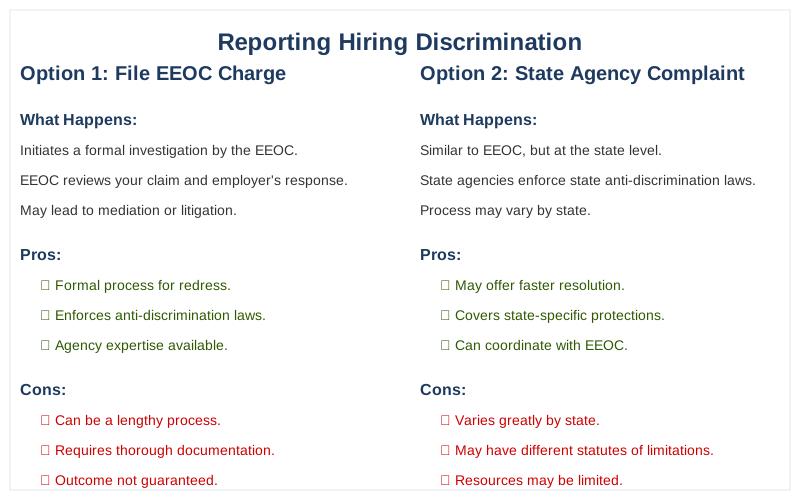
Infographic: Pros/cons of reporting hiring discrimination.
Product comparison for What Happens When You Report Hiring Discrimination

Key Takeaways

  • Reporting hiring discrimination is a serious step with significant implications. The process typically involves filing a charge with the Equal Employment Opportunity Commission (EEOC) or a similar state agency, initiating an investigation that thoroughly reviews the allegations and company practices How to Handle an EEOC Investigation in 2026 | HR Acuity. Employers are increasingly facing scrutiny, with some potentially required to certify their actions are free from discrimination The 2026 Regulatory Landscape: What to Expect & How to Prepare.
  • Documentation is paramount. Your ability to prove your case hinges on meticulously recorded evidence of discriminatory actions or statements. This includes dates, times, individuals involved, and the specific nature of the conduct, which can significantly bolster your discrimination complaint process How to Safely Document Workplace Discrimination - Weiler Law PLLC.
  • Retaliation is illegal. Employers are prohibited from punishing or harassing you for reporting job discrimination, even if the conduct is ultimately found not to be illegal Discrimination, harassment, and retaliation | USAGov. However, be aware that if the decision was made by your direct supervisor, your career progression under their management might be impacted Will reporting discrimination ruin my career growth? : r/WorkAdvice.
  • Protect yourself first. The system is designed to investigate, but your immediate career health is your responsibility. Always document everything in writing and keep copies, as this is your strongest defense and the foundation for any successful EEOC complaint.
Understanding the nuances of reporting discrimination can be crucial, especially when considering how diversity hiring programs may not address underlying issues.

Frequently Asked Questions

I think I was denied a job because of my race. What's the first step to take?
If you believe you've experienced hiring discrimination, you can file a charge of discrimination with the Equal Employment Opportunity Commission (EEOC) EEOC. This is a signed statement that asserts an employer engaged in discriminatory practices. The EEOC will then investigate your claim.
What happens after I file a discrimination complaint with the EEOC?
After you file an EEOC complaint, the agency will typically notify the employer and may attempt to mediate the dispute. If mediation isn't successful, the EEOC will conduct an investigation to determine if there's reasonable cause to believe discrimination occurred HR Acuity.
Can my employer retaliate against me if I report hiring discrimination?
No, it is illegal for an employer to retaliate against you for reporting discrimination. Federal and state laws protect employees, former employees, and job applicants from retaliation after they file a complaint California Department of Industrial Relations. If retaliation occurs, you may have grounds for a separate legal claim.
How long does it take for the EEOC to investigate a discrimination complaint?
The timeframe for an EEOC investigation can vary significantly depending on the complexity of the case and the agency's caseload. Some investigations might be resolved within a few months, while others could take a year or longer HR Acuity. You will be kept informed of the progress of your case.
What if the EEOC finds evidence of discrimination after investigating my complaint?
If the EEOC finds cause to believe discrimination occurred, they will issue a "Notice of Right to Sue" which allows you to file a lawsuit in federal court. In some cases, the EEOC may also attempt to reach a settlement between you and the employer HR Acuity.
Are there other places besides the EEOC to report hiring discrimination?
Yes, in addition to the federal EEOC, you can also report discrimination to your state or local government agencies that handle employment law. For example, in California, you can file with the Civil Rights Department California Labor Law. Some states have their own anti-discrimination laws and enforcement bodies.

Sources

Related Articles