Understanding Discrimination in the Workplace: Practical Insights for Job Seekers
RoleAlign Team
12 min read
Includes Video
You just poured hours into a job application, meticulously tailoring your resume and cover letter, only to receive that dreaded automated rejection email. Or maybe you aced an interview, felt a real connection, and then... silence. It stings, and often, the unspoken question lingers: was it something I said, or something about me?
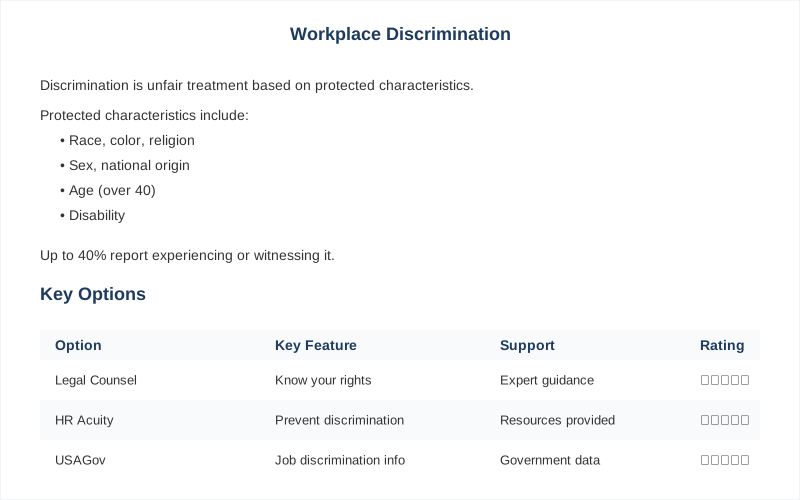
You just poured hours into a job application, meticulously tailoring your resume and cover letter, only to receive that dreaded automated rejection email. Or maybe you aced an interview, felt a real connection, and then... silence. It stings, and often, the unspoken question lingers: was it something I said, or something about me? Discrimination in the workplace, whether overt or subtle, is a reality that can derail even the most qualified candidates. It occurs when an employer treats an applicant or employee less favorably because of their race, color, religion, sex, national origin, age, or disability Texas Workforce Commission. This unfair treatment can surface in hiring, promotions, compensation, and even daily work interactions. While it's difficult to pinpoint definitively, understanding the landscape of employment discrimination is crucial for navigating your job search effectively. Knowing your rights and recognizing potential red flags can empower you to advocate for yourself. Up to 40% of employees report experiencing or witnessing discrimination at work HR Acuity, making awareness not just important, but essential.
Key specifications for discrimination in the workplace
The Real Answer
Discrimination in the workplace isn't just about blatant rejection; it's often subtle unfair treatment based on protected characteristics. From a recruiter's perspective, identifying and proving discrimination is complex, but understanding the legal framework is crucial for candidates.
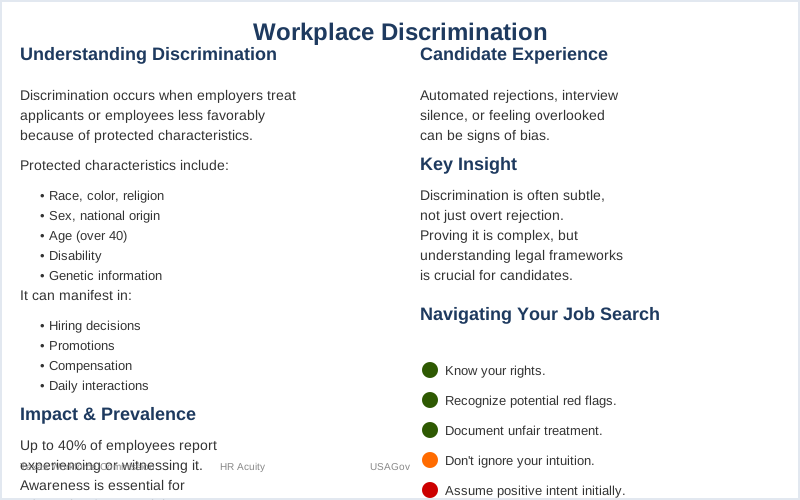
Discrimination in the workplace means an employer treats a job applicant or employee unfairly because of their race, color, religion, sex, national origin, age (over 40), disability, or genetic information USAGov. This unfair treatment can manifest in hiring, firing, promotions, wages, or even daily work assignments. While overt discrimination is illegal, subtle biases can be harder to spot and prove, impacting career progression and well-being IMD.
Many candidates assume recruiters are solely focused on skills and experience. However, responsible recruiters and hiring managers are acutely aware of equal employment opportunity laws designed to prevent bias. The challenge is that proving discrimination often requires demonstrating a pattern of behavior or a clear causal link between a protected characteristic and an adverse employment action. This is where the legal definitions become critical.
It's important to know that not all employers are covered by federal discrimination laws; coverage often depends on the number of employees USAGov. If you believe you've experienced discrimination, the first step is often filing a charge with the Equal Employment Opportunity Commission (EEOC) or your state's Fair Employment Practices Agency (FEPA) EEOC. Up to 40% of employees report experiencing or witnessing discrimination at work, highlighting its prevalence HR Acuity.
Navigating this landscape requires understanding what constitutes illegal discrimination versus subjective business decisions. The Texas Workforce Commission notes that employment discrimination exists when an employer treats someone less favorably *merely because* of their protected class Texas Workforce Commission. This distinction is key - a company can make tough decisions, but not based on illegal prejudice.
To better understand these subtle disparities, explore how companies often evade accountability in pay discrimination practices.
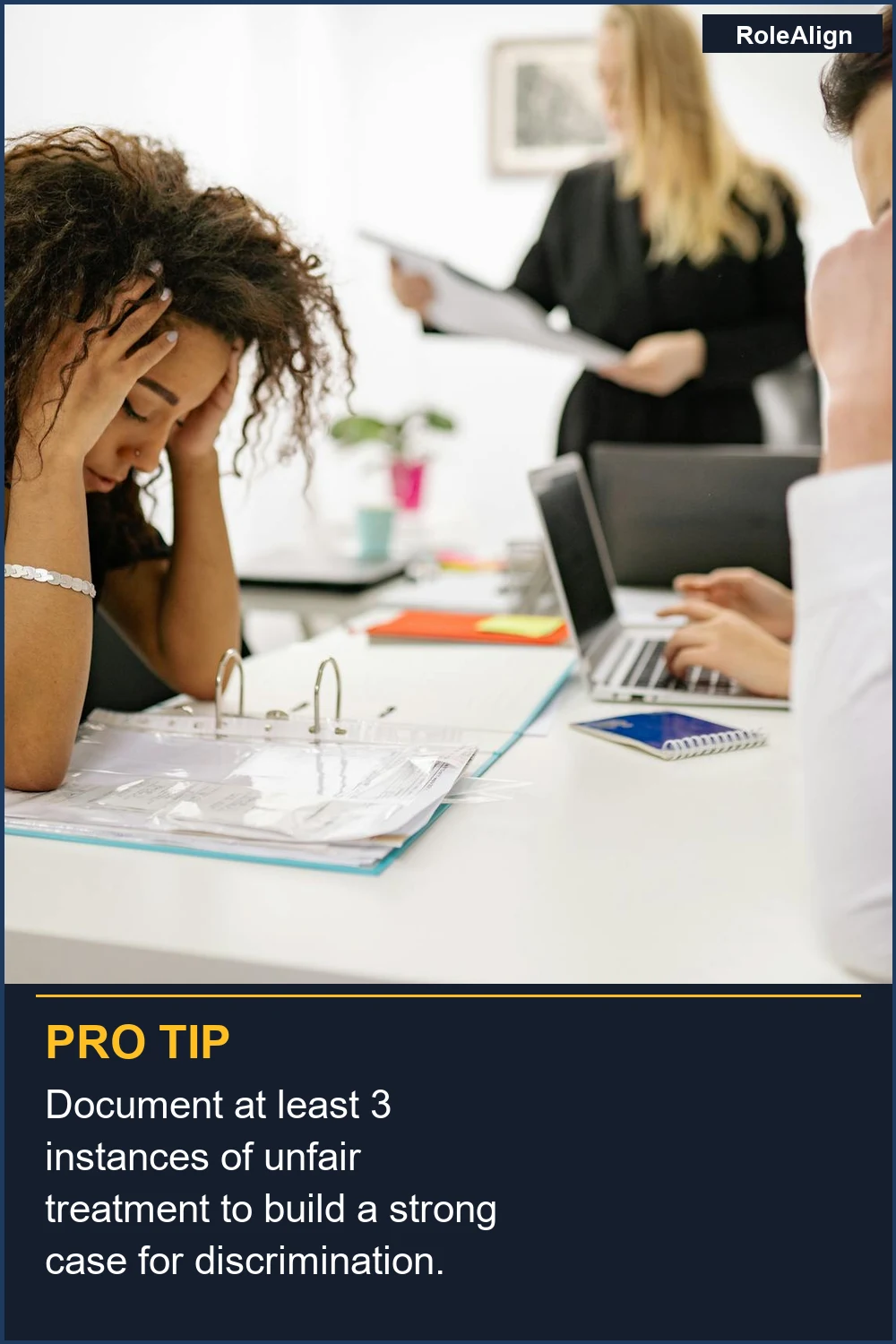
Experiencing workplace discrimination can lead to immense stress, especially when subtle unfairness impacts career progression. Understand your rights when facing bias.
| Photo by Yan Krukau
Experiencing workplace discrimination can lead to immense stress, especially when subtle unfairness impacts career progression. Understand your rights when facing bias.
| Photo by Yan Krukau
What's Actually Going On
1
Applicant Tracking Systems (ATS) parse resumes by looking for keywords and specific formatting. Recruiters, especially in larger enterprises, rely heavily on these systems to filter out candidates. They often set up parameters based on job descriptions, meaning if your resume doesn't use the exact terminology or list the required skills, it might be automatically rejected before a human even sees it. USAGov notes that discrimination happens when an employer treats an applicant unfairly based on protected characteristics like race, sex, or age.
2
Recruiters screen for a quick match to the job requirements and company culture. This isn't always a conscious bias; it's often about efficiency. They're looking for signals that you can do the job and will fit in. In smaller companies or startups, this screening might be more hands-on, with founders or early employees making calls. In established corporations, it's more likely to be a multi-stage process involving HR, hiring managers, and sometimes an internal hiring committee.
3
Hiring committees make decisions based on a combination of technical skills, experience, and perceived cultural fit. This is where subtle biases can creep in. A committee member might unconsciously favor a candidate who reminds them of themselves or who comes from a similar background. Differences by industry are stark: tech might prioritize rapid learning and adaptability, finance demands precision and regulatory understanding, and healthcare emphasizes patient care and ethical conduct.
4
Seniority level impacts the process significantly. Entry-level roles are often heavily filtered by ATS and basic qualifications. Mid-level roles involve more nuanced screening for specific skills and project experience. Executive-level hiring committees often conduct extensive interviews, reference checks, and behavioral assessments, where a broader range of factors, including leadership style and strategic thinking, are evaluated.
5
Company size dictates the formality and potential for bias. Startups might have fewer formal processes, leading to more ad-hoc decisions that can be prone to personal preference or unconscious bias. Enterprises, with their structured HR departments and compliance teams, often have more checks and balances, but the sheer volume of applications can mean reliance on ATS, which can inadvertently filter out qualified candidates from non-traditional backgrounds. Up to 40% of employees experience or witness discrimination at work HR Acuity, highlighting the pervasive nature of the issue.
6
Protected classes are legally defined and include race, color, religion, sex, national origin, age (40 or older), disability, and genetic information Texas Workforce Commission. Discrimination occurs when an employer treats an applicant or employee less favorably because of these characteristics. This can manifest in hiring, promotions, pay, or even day-to-day treatment.
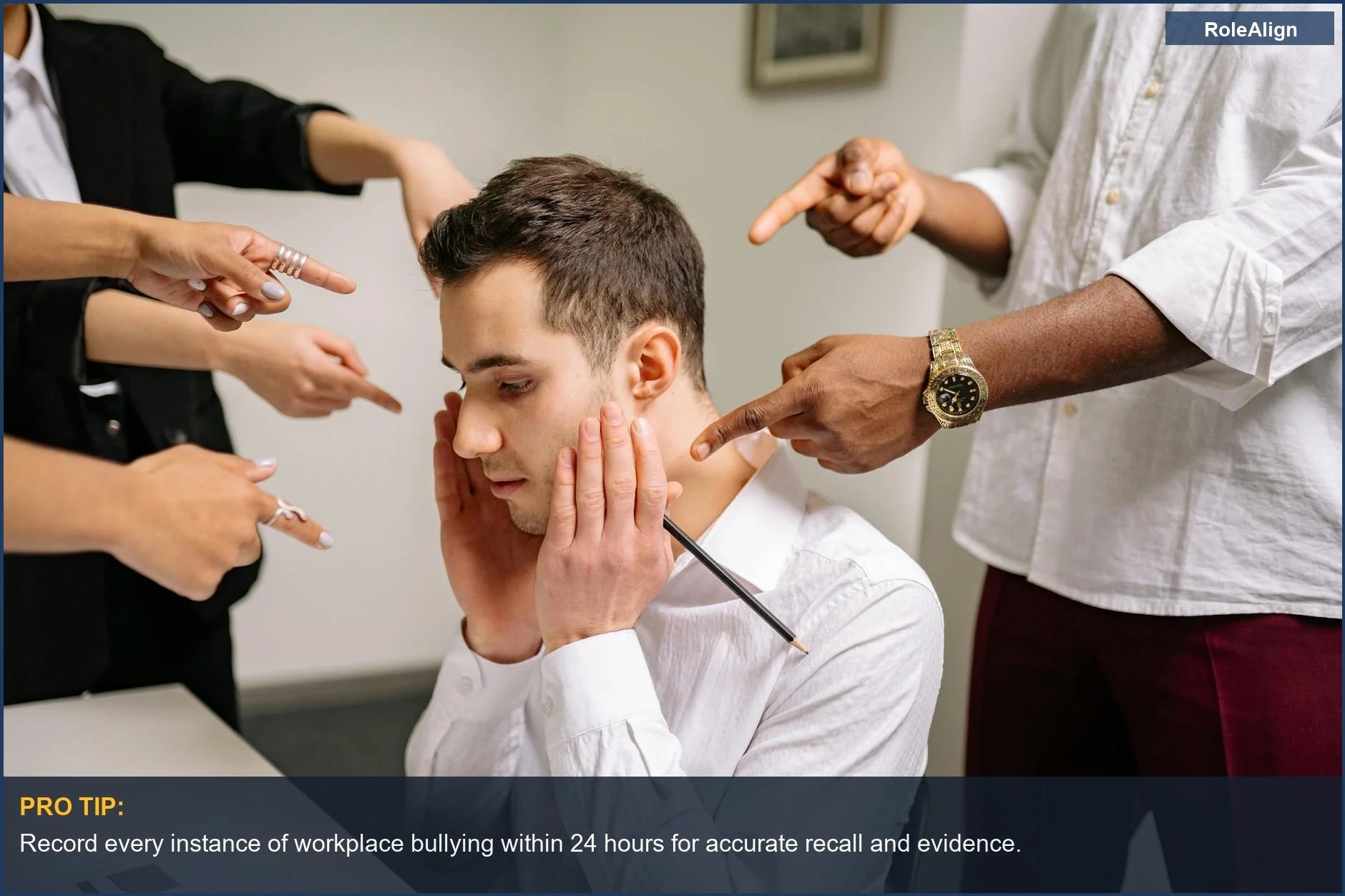
Workplace bullying, often disguised as team feedback, can be a form of discrimination. Recognize the signs and seek support to overcome it.
| Photo by Yan Krukau
Workplace bullying, often disguised as team feedback, can be a form of discrimination. Recognize the signs and seek support to overcome it.
| Photo by Yan Krukau
How to Handle This
1
Document Everything Immediately. If you suspect discrimination, start a private, detailed log of every incident: dates, times, specific actions or words, who was present, and your feelings. Recruiters and legal teams look for patterns; your log provides the raw data. The EEOC requires a signed statement, and your documentation forms its basis. Skipping this means relying on unreliable memory, easily challenged, and lacking concrete evidence for formal complaints or legal action.
2
Understand Protected Classes and Your Rights. Illegal discrimination is unfair treatment based on race, color, religion, sex, national origin, age (40+), disability, or genetic information. Federal and state laws, like those enforced by the Texas Workforce Commission, protect you. Recruiters understand these laws to avoid legal issues for their companies. Ignoring your rights means you might not recognize unlawful behavior or miss crucial filing deadlines, like the 45-calendar day window for federal employees to report discrimination, as USAGov highlights.
3
Seek Internal Resolution First, If Safe. Consider a safe, internal channel like HR or a trusted manager. Recruiters prefer companies resolve issues internally to avoid external complaints and lawsuits, signaling functional processes. Failing to explore internal options can make you seem aggressive, bypassing established procedures.
4
Consult External Resources for Guidance. If internal resolution fails or isn't an option, contact external agencies. The EEOC is the primary federal agency for filing charges. State agencies, like the Texas Workforce Commission's Civil Rights Division, also handle complaints. Candidates who understand these processes are more informed and likely to pursue legitimate claims. Skipping this step means you might not know how to file a complaint or understand available legal avenues, leading to frustration and powerlessness without structured support.
Feeling overwhelmed by pointing fingers at work? This can be a clear sign of workplace discrimination. Don't let it go unaddressed.
| Photo by Yan Krukau
Feeling overwhelmed by pointing fingers at work? This can be a clear sign of workplace discrimination. Don't let it go unaddressed.
| Photo by Yan Krukau
What This Looks Like in Practice
Senior Software Engineer at a Series B Startup: Passed over for promotions in favor of less experienced male colleagues, with "cultural fit" cited as the reason without objective criteria. This is subtle gender discrimination.
What worked: Documenting every instance of being overlooked, noting who received promotions instead, and gathering support from trusted colleagues.
Entry-Level Data Analyst at a Fortune 500: From a minority ethnic background, consistently assigned less desirable projects and excluded from networking opportunities. Excellent performance reviews never led to high-profile assignments. This workplace discrimination based on race stunts career growth.
What worked: Detailed records of project assignments, performance metrics, and exclusion instances, followed by a formal complaint to the EEOC after exhausting internal channels.
What didn't work: Assuming the manager would eventually recognize potential without direct intervention or a formal process. Filing A Charge of Discrimination - EEOC
Career Changer from Teaching to Product Management: Hiring managers questioned their ability to grasp technical concepts despite relevant certifications and personal projects. Candidates with less direct experience but a "tech background" were considered more readily. This highlights age discrimination or bias against non-traditional paths.
What worked: Proactively addressing concerns by highlighting transferable skills, demonstrating product lifecycle understanding through portfolio projects, and leveraging informational interviews.
To further explore the nuances of bias in hiring, consider how algorithms can inadvertently perpetuate discrimination, as discussed in this insightful article.
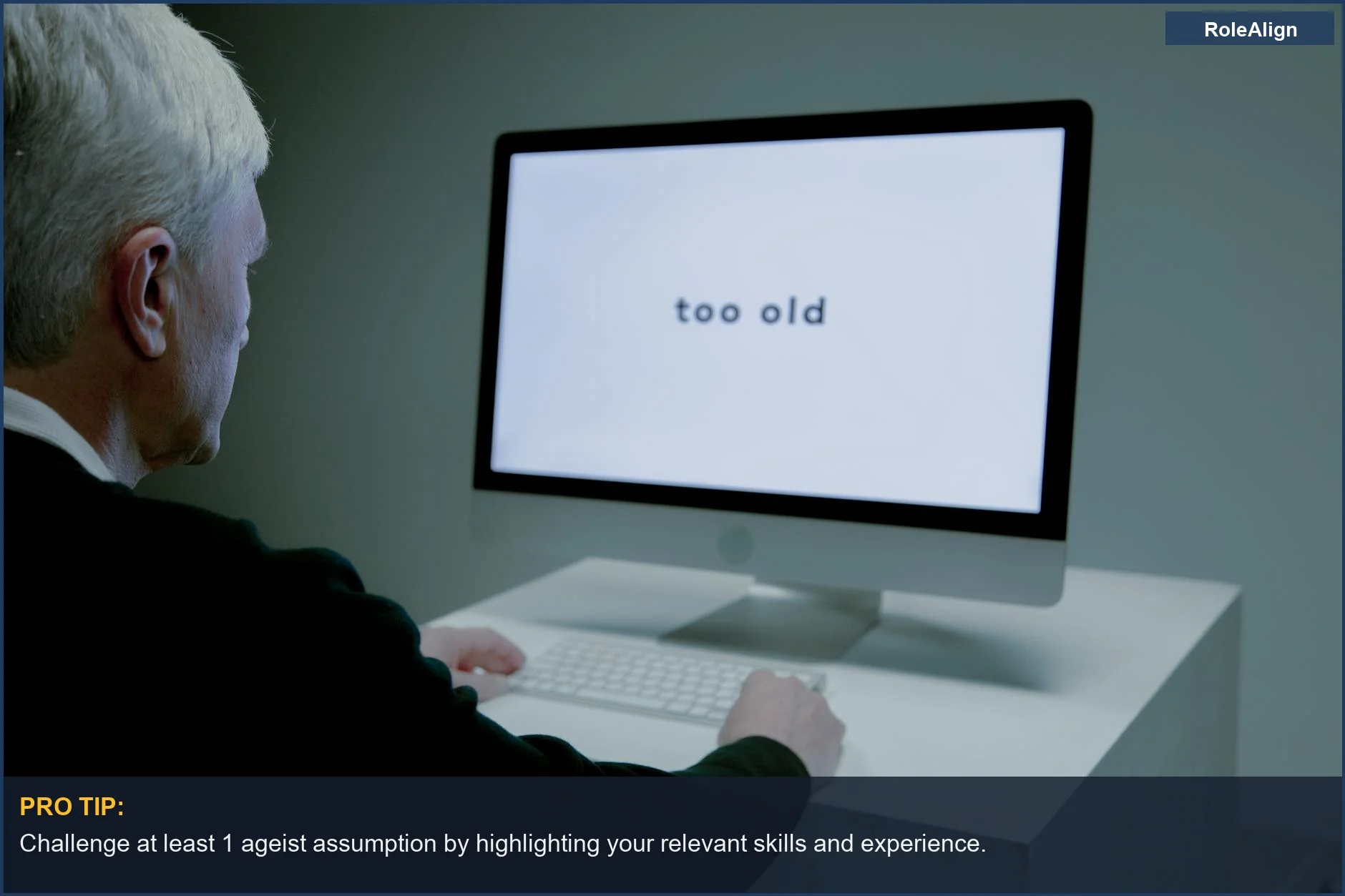
Ageism in the workplace is a serious issue. This senior professional faces online discrimination, reminding us that bias affects all ages.
| Photo by Ron Lach
Ageism in the workplace is a serious issue. This senior professional faces online discrimination, reminding us that bias affects all ages.
| Photo by Ron Lach
Mistakes That Kill Your Chances
Mistake Bringing up past discrimination claims too early or aggressively.
Why candidates make it They feel it's crucial to disclose immediately for transparency or to get it "out of the way."
What recruiters actually see A candidate who is potentially litigious, difficult to manage, or focused on past grievances over future contributions. It signals a defensive posture before an offer. We're looking for fit and enthusiasm for the *current* role.
The fix Focus on your qualifications and how you solve employer problems. If discrimination was a significant factor in leaving a previous role, frame it professionally and factually when asked later, ideally after mutual interest is established. Premature discussion can be perceived negatively, as the EEOC notes a charge is a formal step.
Mistake Vague or unsubstantiated accusations of discrimination on your resume or cover letter.
Why candidates make it They believe highlighting past unfair treatment signals awareness of their rights and self-protection.
What recruiters actually see An unprofessional or overly negative tone. Recruiters look for positive contributions and problem-solving. Such statements feel like a preemptive complaint, hindering objective skill assessment.
The fix Keep application materials focused on achievements, skills, and value. Document discrimination thoroughly. Address it later if a formal complaint is necessary or if asked directly about leaving a role, but never on initial application documents.
Mistake Assuming every perceived slight is illegal discrimination.
Why candidates make it Fear of discrimination is real, and the line between unfair treatment and illegal discrimination is blurry. They may conflate general workplace rudeness with legally protected actions. Discrimination is specifically about being treated less favorably because of a protected class, as the Texas Workforce Commission states.
What recruiters actually see A candidate with potentially unrealistic expectations or a tendency to perceive issues where none exist, indicating potential conflict or lack of understanding of employment law. We need people who collaborate and focus on business outcomes.
The fix Understand protected classes and illegal discrimination. Not every negative interaction is discrimination. Focus on building strong professional relationships and addressing issues through appropriate channels, like speaking directly to a manager about performance feedback, rather than framing it as discrimination. USAGov clarifies discrimination is based on specific protected characteristics.
Mistake For new grads: Not understanding that "culture fit" can sometimes mask bias.
Why candidates make it Eagerness to impress and a belief that fitting the perceived company culture is paramount.
What recruiters actually see A candidate potentially trying too hard to conform, hiding their authentic selves. Recruiters can also be unconsciously biased, favoring candidates similar to themselves or current team members, allowing discrimination to creep in. Awareness is key, as up to 40% of employees experience or witness discrimination at work.
The fix Be authentic. While professional demeanor is essential, don't contort yourself. Focus on demonstrating skills, eagerness to learn, and how your unique perspective adds value. Ask about team dynamics and company values to gauge true inclusivity, not just perceived "fit."
Mistake For mid-career professionals: Over-reliance on past successful strategies that may now be viewed through a discriminatory lens.
Why candidates make it They have proven methods and are accustomed to autonomy or recognition more prevalent in previous environments.
What recruiters actually see A candidate resistant to new approaches or unable to adapt to diverse team structures and management styles. This can signal inflexibility, and if it stems from unconscious bias about how things "should" be done, it's a red flag for potential discrimination issues.
The fix Frame past successes by highlighting adaptable skills and quantifiable results. Emphasize your ability to collaborate with diverse teams and embrace evolving methodologies. Be open to learning and adapting; flexibility is crucial for modern workplaces.
Mistake For senior leaders: Assuming seniority grants immunity from scrutiny on hiring practices.
Why candidates make it Accustomed to high-level decisions, they may not be attuned to equitable hiring nuances or believe their experience shields them from oversight.
What recruiters actually see A leader who may perpetuate bias, leading to legal risks and a toxic work environment. Hiring managers are increasingly aware of the need for diverse candidate pools and equitable evaluation, as emphasized by organizations like the EEOC.
The fix Actively champion diversity and inclusion in hiring. Implement best practices for unbiased interviewing, such as structured interviews and diverse panels. Articulate your commitment to equitable hiring and demonstrate how you foster an inclusive team culture.
Understanding the implications of reporting discrimination can be crucial, so consider learning about reporting hiring discrimination.
Comparison overview for discrimination in the workplace
Key Takeaways
Discrimination is real and pervasive; up to 40% of employees experience or witness it HR Acuity. It's not just overt acts; subtle biases in hiring, promotions, and daily interactions are also illegal. Employers treat applicants or employees unfairly because of protected classes like race, religion, sex, age (40+), national origin, or disability USAGov.
Know your rights and reporting channels. Federal law protects you, enforced by the EEOC and state agencies USAGov. For instance, you must file a charge with the EEOC before suing in federal court EEOC.
Document everything. If you suspect discrimination, meticulously record dates, times, specific incidents, who was involved, and any witnesses. This is crucial for any formal complaint IMD.
The single most important thing a recruiter would tell you off the record? Don't let the fear of appearing "difficult" stop you from addressing unfair treatment. Companies that tolerate discrimination are toxic environments, and you're better off out. If you're experiencing workplace discrimination, it's okay to seek legal help and understand your options.
Navigating workplace dynamics is crucial, as understanding office politics can significantly impact your job application success.
Frequently Asked Questions
What are the most common ways people get treated unfairly at work?
You'll see unfair treatment based on race, gender, age (especially over 40), religion, national origin, and disability. This can show up in hiring, pay, promotions, or even just day-to-day interactions where someone is consistently overlooked or spoken over. Honestly, it's shocking how often it still happens, even in seemingly progressive companies. A SHRM report in 2023 indicated that a significant percentage of employees have witnessed or experienced some form of unfair treatment at work. HR Acuity
How can being treated unfairly at work mess up your career path?
It's a career killer, plain and simple. When you're passed over for promotions or challenging projects because of who you are, your skills stagnate, and your visibility drops. You might see colleagues with less experience but different backgrounds getting ahead, which is incredibly demoralizing. This directly impacts your earning potential and long-term growth trajectory. IMD
If I think I'm being treated unfairly at work, what's the first real step I should take?
First, document *everything*. Dates, times, who was present, what was said or done. Then, check your company's HR policies for their reporting procedures; most have an internal process. If that doesn't resolve it or you're uncomfortable going internal, your next step is usually filing a charge with the EEOC (Equal Employment Opportunity Commission) or your state's equivalent agency. They're the ones who can actually investigate and take action.
Are there specific industries where this kind of unfair treatment is more of a problem?
While it can happen anywhere, historically, industries with less diversity in leadership or those heavily reliant on traditional hiring pipelines have seen more issues. Think about sectors like finance, manufacturing, or even certain pockets of tech that haven't pushed DEI hard enough. It's less about the industry itself and more about the company culture and leadership's commitment to fairness. USA.gov
What can companies actually do to stop this unfair treatment from happening?
Companies need to move beyond just lip service. This means robust, unbiased training for *everyone*, especially hiring managers, that goes beyond ticking a box. They need clear, accessible reporting mechanisms with guaranteed non-retaliation policies and consistent enforcement. Regular pay equity audits and diverse interview panels are also non-negotiable. It's about building a culture where fairness is ingrained, not an afterthought. HR Acuity