Becoming a Workplace Culture Insider: Understanding the Dynamics That Shape Your Career
RoleAlign Team
11 min read
Includes Video
You just got that rejection email. Again. Staring at the screen, you wonder what invisible barrier you hit this time. It wasn't your skills, it wasn't your experience; it was something else, something you couldn't quite grasp. This invisible force is workplace culture, and understanding its dynamics is your ticket to becoming a true workplace culture insider.
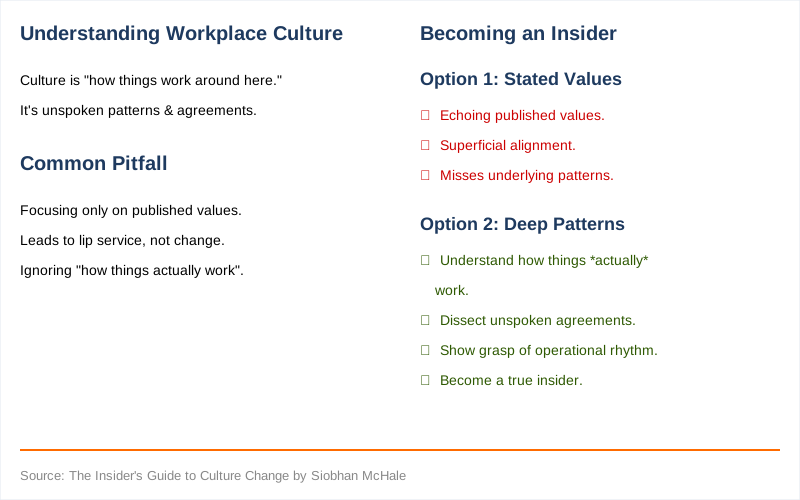
You just got that rejection email. Again. Staring at the screen, you wonder what invisible barrier you hit this time. It wasn't your skills, it wasn't your experience; it was something else, something you couldn't quite grasp. This invisible force is workplace culture, and understanding its dynamics is your ticket to becoming a true workplace culture insider. Many leaders try to shift culture by simply publishing values, only to see minimal impact. As Siobhan McHale points out in The Insider's Guide to Culture Change, this often results in short-term lip service rather than genuine transformation. Culture isn't just about stated ideals; it's "how things work around here," a complex web of patterns and agreements that dictate daily operations and employee interactions The Insider's Guide to Culture Change by Siobhan McHale. To navigate the hiring landscape effectively and to truly thrive in your career, you need to dissect these underlying patterns, not just the surface-level behaviors.
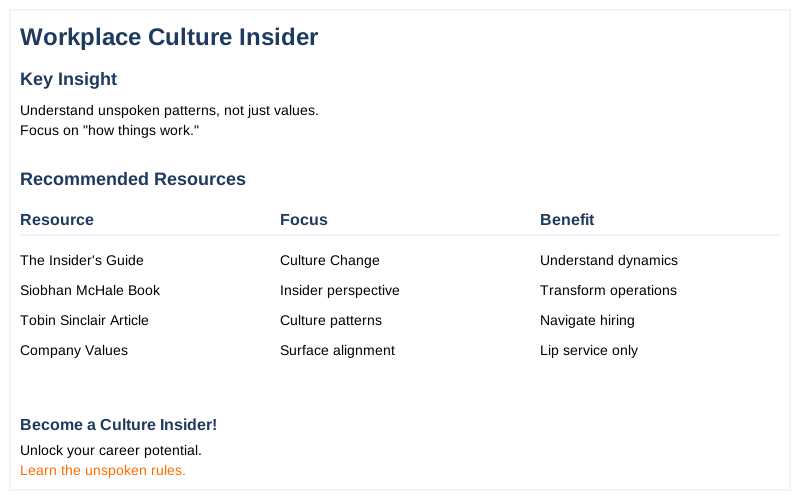
Key specifications for workplace culture insider
The Real Answer
Becoming a true workplace culture insider isn't about memorizing company values; it's about understanding the unspoken patterns and agreements that dictate how things *actually* get done.
Recruiters and hiring managers aren't just looking at your resume; they're assessing how you'll fit into the company's operational rhythm. They're scanning for evidence that you grasp the deep-seated behaviors and informal rules, not just the stated mission. Many candidates mistakenly focus on surface-level alignment, like echoing core values, but miss the crucial underlying dynamics. As Siobhan McHale notes in The Insider's Guide to Culture Change, culture is fundamentally "how things work around here," and it emerges from daily behaviors, not just proclamations.
To become a workplace culture insider, you need to move beyond what's written and dig into what's *lived*. This means observing how decisions are made, how communication flows, and how conflicts are resolved. Are people empowered to speak up, or is there a preference for consensus even when it stifles innovation? Understanding these patterns of behavior is key, as they often override stated policies. Toby Sinclair's review of McHale's book highlights that if you don't break the pattern, culture won't change, emphasizing that these overriding, often unwritten rules govern how people work.
This perspective is critical because many attempts at culture change fail by focusing on isolated elements rather than the interconnected system. For instance, simply introducing new IT systems or publishing value statements often proves ineffective because they don't address the ingrained patterns. McHale's work breaks down culture transformation into a four-step process: diagnose, reframe roles, break patterns, and consolidate gains. By applying this framework, you can better understand and navigate any organization's unique operating system, making you an invaluable asset.
Understanding the nuances of office politics hiring can significantly influence your success in the hiring committee's evaluation process.
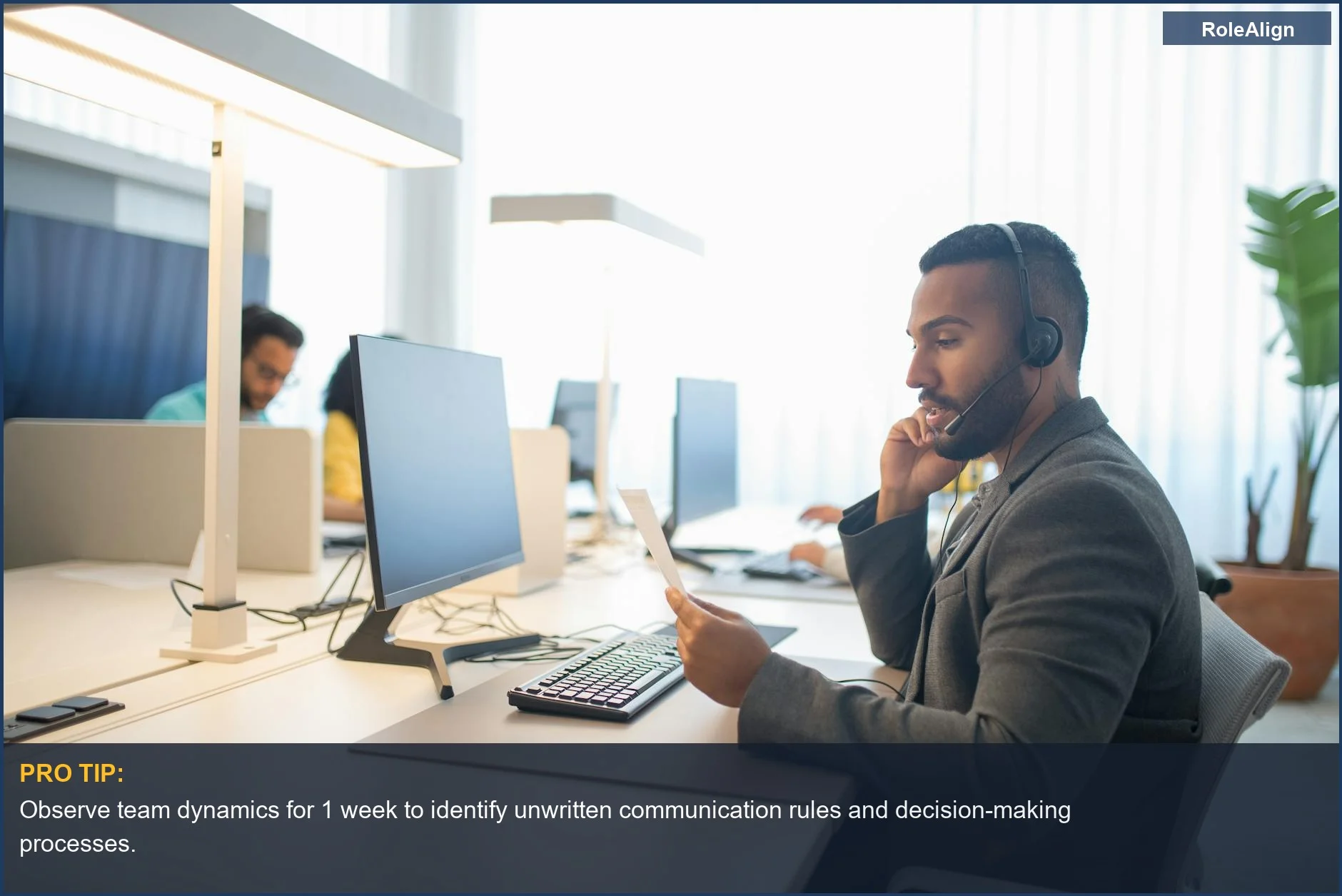
Understanding the unspoken agreements is key to being a workplace culture insider. Observe how teams collaborate and share insights effectively in modern offices.
| Photo by Kampus Production
Understanding the unspoken agreements is key to being a workplace culture insider. Observe how teams collaborate and share insights effectively in modern offices.
| Photo by Kampus Production
What's Actually Going On
1
Understand the ATS filter - Most applications never reach a human. Applicant Tracking Systems (ATS) like Taleo or Greenhouse parse your resume, looking for keywords matching the job description. Without them, your resume gets binned. Think of it as a pre-screening gatekeeper. Companies use these systems to manage volume, not to find the best candidate initially. Siobhan McHale, an expert in culture transformation, highlights how ingrained patterns within an organization dictate operations, and the ATS is just another pattern in the hiring process.
2
Recruiter screen: The 6-second scan - If your resume passes the ATS, a recruiter spends about 6 seconds on it. They're looking for obvious qualifications, career progression, and red flags. Is your experience relevant? Are there unexplained gaps? Does it align with the company's needs, not just your own? Recruiters are often working with multiple roles and hundreds of applications, so clarity and impact are paramount. For senior roles, they're assessing strategic fit and leadership potential.
3
Hiring committee decisions: Beyond the resume - This is where the true workplace culture insider knowledge comes in. Hiring committees weigh technical skills, cultural fit, and team dynamics. Startups might prioritize adaptability and a "roll-up-your-sleeves" attitude, while enterprise companies look for process adherence and proven experience within similar structures. In tech, a strong portfolio or GitHub presence can be more impactful than a perfectly worded resume. Finance demands meticulous attention to detail and compliance. Healthcare emphasizes patient care and ethical conduct. Toby Sinclair's review of "The Insider's Guide to Culture Change" emphasizes that culture isn't just about values; it's about the patterns and agreements that govern how work gets done.
4
Seniority matters - For entry-level roles, demonstrating potential and a willingness to learn is key. For mid-level positions, recruiters look for a track record of delivering results and managing projects. At the senior level, hiring committees are evaluating your ability to lead teams, drive strategy, and influence organizational culture. Your ability to articulate how you've navigated and influenced "how things work around here" becomes critical. The Insider's Guide to Culture Change suggests that understanding these deeply embedded patterns is crucial for any transformation, including hiring.
Understanding how ATS interacts with biases can further illuminate the importance of recognizing discrimination in the workplace.
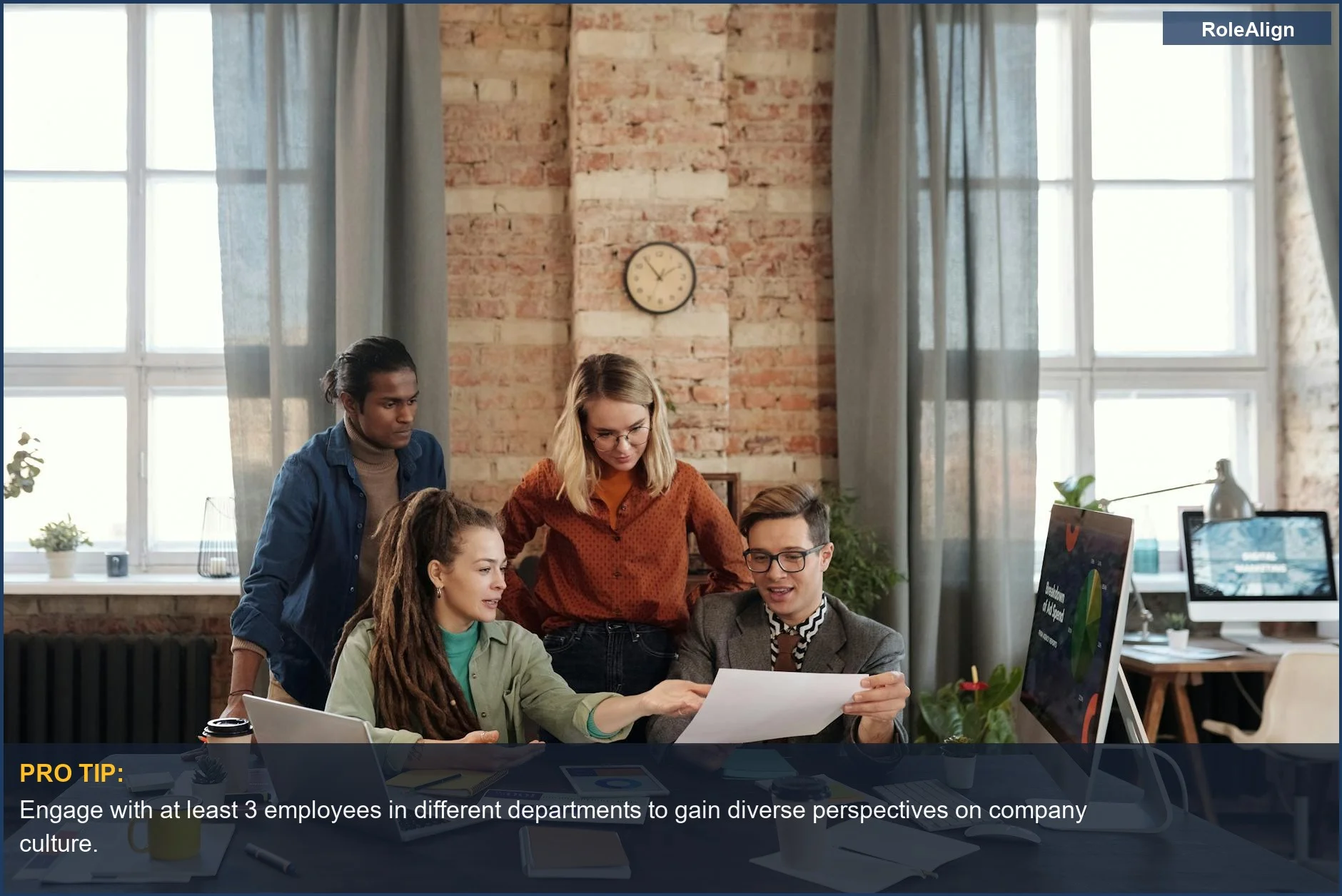
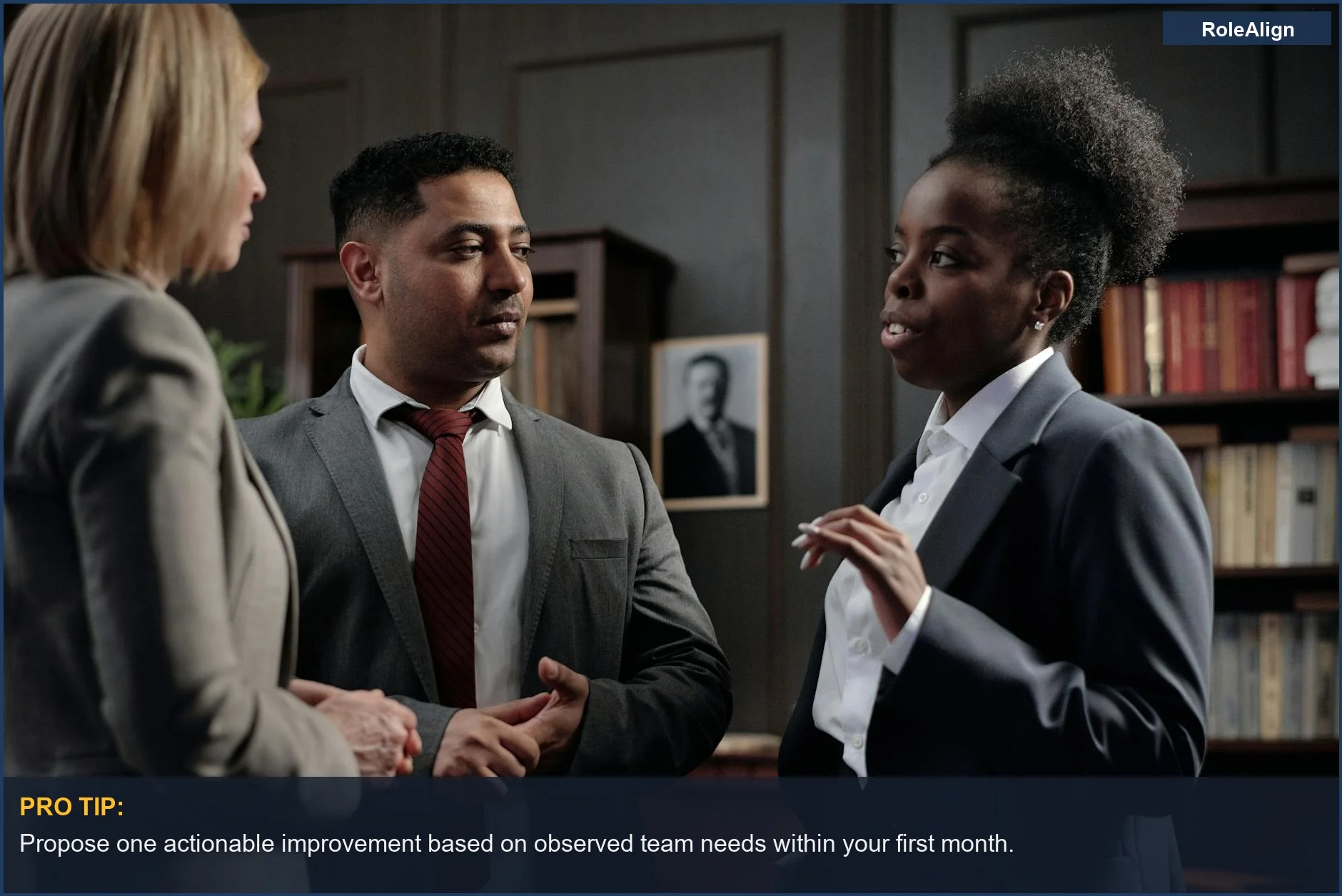
A diverse team strategizing highlights the vibrant and inclusive workplace culture many seek. Researching this DNA is crucial for insider knowledge.
| Photo by Mikael Blomkvist
A diverse team strategizing highlights the vibrant and inclusive workplace culture many seek. Researching this DNA is crucial for insider knowledge.
| Photo by Mikael Blomkvist
How to Handle This
1
Research the company's DNA - Before you even think about applying, dive deep into their stated values, recent news, and executive interviews. Look for the *actual* patterns of behavior, not just the glossy mission statement. As Siobhan McHale notes in The Insider's Guide to Culture Change, culture is "how things work around here," and this is shaped by observable patterns, not just words. For senior roles, understanding these patterns is critical for demonstrating strategic alignment. For junior roles, it shows you're serious about fitting into the existing ecosystem.
Recruiters look for candidates who can articulate *why* they want to join *this specific company*, beyond a generic job description. They want to see you've done your homework and understand the underlying dynamics.
Skipping this means you'll sound like every other applicant, unable to connect your skills to the company's unique operational style. You'll likely be filtered out by an ATS like Taleo or Workday because your application lacks the specific keywords and contextual understanding they flag.
2
Map your experience to their patterns - Once you understand their operational patterns, identify specific instances in your career where you've either reinforced or disrupted similar patterns. McHale's framework emphasizes breaking deeply embedded patterns The Insider's Guide to Culture Change. If the company values rapid iteration, highlight projects where you quickly pivoted based on feedback. If they emphasize collaborative problem-solving, detail how you facilitated cross-functional team success.
From a recruiter's viewpoint, this is how you prove you can *thrive* in their environment, not just *survive*. They're assessing your cultural fit and your potential to contribute to their existing operational flow.
Failure to do this results in a resume that's a generic skills list. Recruiters see this as a lack of self-awareness and an inability to adapt, making you a high-risk hire. This is particularly true in fast-paced industries like AI startups, where adaptability is key.
3
Engage through targeted channels - For most roles, your initial engagement should be through LinkedIn, not a cold email to a generic HR address. Connect with the hiring manager or a recruiter specializing in your field, referencing a specific piece of their content or a company initiative you found compelling during your research. For more senior or specialized roles, a referral from an existing employee is gold. A Toby Sinclair review of The Insider's Guide to Culture Change highlights that culture change often involves reframing roles, suggesting that understanding how *you* fit into their evolving structure is vital.
Recruiters are inundated with applications. A personalized message on LinkedIn, showing you've done your research and understand their culture, cuts through the noise. It signals you're a serious, engaged candidate.
Skipping this means your application gets buried. A generic application often lands in an ATS queue, where it's deprioritized unless it perfectly matches the job description's keyword density. You become just another data point, not a potential cultural asset.
Understanding a company's culture can significantly enhance your job search, as explored in our article on finding jobs.
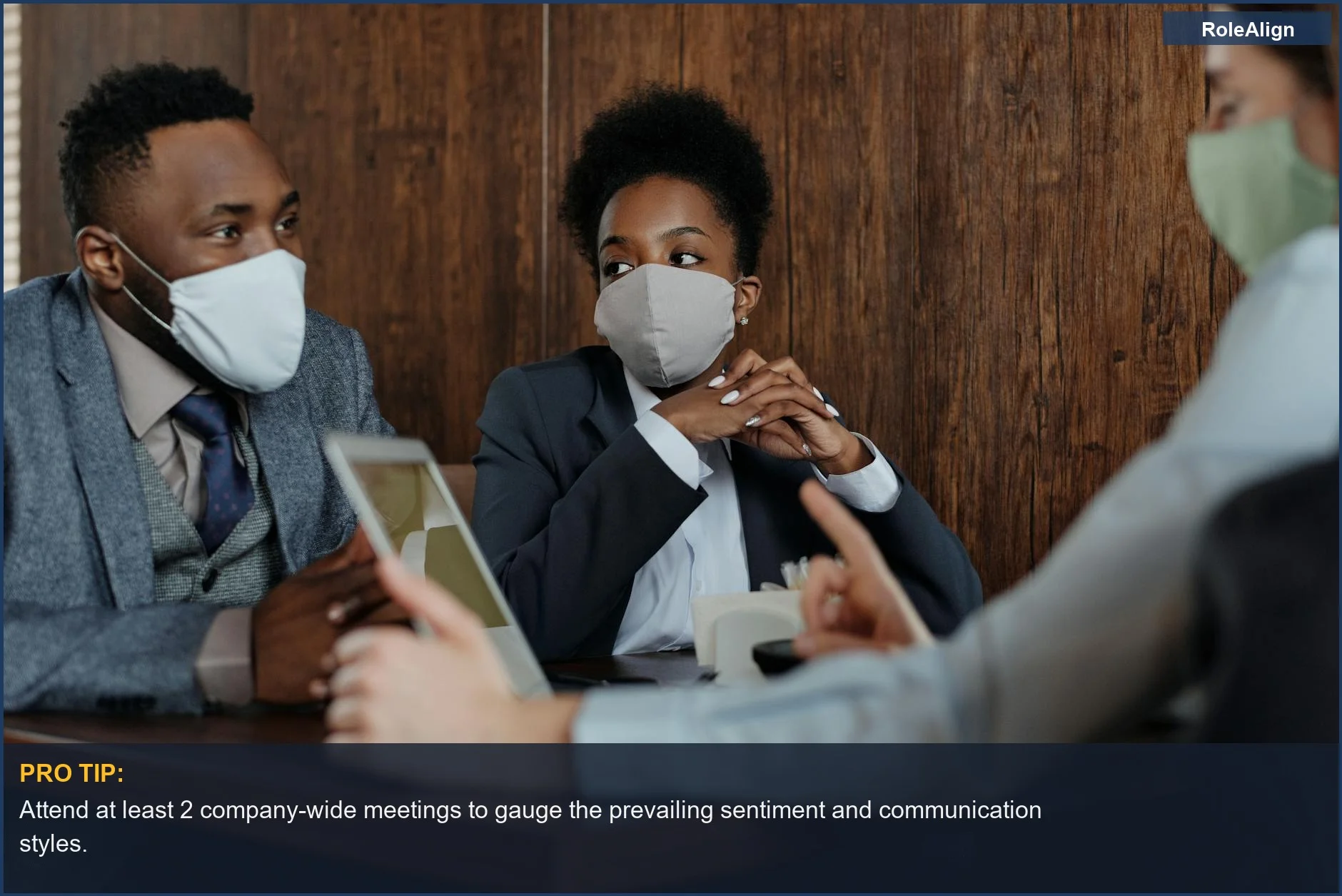
Even with face masks, teamwork and discussion thrive, showing a resilient workplace culture. Researching company DNA reveals true patterns beyond official statements.
| Photo by August de Richelieu
Even with face masks, teamwork and discussion thrive, showing a resilient workplace culture. Researching company DNA reveals true patterns beyond official statements.
| Photo by August de Richelieu
What This Looks Like in Practice
Senior Software Engineer at a Series B Startup Pushing for Staff Engineer, but the company culture prioritizes "founder's vision" over individual contributions. Your direct manager is supportive but constrained. You proposed a new architectural pattern to improve scalability. What worked: You meticulously documented technical benefits and presented it at a cross-team tech lead meeting, securing buy-in from a respected senior engineer in another department. The Insider's Guide to Culture Change highlights understanding and reframing roles to empower employees. What didn't work: Your initial approach was solely data-driven, failing to connect it to the founder's stated goals of rapid growth. This is a common pattern where culture clashes with innovation, debunking the myth that simply stating values leads to change.
Entry-Level Data Analyst at a Fortune 500 Eager to contribute but stuck in menial data-cleaning tasks with little visibility. The company culture is highly hierarchical, with decisions flowing top-down. What worked: You proactively sought a mentor in a senior analytics role who navigated internal politics and explained the "unwritten rules." This mentor guided you on framing requests for more challenging work in terms of department efficiency gains. What didn't work: Directly approaching senior leadership with unsolicited ideas was politely dismissed, as it bypassed established channels and was perceived as overstepping. McHale's process emphasizes diagnosing existing culture before attempting change.
Career Changer from Teaching to Product Management Transitioning into Product Management at a fast-growing tech company. The culture is fast-paced, assuming a baseline understanding of agile methodologies and product development jargon. What worked: You admitted knowledge gaps early on to your manager and team, actively seeking internal documentation and asking clarifying questions. You leveraged your teaching experience to build rapport and demonstrate quick learning, resonating with the team's collaborative spirit. What didn't work: Applying overly formal project management structures from teaching felt rigid and out of sync with the company's fluid, iterative approach. This highlights how patterns, not just explicit behaviors, govern culture, as noted in Sinclair's review.
Collaboration and open discussion are hallmarks of a strong workplace culture. As a workplace culture insider, leverage these discussions for career growth.
| Photo by August de Richelieu
Collaboration and open discussion are hallmarks of a strong workplace culture. As a workplace culture insider, leverage these discussions for career growth.
| Photo by August de Richelieu
Mistakes That Kill Your Chances
Symptom You focus on *what* the company does, not *how* it does it.
Signal Generic answers about mission statements, product features, or market position. You talk about "innovation" without defining it.
Fix Research the company's unwritten rules and patterns of behavior. Understand "how things work around here" by looking at employee reviews on Glassdoor, news articles about company culture shifts, or even the language used in their job descriptions. As Siobhan McHale notes in The Insider's Guide to Culture Change, culture is about "the patterns or agreements that determine how the business operates."
Symptom You treat culture as a static trait, not a dynamic system.
Signal Describing the culture as "toxic" or "great" without nuance. You don't connect your past experiences to contributing to or improving culture.
Fix Understand that culture is about systemic patterns, not just individual behaviors. For mid-career folks, highlight instances where you identified and helped break negative patterns or reinforce positive ones. If you're a senior leader, emphasize your role in driving culture transformation. McHale's book stresses changing the "web" of culture, not just individual threads The Insider's Guide to Culture Change by Siobhan McHale.
Symptom You believe stating values equates to embodying them.
Signal Reciting company values verbatim without providing concrete examples of how you've lived them. You think saying "collaboration is key" is enough.
Fix Demonstrate your understanding of values in action. For new grads, this means showing how you've collaborated on projects or handled conflict constructively. For experienced hires, it's about illustrating how you've fostered a culture of accountability or supported team members through challenges, proving you understand that "culture emerges not from a proclamation... but from how people... behave day in and day out" Book: The Insider's Guide to Culture Change - Siobhán McHale.
Symptom You only talk about your individual contributions.
Signal Resumes and interviews filled with "I did X," "I achieved Y" without mentioning team impact or how you influenced others.
Fix Show how you positively impacted the collective. Frame your achievements in terms of team success, cross-functional collaboration, or how you helped empower colleagues. Recruiters look for candidates who understand that a successful company culture is built by people who lift others up, not just themselves.
Understanding these mistakes can also guide you in researching new career paths to enhance your professional journey.
Comparison overview for workplace culture insider
Key Takeaways
The single most important thing a recruiter will tell you off the record? It's not about ticking boxes or keywords. It's about understanding the underlying patterns of behavior that define a company's culture. As Siobhan McHale states, culture is "how things work around here" Book: The Insider's Guide to Culture Change - Siobhán McHale. If you don't grasp these unspoken rules, you'll always be an outsider, no matter how qualified you are.
To become a true workplace culture insider, focus on dissecting these patterns, not just listing skills. Analyze where the culture is broken or not adding maximum value The Insider's Guide to Culture Change | Siobhan McHale. This means understanding the system, not just individual behaviors.
Consolidate gains to sustain change. True culture transformation requires ongoing effort to embed new ways of working and prevent backsliding.
Navigating workplace culture can often lead to a deeper understanding of career change meaning and its implications.
Frequently Asked Questions
What actually makes a workplace feel like a good place to be?
Forget the posters with inspirational quotes. What truly defines a positive culture are the underlying patterns of how people interact and get work done, as Siobhan McHale notes in 'The Insider's Guide to Culture Change.' Source. This means things like psychological safety, where people feel comfortable speaking up, and genuine collaboration, not just people sitting near each other. It's about how problems are actually solved, not just how the company *says* they are solved.
How does the vibe differ between a new tech company and a big old corporation?
Tech startups often have a 'move fast and break things' culture, which can be exciting but also chaotic, with less defined processes. Established corporations, on the other hand, tend to have more structure and hierarchy, which can mean slower decision-making but also more stability and established career paths. I've seen startups where the CTO answers Slack messages at 2 AM, and corporations where getting a new printer approved takes a month. Source. It's a trade-off between agility and predictability.
Does being higher up the ladder really change how you see the company culture?
Absolutely. Seniority drastically shifts your perspective, often for the better or worse. Leaders are privy to strategic decisions and the 'why' behind initiatives, while junior employees might only see the immediate impact on their day-to-day tasks. Source. You'll hear different stories from a VP about 'driving innovation' versus an entry-level coder complaining about legacy systems.
How can I tell what a company's culture is *really* like during interviews?
Don't just listen to the canned answers about 'collaboration' and 'innovation.' Ask specific questions about how decisions are made, how failure is handled, and what the typical workday looks like for someone in the role you're applying for. Pay attention to how interviewers talk about their colleagues and managers - do they sound energized or resigned? Source. Also, check out Glassdoor reviews, but cross-reference with your own observations.
What are the big mistakes people make when they start a new job and try to fit in?
The most common pitfall is trying too hard to be someone you're not, or assuming you know better than everyone else from day one. Remember, culture is built on 'patterns or agreements that determine how the business operates,' not just stated values. Source. Instead, focus on listening, observing, and understanding those unwritten rules before trying to change them. Give it at least 90 days before you start suggesting major overhauls.