Why AI-Generated Resumes Get Flagged by Recruiters (And What to Do Instead)

RoleAlign Team
15 min read
Includes Video

You've spent hours crafting what you thought was the perfect resume, meticulously detailing your accomplishments with bullet points generated by ChatGPT. You hit submit, only to receive an automated rejection email hours later, or worse, silence. The sting of rejection is amplified when you suspect your AI-generated resume flagged by recruiters wasn't even seen by human eyes.

You've spent hours crafting what you thought was the perfect resume, meticulously detailing your accomplishments with bullet points generated by ChatGPT. You hit submit, only to receive an automated rejection email hours later, or worse, silence. The sting of rejection is amplified when you suspect your AI-generated resume flagged by recruiters wasn't even seen by human eyes. It's a harsh reality: recruiters and Applicant Tracking Systems (ATS) are becoming increasingly adept at spotting content that screams "AI-written." In fact, according to recent surveys, around 20% of recruiters have explicitly rejected candidates solely for AI-written resumes I asked ChatGPT: "Research and make an educated and ... - LinkedIn. This isn't about avoiding AI altogether; it's about understanding that fully machine-generated applications often lack the nuance, personality, and specific detail that human reviewers crave. With over 31% of job seekers now using tools like ChatGPT for their applications The Smart Way Job Seekers Use ChatGPT in 2026 Without Getting ..., recruiters are drowning in a sea of sameness, making it harder than ever to discern genuine talent from automated output.

Recruiters have reported that AI-generated resumes often exhibit a distinct lack of personalization, leading to a generic feel that fails to capture the unique value a candidate brings. This "sea of sameness" is a growing concern, as companies like Oceans and Eaton Capital Management have noted that AI applications make candidates appear nearly identical AI-written résumés frustrate employers, blur talent. Furthermore, the pressure to hire is intensifying, leading more than 9 in 10 recruiters to plan an increased use of AI tools in their processes Recruiters are increasing their AI usage as pressure to hire intensifies. This means a significant portion of applications, potentially one in five candidates, are being filtered out by AI before a human even reviews their resume, and these candidates often never learn the reason for their rejection Recruiters Are Asking AI About You Before They Call You in 2026. The tell-tale signs can include overly polished language, a lack of specific, quantifiable achievements, or an absence of the individual's unique voice and career narrative. Experienced recruiters are trained to look for these subtle indicators that signal an application may have been solely machine-produced.
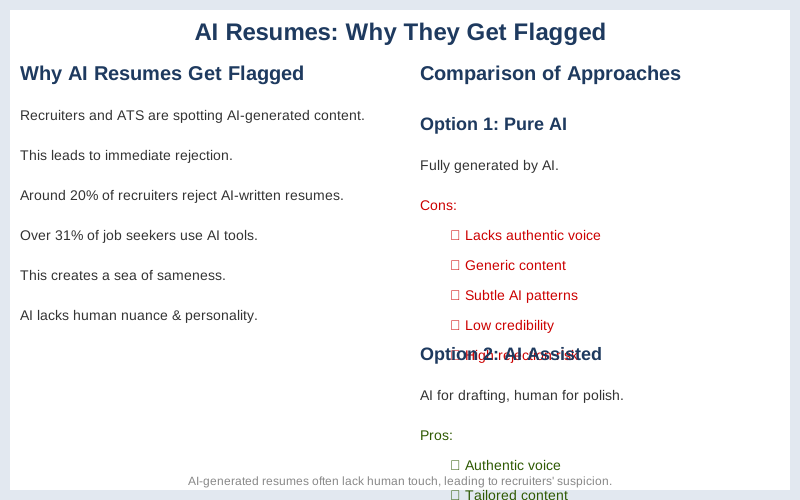
AI resume flags: recruiter rejection reasons.
Key specifications for why AI-generated resumes and cover letters get flagged and rejected by experienced recruiters

The Real Answer

Recruiters flag AI-generated resumes and cover letters because they appear generic, lack authentic voice, and often contain subtle linguistic patterns that signal machine authorship, leading to an immediate loss of candidate credibility.

The core issue isn't the use of AI itself, but the obviousness of its application. Recruiters are inundated with applications; they're trained to spot inconsistencies and a lack of genuine human insight. When your resume reads like a perfectly optimized but soulless marketing blurb, it screams "mass applicant" rather than "ideal candidate." This is particularly true as AI usage in job applications rises; by early 2026, over 31 percent of job seekers were using tools like ChatGPT for drafting inradius.in.

What recruiters actually see is a flood of applications, and they're increasingly leveraging AI themselves to manage the volume. More than 9 in 10 recruiters planned to increase their AI tool usage in 2026 to meet hiring goals hrdive.com. This means they're not just looking for keywords; they're looking for signals that indicate genuine engagement and fit. An AI-generated resume often misses the mark on specific achievements and nuanced understanding of the role, presenting a polished but ultimately hollow profile.

The tell-tale signs are subtle but consistent: repetitive sentence structures, generic claims without supporting metrics, and a lack of personalization that aligns with the specific company or role. Over one-third of hiring managers could spot AI-generated resumes in test samples yotru.com. This isn't about advanced AI detection software; it's about human intuition honed by reviewing thousands of applications. An AI-generated cover letter tells you nothing about how someone thinks or why they want the role; it removes the very signals that matter most LinkedIn.

The risk is significant: around 20% of recruiters have explicitly rejected candidates solely for AI-written resumes LinkedIn. Furthermore, one in five candidates are getting filtered out by AI before a human even reviews their resume, and they never find out why Medium. The goal is to use AI as an assistant, not a ghostwriter, ensuring your application remains a unique reflection of your experience and personality.
Understanding these challenges is crucial, especially as AI is changing recruiter workflows in significant ways.
Inject personal anecdotes into 2-3 bullet points to showcase unique experiences and avoid generic phrasing.
Generic code on a laptop screen highlights how AI-generated resumes often lack authentic voice, leading recruiters to flag them. Avoid this by personalizing your content. | Photo by Markus Winkler

What's Actually Going On

1
ATS Parsing and Initial Screening - Applicant Tracking Systems (ATS) are the gatekeepers. They parse resumes for keywords and basic formatting. While they don't inherently detect AI, poorly structured AI output can cause parsing errors. This is where an AI generated resume flagged by recruiters can be the first hurdle. Around 20% of candidates are filtered out by AI before a human even sees their resume Recruiters are Asking AI About You Before They Call You in 2026. Recruiters are increasingly using AI themselves, with 93% planning to grow their AI use Recruiters are increasing their AI usage as pressure to hire intensifies. The way AI tools often generate text can lead to formatting inconsistencies or the inclusion of filler phrases that might not align with standard ATS parsing protocols. This can manifest as missing information or incorrectly categorized skills, leading to an immediate disqualification before a human recruiter even has a chance to review the application. The sheer volume of applications means ATS are designed for efficiency, and any deviation from expected structure can be a red flag.
2
Recruiter Review and Red Flags - Recruiters spend seconds, not minutes, on initial scans. They look for authenticity, clarity, and concrete achievements. AI-generated content often feels generic, repetitive, and lacks personalization. This is where the "ChatGPT resume detection" becomes apparent. Recruiters are trained to spot patterns like identical sentence rhythms, vague claims, and recycled phrases like "dynamic team player." Many recruiters report explicitly rejecting candidates solely for AI-written resumes I asked ChatGPT: "Research and make an educated and ... - LinkedIn. Over one-third of hiring managers can spot AI-generated resumes Can You Get Rejected for Using a ChatGPT Resume in 2026? - Yotru. This is because AI often struggles to inject genuine personality or nuanced understanding of a specific role and company. For example, an AI might produce a cover letter that lists skills but fails to articulate *why* those skills are relevant to the specific challenges the company is facing, or how the candidate's personal experiences shaped their approach. The language can feel formulaic, lacking the unique voice and conviction of a human applicant. Recruiters are increasingly attuned to this, noticing a lack of specific, quantifiable results or unique anecdotes that would typically emerge from a candidate's actual work history. The repetition of phrases or an overly polished, almost sterile tone can be immediate giveaways that the content wasn't crafted with personal insight.
3
Hiring Committee Decisions and Nuance - Beyond the initial screen, hiring committees seek cultural fit and genuine enthusiasm. An AI cover letter, for instance, tells them nothing about how someone thinks or why they want the role I am genuinely scared of AI... for the rest of you recruiters out there.. The perceived lack of effort and authenticity from an AI-heavy application can signal a candidate who isn't deeply invested. For enterprise companies, strict adherence to ATS rules and a focus on quantifiable results are paramount. Startups might look for more adaptability and creative problem-solving, which can be harder for AI to convincingly portray. In tech, specific technical skills and project details are key; in finance, precision and regulatory awareness matter; and in healthcare, patient-centric language and ethical considerations are crucial. Seniority levels also matter: junior roles might be more forgiving of AI polish, while senior roles demand strategic insight and leadership that AI struggles to replicate. Recruiters using AI reject 75% of resumes before a human sees them Recruiters Overwhelmed by AI-Powered Job Applications - LinkedIn. The nuance of human interaction, the ability to convey passion for a specific mission, or the subtle understanding of team dynamics are all elements that AI currently struggles to replicate authentically. For instance, a senior candidate's resume should reflect strategic thinking and leadership experience, not just a list of responsibilities. AI-generated content can make candidates appear nearly identical, failing to highlight what makes them unique AI-written résumés frustrate employers, blur talent. This homogeneity is a significant turn-off for hiring managers seeking individuals who can bring distinct perspectives and innovative solutions to their teams. The ability to articulate a personal career narrative, connect past experiences to future aspirations, and demonstrate a genuine understanding of the company's culture and values are all critical components that AI-generated applications often miss, leading to rejection.
To grasp the full impact of these systems, it's essential to understand how AI screens your resume before reaching a recruiter.
Ensure your AI resume is ATS-friendly by using standard fonts and clear headings for 100% parsing success.
An 'Authentication Failed' message on a screen symbolizes the rejection of AI cover letters by ATS. These systems scan for specific formatting and keywords. | Photo by Markus Spiske

How to Handle This

1
Review and Humanize AI Output - Before submitting anything, meticulously edit every sentence. AI often produces generic phrasing like "synergized cross-functional teams" or "leveraged innovative solutions" without specific context. Recruiters see this uniformity and know it's AI-generated, especially since 33.5% of hiring managers can spot AI resumes Can You Get Rejected for Using a ChatGPT Resume in 2026? - Yotru. If you skip this, your application screams "low effort" and gets sidelined. For senior roles, this lack of specific detail is a critical red flag; for early-career positions, it shows a failure to grasp how to articulate impact.
2
Inject Specific, Quantifiable Achievements - AI struggles to invent concrete, verifiable results. Instead of "Improved efficiency," write "Reduced project completion time by 15% through implementing a new agile workflow." Recruiters are looking for measurable impact, not vague claims. An AI-generated resume often lacks the precise metrics that demonstrate your value, making it indistinguishable from thousands of others AI-written résumés frustrate employers, blur talent. Skipping this means your resume won't pass the 20-second scan, and you miss the chance to impress with actual accomplishments.
3
Align with Company Culture and Role Nuances - AI can generate text that sounds plausible, but it rarely captures the subtle tone or specific cultural fit a company seeks. Recruiters are trained to spot generic language that doesn't reflect an understanding of their specific industry challenges or team dynamics. When recruiters ask for a cover letter, they want to see *why* you want *this* role at *this* company, not a generic pitch Recruiters Overwhelmed by AI-Powered Job Applications - LinkedIn. Failing to personalize means your application feels like a mass mailing, showing you haven't done your homework. This is especially critical when applying for niche roles or in industries known for strong internal cultures.
4
Proofread for AI Hallucinations and Inconsistencies - AI models can "hallucinate" information, inventing experiences or skills that don't exist or misrepresenting your actual background. This is a major reason AI generated resumes get flagged by recruiters, as they can spot discrepancies between your resume and your LinkedIn profile or even your verbal responses during an interview. One in five candidates are filtered out by AI before a human even reviews their resume Recruiters Are Asking AI About You Before They Call You in 2026. If you don't catch these errors, you'll be rejected for fabricating information, a far worse outcome than being flagged for AI use.
To enhance your job search strategy, consider using AI tools effectively while keeping your resume personalized.
Humanize at least 50% of your AI-generated content by adding specific achievements and industry jargon.
Holding a rejection letter, this person's situation mirrors candidates whose AI cover letters get flagged. Generic phrases like 'synergized teams' are red flags for recruiters. | Photo by RDNE Stock project

What This Looks Like in Practice

  • Senior Software Engineer at a Series B Startup: You used ChatGPT for bullet points like "leading cross-functional teams" and "driving innovation." Too polished, too generic. Recruiters, like those Forbes mentions, spot this lack of hard-won experience. This startup needed concrete contributions, specific technical challenges overcome, not platitudes. Your AI resume missed specific Kubernetes challenges or the impact of an optimization. Rejected. It wasn't just the ATS; the hiring manager saw the fluff.
  • Entry-Level Data Analyst at a Fortune 500: You fed academic projects and internships into an AI builder. Output: perfectly structured sentences, keywords like "data visualization," "statistical analysis," and "predictive modeling." It missed the nuance of your learning journey or unique insights from limited projects. Recruiters see the *sameness* in AI-generated applications, a trend Finance & Commerce reported. Your resume lacked the personal touch and specific project details that differentiate a promising junior analyst.
  • Career Changer from Teaching to Product Management: You used an AI tool for a cover letter to translate pedagogical skills. Grammatically perfect, hit keywords like "stakeholder management" and "user empathy." It missed the *why*. Recruiters looking for genuine passion and a clear understanding of your transition found it impersonal, lacking authentic motivation. An AI cover letter tells them nothing about how you think or why you want the role. LinkedIn posts from recruiters highlight how these generic letters fail to convey your unique story.
  • Mid-Level UX Designer at a SaaS Company: You used AI to rewrite your experience section, aiming for stronger action verbs and quantifiable results. AI produced statements like "Optimized user workflows, resulting in a 30% increase in engagement." The problem: you couldn't recall the specific projects or data supporting these claims. When asked to elaborate on methodology, you faltered. Recruiters are wary of inflated, unverifiable achievements. As recruiters note, AI-generated content often lacks concrete, verifiable evidence.
To enhance your chances in AI-driven interviews, consider how to craft an effective AI-generated resume.
Review AI output for at least 3 common clichés and replace them with concrete examples and metrics.
A blue screen error on a data center terminal signifies the potential 'crash' of AI resume builders. Over-reliance on ChatGPT for bullet points can lead to rejection. | Photo by panumas nikhomkhai

Mistakes That Kill Your Chances

Symptom Generic, repetitive phrasing and a lack of specific, quantifiable achievements.
Signal Bullet points read like a laundry list of common buzzwords ("synergistic," "results-oriented," "dynamic team player") without concrete examples or metrics. For new grads, this often manifests as aspirational statements rather than demonstrated skills. Mid-career and senior candidates might use more sophisticated but equally vague corporate jargon.
Fix For new grads, focus on academic projects, volunteer work, or internships, detailing your *specific* role and any measurable outcomes. For experienced hires, replace generic phrases with STAR method (Situation, Task, Action, Result) bullet points. Quantify everything possible. If the AI generated it, rewrite it with your own words and data.
Symptom Inconsistent tone and unnatural sentence structures that don't match your professional voice.
Signal The resume or cover letter feels like it was written by multiple people, or the language is overly formal or stilted. Recruiters can spot when the "voice" doesn't align with your LinkedIn profile or typical professional communication. This AI resume flagged by recruiters is a major red flag. Forbes notes that AI can produce text that sounds "too perfect" or lacks a human touch.
Fix Use AI as an outline generator, not a ghostwriter. Paste your raw experience into the AI, then extensively edit and rewrite the output in your own voice. Read it aloud to catch awkward phrasing. Ensure consistency across all sections.
Symptom Information that is factually incorrect or a mismatch with your actual experience.
Signal AI models can "hallucinate" details, creating fabricated achievements, skills, or even entirely fictional projects. This is particularly damaging for senior candidates whose experience is heavily scrutinized. A quick cross-reference with your LinkedIn or a brief online search can expose these inaccuracies. Reddit discussions highlight that AI can invent information.
Fix Never blindly copy-paste AI output. Always fact-check every claim, date, and metric. If the AI suggests a skill you don't possess or an achievement you didn't have, remove it entirely. Your resume must be a truthful representation of your career.
Symptom Over-reliance on keywords without context, leading to unnatural density.
Signal While ATS systems scan for keywords, human recruiters look for context and relevance. AI-generated content can sometimes stuff keywords unnaturally, making sentences awkward or nonsensical. Recruiters see this as a sign of a candidate trying to game the system rather than genuinely matching the role. Inradius.in notes that companies check for patterns, and overly dense keyword usage is a red flag.
Fix Use AI to *identify* relevant keywords from the job description, then strategically integrate them into your bullet points and summary where they naturally fit and support your achievements. Aim for a 70-80% match with the JD, not 100%, to avoid sounding robotic.
To truly stand out, it's essential to understand how AI resume builders miss uniqueness.
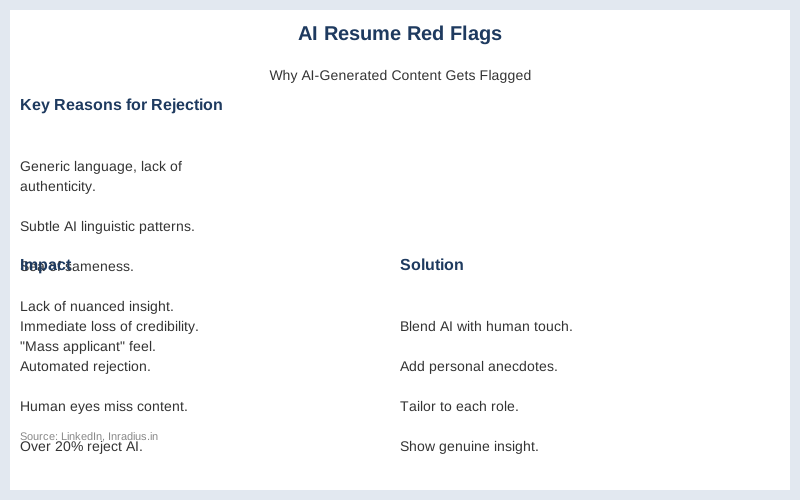
AI resume/cover letter rejection reasons vs. recruiter standards.
Comparison overview for why AI-generated resumes and cover letters get flagged and rejected by experienced recruiters

Key Takeaways

To enhance your chances further, consider using an AI resume builder for ATS-optimized applications.

Frequently Asked Questions

Why do recruiters instantly flag my resume when they know I used AI?
Recruiters can spot AI-generated resumes because they often sound generic, repetitive, and lack the specific, nuanced language that comes from genuine experience. Think of it like recognizing a stock photo versus a candid shot - the AI version feels polished but ultimately impersonal. Around 20% of recruiters have explicitly rejected candidates solely for AI-written resumes in recent surveys, and that number is only climbing as AI detection tools improve Source.
What specific things on my resume make a recruiter think it's AI-written?
Look for consistent sentence structures across your bullet points, vague claims without concrete metrics, and overused buzzwords like 'dynamic team player.' Recruiters also notice when your resume's tone or content doesn't align with your LinkedIn profile, which is a quick way to flag potential AI use. Many hiring teams now check for these patterns, with 78% of companies actively looking for them Source.
Are AI resume builders really that bad, or is it just picky recruiters?
AI resume builders can be a starting point, but relying on them entirely leads to applications that sound almost identical. Companies like Oceans and Eaton Capital Management have reported this homogeneity making candidates indistinguishable. While AI can help with formatting or initial drafts, the lack of unique voice and specific accomplishments makes them easy to dismiss Source.
How quickly can recruiters tell if a cover letter is AI-generated?
Recruiters can often spot AI-generated cover letters by their overly formal, predictable structure and a lack of genuine enthusiasm or specific connection to the company. If it reads like a template that could be sent to any job, it's a red flag. While the exact detection time varies, hiring managers spend an average of less than 20 seconds on each resume, so any perceived artificiality is likely to be noticed immediately Source.
Will an Applicant Tracking System (ATS) flag my resume if it's AI-generated?
ATS systems are less about 'flagging' AI content and more about parsing keywords and structure. However, an AI-generated resume might not effectively incorporate the specific keywords from the job description in a natural way, causing it to score lower. Plus, with 20% of candidates being filtered out by AI before a human even sees their resume, it's clear automated systems are part of the problem Source.
What's the biggest mistake people make when using AI for their job applications?
The biggest mistake is treating AI as a ghostwriter rather than an assistant. Many job seekers simply copy-paste AI output without editing or adding their own unique insights and experiences. When you use AI as a tool to refine your existing content, rather than generate it from scratch, your application feels far more authentic and human.
Can recruiters really tell that easily, or are they just being biased against AI?
It's not about bias, it's about efficiency and authenticity. Recruiters, especially those in high-volume roles, are inundated with applications - over 9 in 10 plan to increase their AI usage to manage the load Source. Generic, AI-penned content doesn't provide the specific evidence of skills and accomplishments they need to quickly assess fit, leading to rejection because it simply doesn't offer what they're looking for.
How many recruiters are actually rejecting resumes for being AI-written?
Recent surveys indicate that around 20% of recruiters have explicitly rejected candidates based on their resumes appearing to be AI-written. This is significant because it means a substantial portion of applicants are being screened out before a human even gets a chance to review their qualifications. As AI tools become more prevalent, this trend is likely to continue or even increase.

Sources

Related Articles