
Why Entry Level Jobs Require 5 Years Experience (2026 Complete Guide)
You just spent hours tailoring your resume, meticulously crafting a cover letter, and finally hit submit on that "entry level" marketing coordinator role. Then, the automated rejection email lands: "We've decided to move forward with other candidates whose qualifications more closely match our needs." You check the job description again, a knot tightening in your stomach.
You just spent hours tailoring your resume, meticulously crafting a cover letter, and finally hit submit on that "entry level" marketing coordinator role. Then, the automated rejection email lands: "We've decided to move forward with other candidates whose qualifications more closely match our needs." You check the job description again, a knot tightening in your stomach. It listed "2-4 years of relevant experience." This isn't an isolated incident; in 2026, 35% of entry-level positions on LinkedIn require years of prior relevant work experience, with some demanding up to five.
This "entry level experience required" paradox leaves countless graduates and career changers staring at job boards, feeling utterly defeated. The expectation for significant experience in roles supposedly designed for newcomers is fundamentally altering the job market. Hiring managers, under pressure to deliver results quickly, are increasingly looking for candidates who can hit the ground running, rather than those with raw potential. As one expert notes, companies "expect fewer mistakes. They expect faster onboarding. They are not hiring potential." This trend actively pushes talented individuals away, creating a frustrating barrier to entry for those eager to build their careers. The reality is that many of these "entry-level" roles are essentially asking for mid-level expertise, effectively shutting out individuals who have only recently completed their education or are transitioning into a new field. This creates a vicious cycle where gaining that initial experience becomes nearly impossible without prior connections or unpaid internships, which are not accessible to everyone. Indeed, numerous individuals report applying to over 50 jobs daily, even with the "entry level" filter applied, only to find a consistent demand for 2-4 years of experience, as noted on platforms like Reddit. This disconnect between the job title and the required qualifications leaves many feeling bewildered and discouraged about their career prospects.
The Real Answer
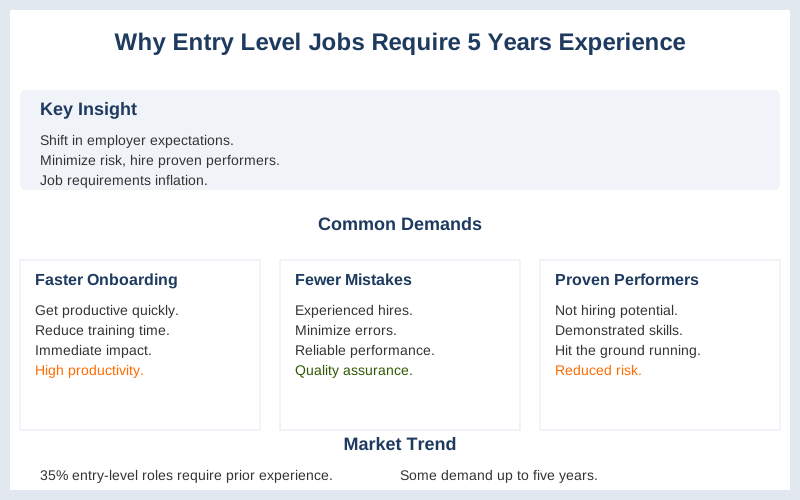
The core reason "entry-level" jobs demand 5 years of experience is a shift in employer expectations driven by market conditions and a desire to minimize risk. Companies aren't hiring potential; they're hiring proven performers who can hit the ground running, leading to job requirements inflation.
Recruiters aren't necessarily trying to be difficult; they're responding to a highly competitive talent market. When there are more qualified candidates than open roles, employers can afford to be picky. This often translates to listing experience requirements that are aspirational rather than strictly necessary, effectively filtering out a large pool of applicants before they even submit a resume. For instance, 35% of entry-level positions on LinkedIn already require prior work experience, with some demanding up to 5 years Why Gen Z Can't Find Entry-Level Jobs In 2026 - Forbes. This phenomenon is not isolated; many individuals report encountering job postings that, despite being labeled "entry-level," request anywhere from 2 to 4 years of experience Why does every "entry level" job require multiple years of experience?.
The expectation is that candidates with significant experience will require less training, make fewer mistakes, and onboard faster. Companies are prioritizing immediate productivity over long-term development, meaning they're "not hiring potential" Entry-level jobs now require 5+ years experience, is the hiring game .... This practice pushes away talented individuals who could thrive with the right opportunity, ironically hindering the very talent pipeline companies claim to need. Many hiring managers list experience as a way to identify high-performing candidates FAQ: Why Do Entry-Level Jobs Require Experience? (Plus Tips). The underlying sentiment is that if a candidate already possesses the required skills and knowledge, they represent a lower investment and a quicker return for the company.
While the term "entry-level" traditionally implies a starting point for new graduates, its definition has become fluid. For many employers, it now means "the bottom rung of our ladder, which we'd like you to already know how to climb" Entry-level shouldn't need to have 3-5 years of experience - LinkedIn. Companies are essentially looking for candidates who can perform at a level beyond true entry-level, creating a paradox for those seeking their first professional role. This scenario is particularly prevalent in competitive sectors like tech and corporate environments within the U.S., where numerous graduates struggle to find initial opportunities Why Entry Level Jobs Now Need 3-5 Years of Experience? - YouTube. The original intent of entry-level positions was to provide a pathway for new talent to enter the workforce and gain crucial experience Why do 'entry' level jobs now need 3-5 years of experience?, but this is increasingly not the reality.


What's Actually Going On


How to Handle This

What This Looks Like in Practice
- Senior Software Engineer at a Series B Startup: A startup, desperate to scale rapidly, advertised a Senior Software Engineer role requiring 5 years of experience. They wanted someone who could hit the ground running, mentor junior developers, and architect complex systems with minimal oversight. The reality was they had a shoestring budget and couldn't afford a true senior engineer. What worked: They eventually hired a mid-level engineer with 3 years of experience who was willing to take on more responsibility for a slightly lower salary. What didn't work: Their initial search yielded few qualified candidates, and many promising engineers were deterred by the inflated experience requirement Entry-level shouldn't need to have 3-5 years of experience - LinkedIn.
- Entry-Level Data Analyst at a Fortune 500: A large corporation posted an "entry-level" Data Analyst position demanding 3-5 years of experience. Their goal was to find someone who could immediately generate insights and build complex dashboards without extensive training. This practice is common, with Forbes reporting that 35% of entry-level positions require prior relevant work experience. What worked: They attracted candidates with strong internship experiences and academic projects that mimicked real-world data analysis. What didn't work: They missed out on many recent graduates with high potential but less formal experience, limiting their talent pool.
- Career Changer from Teaching to Product Management: A candidate transitioned from teaching to product management, applying for roles labeled "entry-level" that nonetheless asked for 2-4 years of experience. They were seeking a role where their transferable skills in communication, project planning, and user empathy would be valued. What worked: They highlighted transferable skills and completed a product management certification, framing their teaching experience as relevant project leadership. What didn't work: Many applications were filtered out by automated systems due to the explicit years of experience requirement, despite the candidate possessing the core competencies Why does every "entry level" job require multiple years of experience?.

Mistakes That Kill Your Chances
Key Takeaways
- The "entry level experience required" paradox is a symptom of a job market saturated with qualified candidates, forcing employers to become increasingly selective. While some roles may list up to 5 years of experience, this often signals a desire for candidates who can hit the ground running with minimal onboarding, not necessarily those who have spent half a decade in the exact same role Entry-level jobs now require 5+ years experience, is the hiring game ....
- Many companies list higher experience requirements than truly necessary because they can be pickier due to the sheer volume of applicants Why are entry-level roles asking for 3–5 years of experience - Reddit. This practice, while seemingly efficient for employers, pushes away talented individuals who possess the aptitude but lack the specific years of experience Entry-level shouldn't need to have 3-5 years of experience - LinkedIn.
- A significant portion of entry-level positions, around 35% on LinkedIn, now demand prior relevant work experience, with some escalating to 5 years Why Gen Z Can't Find Entry-Level Jobs In 2026 - Forbes. This job requirements inflation means companies are often not hiring potential, but rather expecting immediate productivity and fewer mistakes Entry-level jobs now require 5+ years experience, is the hiring game ....
- The single most important thing a recruiter would tell you off the record? Focus on demonstrating transferable skills and a proactive learning mindset; the exact years of experience are often negotiable if you can prove you're ready to contribute.
Frequently Asked Questions
Why do so many 'entry-level' jobs ask for 3-5 years of experience?
Is it even possible to get an entry-level job if I have no experience?
What's the deal with 'entry level' roles demanding 5 years of experience?
How can I find a true entry-level job when most require years of experience?
Why do companies expect so much experience for jobs labeled 'entry level'?
Sources
- linkedin.com
- Why are entry-level roles asking for 3–5 years of experience - Reddit
- Entry-level jobs now require 5+ years experience, is the hiring game ...
- Entry-Level Jobs in 2026: Why They Require Experience & How to ...
- Beyond the entry-level tag: How to spot growth-focused roles in 2026
- Why does every "entry level" job require multiple years of experience?
- What's the Deal With Entry-Level Job Experience ...
- Entry-level shouldn't need to have 3-5 years of experience - LinkedIn
- Why Gen Z Can't Find Entry-Level Jobs In 2026 - Forbes