
How to Answer Where Do You See Yourself in Five Years (2026 Complete Guide)
You just finished an interview, and the hiring manager dropped the classic: "Where do you see yourself in five years?" Suddenly, your mind goes blank. This question, asked in 78% of job interviews according to 2025 hiring data Revarta , isn't about predicting the future.
You just finished an interview, and the hiring manager dropped the classic: "Where do you see yourself in five years?" Suddenly, your mind goes blank. This question, asked in 78% of job interviews according to 2025 hiring data Revarta, isn't about predicting the future. It's a critical assessment point designed to gauge your ambition and alignment with the role. Interviewers want to know if your career aspirations fit what the company can offer and if you're likely to stay long-term, avoiding costly turnover Built In. They're looking for a realistic vision, not a pipe dream, and certainly not an indication that you're already planning your exit. Failing to prepare for this interview future question can make or break your candidacy. While the average person changes jobs 12 times in their career, demonstrating a thoughtful, forward-looking perspective is key to showing you're a valuable, stable investment. Many hiring managers, like those who use variations such as "How do you see yourself in 5 years?" or "What are your career goals?" Ivy Exec, are looking for this very insight. The goal is to showcase your alignment with the specific role, focusing on skill development and contributions rather than just abstract job titles Built In. Think of it as an opportunity to express enthusiasm for what the job can bring to your long-term professional journey Kickresume, and to articulate how you envision yourself growing and contributing meaningfully to the company's success. For instance, you might express a desire to have developed a strong foundation in a specific area and contributed significantly to key projects PrepLounge. This isn't about having a rigid five-year plan, but rather about demonstrating a clear understanding of your career trajectory and how this position fits into it.
The Real Answer
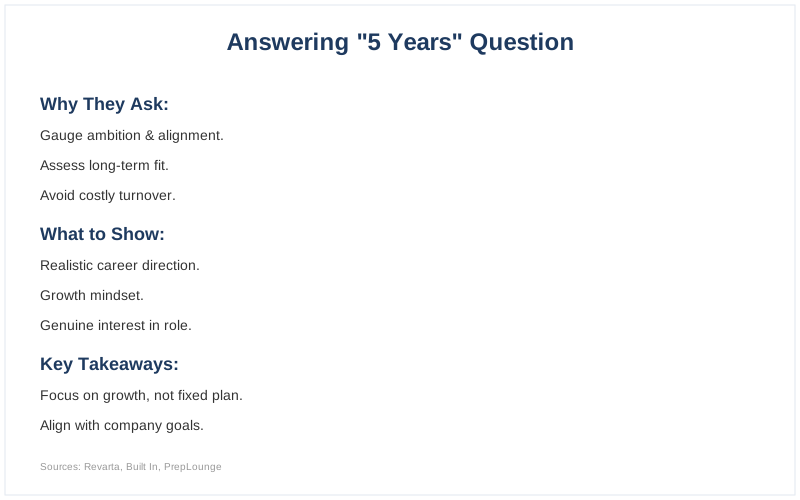
Recruiters use the "where do you see yourself in five years" question not to predict your future, but to gauge your ambition, self-awareness, and alignment with the role and company. They want to see if your professional trajectory aligns with what they can offer, ensuring you're a motivated, long-term investment, not a flight risk.
Forget having a rigid, crystal-ball-like plan. Interviewers know most people, especially early in their careers, don't have one mapped out PrepLounge. What they *do* want is evidence that you've thought critically about your career direction and how this specific opportunity fits into that vision. They're looking for signs of a growth mindset and genuine interest, not a rehearsed speech.
The core insight is that your answer should demonstrate how you aim to grow within the context of the role and company. Focus on developing specific skills, gaining expertise, and contributing meaningfully. For example, instead of saying "I want to be a manager," try "In five years, I aim to have mastered [specific skill relevant to the role], become a go-to resource for the team in [area of expertise], and contributed to [type of project]." This shows ambition grounded in the present opportunity.
This question is asked in a significant portion of job interviews, with "where do you see yourself" responses often being "growth" related reddit. Interviewers want to ensure you're not just looking for a temporary stepping stone. They're assessing your potential commitment and whether you view this role as a place to build a career, rather than just a placeholder Built In. Showing realistic ambition aligned with company opportunities is key.
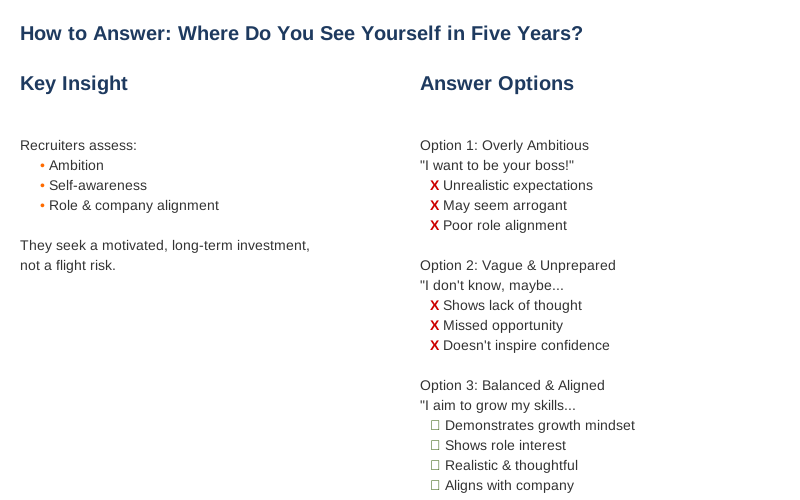
Avoid overly specific job titles or timelines, and never say "I don't know" or "I want your job." Instead, express enthusiasm for what the role can offer in terms of learning and contribution. Frame your goals around developing expertise and making a tangible impact. This strategic approach assures the interviewer that you're a motivated candidate who will likely stay and thrive.


What's Actually Going On
- Startups: Value adaptability and a willingness to wear multiple hats. Focus on contributing to the company's rapid growth and becoming a key player.
- Enterprise: Look for structured career paths. Mentioning a desire to deepen expertise in a specific area or take on more complex projects within a defined framework is key.
- Tech: Emphasize continuous learning, staying ahead of industry trends, and potentially specializing in emerging technologies.
- Finance: Focus on developing analytical skills, understanding complex financial instruments, and contributing to strategic decision-making.
- Healthcare: Highlight patient care, contributing to better health outcomes, and potentially leadership in clinical or administrative roles.


How to Handle This


What This Looks Like in Practice
- Senior Data Scientist at a FinTech Unicorn An experienced candidate seeking to leverage their skills in advanced modeling and AI. They'd express a desire to lead a small team, mentor junior colleagues, and contribute to the strategic direction of AI initiatives, focusing on areas like fraud detection or algorithmic trading. This shows ambition and an understanding of how their growth aligns with the company's trajectory. Built In
- Entry-Level Product Manager at a SaaS Company This candidate might focus on developing a deep understanding of the product lifecycle, mastering agile methodologies, and contributing to successful product launches. They'd aim to become a key contributor to product strategy and potentially take ownership of a specific feature set or product area, demonstrating a commitment to learning and impact. Best Answers: Where Do You See Yourself in 5 Years (Job Interview)
- Career Changer from Healthcare to UX Design A candidate pivoting careers would emphasize building a strong portfolio, gaining industry recognition, and contributing to user-centered design for impactful products. They'd aim to become a proficient UX designer, capable of leading design sprints and advocating for user needs, showcasing their dedication to this new field. Answer "Where Do You See Yourself in 5 Years?" (75+ Examples)
- Mid-Level Software Engineer at a Gaming Studio This individual would focus on becoming a subject matter expert (SME) in a specific area, such as game engine development or performance optimization. They'd aim to contribute to the creation of flagship titles and potentially mentor newer engineers, showing a clear path for growth within the specialized gaming industry. PrepLounge


Mistakes That Kill Your Chances
Key Takeaways
- The most crucial takeaway for recruiters is understanding your long-term commitment and how this role fits your trajectory. They want to avoid short-term candidates and ensure ROI on their hiring costs Built In. This involves demonstrating that you've thought about your career path and see this opportunity as a significant step within it, rather than a brief stopover.
- Your answer to "where do you see yourself" should showcase realistic ambition that aligns with the company's opportunities and your desire for skill development, not just a job title Built In. Instead of just saying "I want to be a manager," focus on the skills you aim to acquire, such as "I see myself having mastered advanced project management techniques and taking on more leadership responsibilities within complex projects."
- Remember, interviewers know you don't have a crystal ball; they're assessing your self-awareness, drive, and whether your aspirations make sense for the position PrepLounge. They are looking for evidence that you understand your strengths and weaknesses, are motivated to grow, and have a vision that is achievable and relevant to the role. For instance, if you're interviewing for an entry-level data analyst position, expressing a desire to be a CEO of the company in five years might be perceived as unrealistic.
- The single most important thing a recruiter would tell you off the record? "Show me you want *this* job, not just *a* job." Your five year plan interview answer needs to be grounded in the specific opportunity at hand. This means researching the company's growth potential, the typical career progression within the department, and tailoring your answer to reflect how this specific role will enable your long-term goals. Consider what specific contributions you hope to make and how you envision your skills evolving within this particular organizational context.
Frequently Asked Questions
What's a good way to respond when asked about my five-year career outlook in an interview?
I'm just starting my career, how should I answer the 'where do you see yourself in 5 years?' question?
How specific should I be when talking about my future in an interview?
What do employers really want to know when they ask about my five-year plan?
Should I mention wanting to advance into management if I'm applying for an individual contributor role?
Sources
- Answer "Where Do You See Yourself in 5 Years?" (75+ Examples)
- where-do-you-see-yourself-in-5-years
- What is the correct answer to "Where do you see yourself in 5 years?"
- How to answer "Where do you see yourself in five years" - PrepLounge
- How to Answer 'Where Do You See Yourself in 5 Years?' | Built In
- how-to-answer-where-do-you-see-yourself-in-5-years-21863